Nature
 PUBLISHED


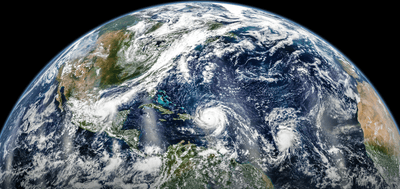


Peak season is wrapping up in the Atlantic, but meteorologists have yet to see a single hurricane. And while this is welcome news for coastal dwellers and disaster recovery teams, it is a deeply strange and fascinating year for weather watchers.
2026 is bucking pretty much every trend in terms of Atlantic hurricanes, let alone the wider weather and climate.
In a typical year, the season runs from the beginning of June to the end of November, reaching its peak in September. In particular, September 10 is often singled out as the peak date, with most activity occurring between mid-August and mid-October.
Over the average year between 1991 and 2020, you’d expect around seven hurricanes in the Atlantic each season, with around five of those occurring by the end of September, plus a couple of major hurricanes.
Nevertheless, we’re bolting towards October and there still has not been a single hurricane in the Atlantic Ocean.
Tropical storms, but no hurricanes yet
The season hasn’t been totally devoid of storminess, mind you.
The Atlantic has borne witness to eight named tropical storms: Arthur, Bertha, Cristobal, Dolly – which occurred just two days after the death of the legendary Dolly Parton – Edouard, Fay, Gonzalo, and the newly emerged Hanna.
However, none of them mustered enough strength to be classified as a full-blown hurricane. Tropical storm Hanna is currently twirling in the mid-Atlantic, but there’s no clear indication of whether it will beef up into a hurricane, while Fay is still bumbling along with minimal gusto. The rest are long gone.
A record-breaker in the making?
Might 2026 be a year without hurricanes? It's far from impossible.
There have only been two years since the late 19th century – 1914 and 1907 – with no recorded Atlantic hurricane. However, this was decades before satellites and other technology that made record-keeping more reliable.
The latest-forming first hurricane of the Atlantic season occurred in 1905 when one arose on October 8. Anything is possible in the coming week or so, but it looks like 2026 might creep past this record.
The starkest comparison to these lackluster years was 2005. It became the most aggressive Atlantic hurricane season since reliable records began, with 15 hurricanes and 7 major hurricanes, including the formidable Katrina, which killed nearly 1,400 people and caused $125 billion in economic damage.
El Niño and its influence over the Atlantic
It’s not a mystery why 2026 is proving to be such an inactive Atlantic hurricane season, though.
The world is currently in the midst of an incredibly powerful El Niño event, an influential weather phenomenon involving higher temperatures in the eastern tropical Pacific. It's associated with more extreme weather elsewhere in the world, from wildfires and drought to deluges of rain and floods, but it's known to weaken hurricane activity over in the Atlantic.
El Niño warms the Pacific Ocean and, in turn, strengthens high westerly winds over the Atlantic, creating wind shear that tears apart hurricanes before they can organize. It also makes the atmosphere more stable, putting another damper on the thunderstorms needed for hurricanes to form.
Meanwhile, the extra warmth in the Pacific tends to actually cook up more hurricanes than average, which is exactly what we’re seeing this year.