Nature
 PUBLISHED


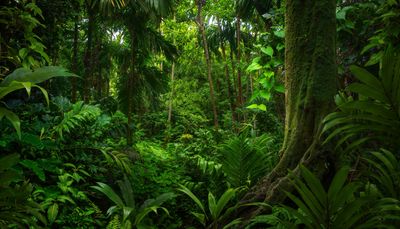


How many undiscovered drugs are quietly growing in the rainforests around the world? It is an almost impossible question to answer, but that hasn’t stopped many researchers trying to put a figure on it.
A new analysis looking at the potential of untapped pharmaceutical reserves in the tropics suggests that rainforests could hold up to $714 billion in potential drug value.
Carried out by Zero Carbon Analytics (ZCA), an international research group that provides analysis of climate change and energy transition, the report helps to underline the critical importance of these environments which are under increasing threat.
Breaking it down by region, they found that, perhaps unsurprisingly, the Amazon rainforest contains the greatest potential value in undiscovered drugs accounting for 30 percent or $215 billion worth, followed by the rainforests of Southeast Asia at $107 billion and the Congo basin with $39 billion.
The team stress that these figures should be paid attention to by those companies whose bottom line relies on these very ecosystems to make a profit.
“These findings present a business case for sectors that stand to benefit from undiscovered pharmaceuticals and [digital sequence information], like pharmaceutical, biotechnology and cosmetics companies, to fund tropical forest conservation,” they write.
Vast untapped potential
Plants have been used as medicine since before our species even evolved. Early hominins, other primates, and even elephants are known to have utilized the medicinal properties found in plants around the world.
And that utilization of the natural world hasn’t stopped. Even today it is thought that up to 40 percent of all modern medicines are derived in some form from plants, including up to three quarters of all cancer drugs approved between the years 1940 and 2014.
For example, a compound found in the bark of the Pacific yew tree, paclitaxel, formed the basis of a now well-established drug called Taxol that is used to treat a range of cancers including breast and ovarian.
But despite our heavy reliance on plants for our medicines, we have still tested so few of them. By some estimates, we have only screened about 1 percent of chemical compounds produced by plants for their medicinal properties.
This is why scientists think that the vast rainforests of South America, Africa, and Southeast Asia could be home to plants that contain a wealth of undiscovered drugs.
And yet we’ve been doing a pretty good job at destroying these forests before we even know.
Since 2001 it is thought that we have lost roughly 13 percent of the world’s tropical forests. By mapping where this deforestation has happened alongside where plant biodiversity – and by extension the potential for commercially valuable compounds – is highest, the ZCA analysis predicts that this may have put $86 billion worth of commercial drug value at risk.
Put simply, we could be clearing land and causing endemic plants to go extinct before anyone has had a chance to test them for life-saving drugs that could be worth tens of billions of dollars.
But these figures focus only on the commercial value of any potential drugs, and not what is called the societal value that these medicines could also contribute. Curing someone of cancer has other health benefits for patients that last long after the pharmaceutical companies patent expires.
The report suggests that these societal values could amount to an extraordinary $7 trillion in value.
How to value nature
These figures ranging from the tens of billions to trillions are rather abstract, but they make an important point that has already been expressed by countless scientists working in these regions.
The value of the rainforests is worth more than the land it is sitting on or the wood that is growing.
It is the extraordinary biodiversity that these tropical regions have incubated over the last tens of millions of years that hold the value. It is the countless plants, birds, and invertebrates that live within these systems and have evolved to survive that are what matters.
ZCA says this type of analysis serves as a way to try and get those who rely on these things – like pharmaceutical, biotechnology, and cosmetics companies – to take more action to prevent these forests from disappearing altogether.