Nature
 PUBLISHED





The Caspian Sea is the largest lake in the world today (ignore the name – blame the ancient Greeks and Persians).
About the size of Japan, it plunges to depths of over 1,000 meters (32,80 feet) at its deepest point, and yet it’s but a puddle compared to the largest lake the Earth has ever seen.
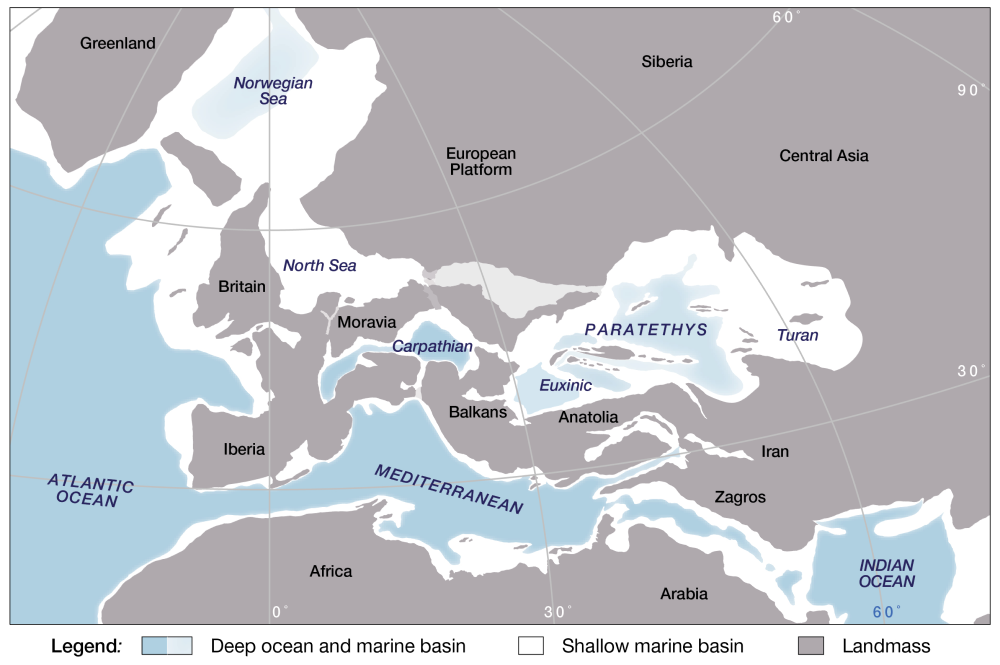
For that, we have to travel back 10 million years when the megalake Paratethys was at its peak. It holds the Guinness World Record for the largest lake ever known to have existed on Earth, and it was a whopper.
Paratethys covered an area of around 2.8 million square kilometers (1.08 million square miles), making it comparable in size to Argentina. Or, if you prefer your comparisons a little splashier, that’s bigger than the modern-day Mediterranean Sea.
The formation of a megalake
The giant body of water started forming around 12 million years ago when tectonic plates smashed together and cut off the Paratethys Sea from the ocean. As new mountains formed in central Europe, the shifting face of the planet created a vast lake stretching between what are now the Alps in the west and and Kazakhstan in the east.
So deep and wide was Paratethys that if you were to take all of the water from today’s fresh and saltwater lakes and pour it into Paratethys, it would still only be 1/10 full.
The lake was so big that it is thought to have influenced the evolution of elephants and giraffes, as well asbeing home to a vibrant community of marine mammals, some of which weren’t found anywhere else on Earth.
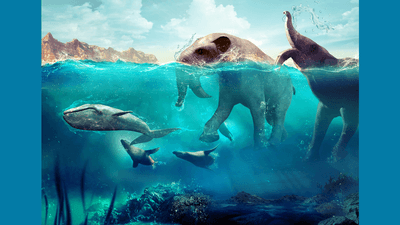
Strange elephant-like creatures known as Deinotherium giganteum roamed in the megalake’s surrounding swamps, while the ancestors to sheep and goats grazed along the shoreline. These land mammals were restrictured to the to the shallows, unlike the megalake’s resident seals and – perhaps most remarkable of all – whales.
A lake filled with miniature whales
Admittedly, it was the smallest species of baleen whale known to have ever existed, but still – a lake with a whale! What a concept.
Today, all baleen whales such as the minke and humpback live exclusively in the oceans, and while we technically still have whales in freshwater ecosystems, they are the toothed whales in the form of river dolphins.
The Paraetethys whale was a miniature baleen whale, which means it was a filter-feeder instead. Known as Cetotherium riabinini, it’s thought to have fed on the megalake’s nutrient-rich muds, making it unlike any baleen whale alive today.
The end of the megalake
The tiny whales were adapted to life in the megalake’s brackish and salty waters, which were the result of a 5-million-year period of dramatic climate shifts.
During the most severe of these changes, between 7.65 and 7.9 million years ago, Paratethys lost around a third of its water volume and two thirds of its surface area. As the water evaporated the concentration of salt near-enough tripled until it was on a par with seawater.
This shift wiped out life big and small, fine-tuning the ecosystem in favor of animals such as mollusks, crustaceans, seals, and whales. In fact, it’s even thought that C. riabinini’s dwarfism, coming in at a meter shorter than today’s bottlenose dolphins, could have been an adaptation to the shrinking body of water.
However, the shrink couldn’t go on forever.
Between 6.7 and 6.9 million years ago, erosions carved an outlet from the megalake’s southwestern edge that eventually found its way to the Mediterranean. Unable to go out with a bang, Paratethys opted for a splash, forming an impressive waterfall as it drained out of existence.
RIP to a real (big) one, we do enjoy a bit of showmanship.