Nature
 PUBLISHED





There’s a dolphin in Brazil so vanishingly rare they’re often referred to as “ghost dolphins”. Found along the country's south-eastern coastline, the La Plata - or franciscana - dolphin is so unusual it is thought to be the only species of river dolphin that lives in the sea.
So preventing such species from slipping over the brink is important, and that means getting to grips with their ecology. This is why scientists were eager to perform forensics on a franciscana dolphin that washed up dead on a beach.
The dolphin had three bite marks on its body, the last of which was fatal.
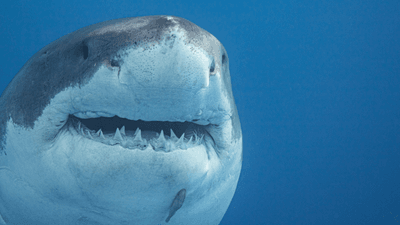
However, by examining a bite on its dorsal fin, scientists could determine the culprit and figure out that the unfortunate dolphin was still very much alive when attacked. They found that it had been killed by a great white shark, marking the first documented evidence of a hunt between these two species in this part of the world.
A little dolphin with a big nose
Franciscana dolphins (Pontoporia blainvillei), are strange in lots of different ways. For example, they have the longest beak-to-body ratio of any dolphin, with their snoot accounting for 15 percent of their total body length.
This figures when you find out their closest relative is the Amazon river dolphin, those famously pink weirdos. In fact, franciscana dolphins look a lot like river dolphins because they technically are one, it's just they don’t live in rivers.
They’re found off the southern coast of Brazil, and down into Uruguay and Argentina, but they’re the most endangered dolphins in the southwestern Atlantic. A rare find, then, dead or alive.
So, when an adult franciscana dolphin was found washed up on the Brazilian coastline, it was time for some science. The poor wee dolphin had a rough end to life, with evidence of three bite marks across its body.
Scientists set out to identify the culprit(s) by measuring the dimensions of the teeth marks, bite morphology, tooth size and shape, and orientation of the scars. This data was then put into software called TPSdig to calculate the likely dimensions of the perpetrator.
Identifying a killer
They had several bites to work with, one of which was on the dorsal fin. Its dimensions indicated the dolphin had been bitten by a great white shark measuring around 3.6 to 3.8 meters (11.8 to 12.5 feet) long and weighing between 400 and 490 kilograms (63 to 77.2 stone).
The bite was accompanied by a haemorrhage, meaning the dolphin was still alive when it happened. This suggests that not only are great whites – thought to be rare in Brazilian waters – present, but that they’re actively hunting one of the region’s most endangered animals.
Yet another challenge for a species on the brink, but then great whites are also in decline. As such, the researchers say it’s essential we figure out their roles in the ecosystem – something we’ve learned a lot about from the body of a small dolphin.
The study is published in the journal Wildlife Research.