Nature
 PUBLISHED



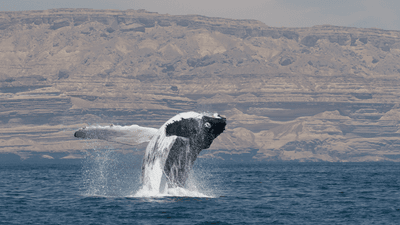


We humans love to put things in boxes, but nature doesn’t make it easy, which is why we’re constantly discovering new-to-science things right under our noses.
Most lately that includes a new kind of humpback whale, although one we’ve been studying for a long time now.
Weird whales
The Arabian Sea humpback whales are considered by some to be the world’s most unusual population of humpback whales.
They prefer to keep to tropical and subtropical waters year-round, shunning the epic migrations that are common among other populations. They also sing a song heard nowhere but the Arabian Sea, and now it seems we finally have the genetic evidence to underpin their establishment as a new-to-science subspecies.
The news comes from the Wildlife Conservation Society who have been working in close collaboration with the Environment Society of Oman, among others, to gather genetic samples of the whales. They then compared these samples to humpbacks found elsewhere in the Earth’s oceans, resulting in a dataset representing 2,285 individuals.
There are currently three recognized subspecies of humpback whale: the North Atlantic humpback whale (Megaptera novaeangliae novaeangliae), the Southern Hemisphere humpback whale (Megaptera novaeangliae australis), and the North Pacific humpback whale (Megaptera novaeangliae kuzira).
Now, it looks as if a fourth subspecies could be about to join the pod. Introducing: the Arabian Sea humpback whale, Megaptera novaeangliae indica.
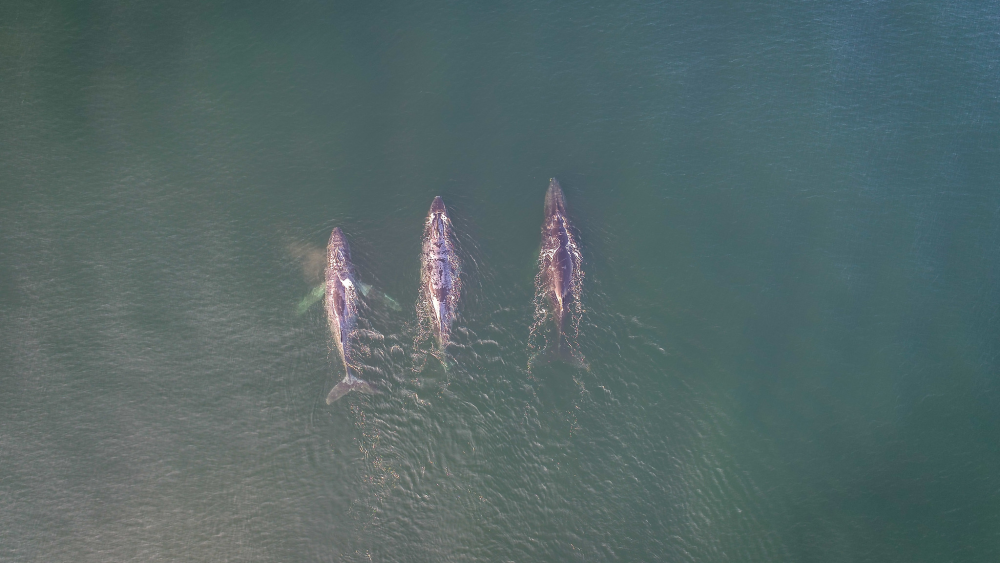
Though the ability to formally recognize a new-to-science marine mammal subspecies sits with The Society for Marine Mammalogy’s Taxonomy Committee, the findings support the allocation.
A long time isolated
The results show high levels of genetic differentiation between the Arabian Sea whales and those found elsewhere on the planet, a discovery that sheds light a population the researchers say had long been an enigma to the scientific community.
“Their ecology is unlike that of any other known humpback whale population, and this new genetic work represents an important milestone in understanding how that uniqueness developed,” said lead author Dr Rita Amaral, who coordinated the genetic analysis working with WCS, in a release emailed to IFLScience.
“The results clearly indicate the Arabian humpback whales have followed their own evolutionary trajectory for tens of thousands of years and support their recognition as a distinct subspecies.”
It’s thought the different humpback whale subspecies diverged between 113,000 and 43,000 years ago. To date, it appears those in the Arabian Sea could be facing the biggest uphill battle with reduced genetic diversity.
Newly described, already threatened
Threats from human activity include fishing gear, vessel strikes, and noise and chemical pollution. Then there are climate-driven factors such as prey availability.
But it’s hoped that this breakthrough in our understanding of their origins could afford them better protections.
“The growing body of research on Arabian Sea humpback whales has given Oman an increasingly clear understanding of both the importance of this population and the pressures it faces,” said Aida Al Jabri from the Environment Authority of Oman.
“This evidence is now helping us move from scientific understanding towards practical conservation action, including regional cooperation through the International Whaling Commission and Oman’s work to explore greater protection for important marine habitats through international mechanisms such as the International Maritime Organisation’s special protection provided by Particularly Sensitive Sea Areas.”
The study is published in Frontiers in Marine Science.