Nature
 PUBLISHED






I recently became the owner of a puppy. Is he wonderful? Yes, very. Would I trust him with information upon which the fate of the world rested? Absolutely not.
But, with a bit of training, could I? Is it possible to train animals as secret agents, or masters in the art of espionage? And has anyone ever tried – and succeeded?
The problem with cats is they kind of just go where they want. And so it became fairly obvious early on that it was hard to control the path of the cat.
CIA spokesperson
Project Acoustic Kitty
Also being the servant of two cats, I already had my doubts before researching for this story that our feline friends are capable of such deeds. If they could talk, mine would probably give up state secrets at the mere whiff of a Churu.
Granted, cats are pros at sneaking around and hiding in all sorts of seemingly unreachable places – but getting them to do something if they don’t want to do it? Mission Im-paws-ible.
And yet, in 1964, someone at the CIA thought it would be a great idea to train cats up as covert operatives – although the idea for using animals in this way was born much earlier than that.
Inspired by the use of animals during World War II, “the [CIA’s] Director of Science and Technology and their Office of Technical Services had created a program that specifically was looking at the animal kingdom and how we could use real animals, but also be inspired by animals to kind of help us with intelligence collection,” a CIA spokesperson told IFLScience.
That became particularly important during the Cold War, when it wasn’t always feasible to drop a human agent in the middle of somewhere like the Soviet Union.
“Sometimes you can't put a human near things, but an animal might go unnoticed. And the thought was, well, there are stray cats in certain areas we are very interested in,” the spokesperson explained.
“If we could get a listening device onto a cat and it wandered around and could pick up conversations for us, that would be incredibly helpful because it'd be too dangerous for our people to go do something like that.”
And so, Project Acoustic Kitty began. With the help of vets, a microphone was implanted in a cat’s ear, with a tiny transmitter placed under some loose skin and an antenna into its fur. Add in some training, and they were ready to go.

So how did Acoustic Kitty fare out in the big, wide world? If you listen to the rumors, not that well.
In the 1987 book The Agency: The Rise and Decline of the CIA, Victor Marchetti, former special assistant to the Deputy Director of the CIA, alleged that the cat had met an unfortunate demise on its very first field test.
“They took it out to a park and pointed it at a park bench and said, ‘Listen to those two guys. Don’t listen to anything else – not the birds, no cat or dog – just those two guys!’ They put him out the van, and a taxi comes and runs him over,” Marchetti claimed.
“There they were, sitting in the van with all those dials, and the cat was dead!”
“That is not accurate,” the CIA spokesperson told IFLScience. “Our cat did not get hit by a taxi on the first mission.”
But ultimately, a life of espionage just wasn’t to be for the cat involved.
“The problem with cats is they kind of just go where they want,” said the CIA spokesperson. “And so it became fairly obvious early on that it was hard to control the path of the cat.”
One distinctive feature of this particular situation is turning cats into recording devices; it potentially makes cats (all cats) into legitimate military targets.
Dr Josh Millburn
“Our final examination of trained cats for use […] convinced us that the program would not lend itself in a practical sense to our highly specialized needs,” reads a declassified 1967 CIA memo.
While it continues to say that it “was indeed possible” to train a cat to go short distances (read into “short” what you will), it states that “the environmental and security factors in using this technique in a real foreign situation force us to conclude that, for our purposes, it would not be practical.”
Spy dolphins
If movies are to be believed, it’s not just park bench conversations where there’s valuable information to be found; fictional spies end up in (usually life-threatening) underwater shenanigans on a concerningly regular basis.
It’s this that takes us to one of the CIA’s more successful ventures into animal espionage: Project OXYGAS, a.k.a. the one with the “spy dolphins”.
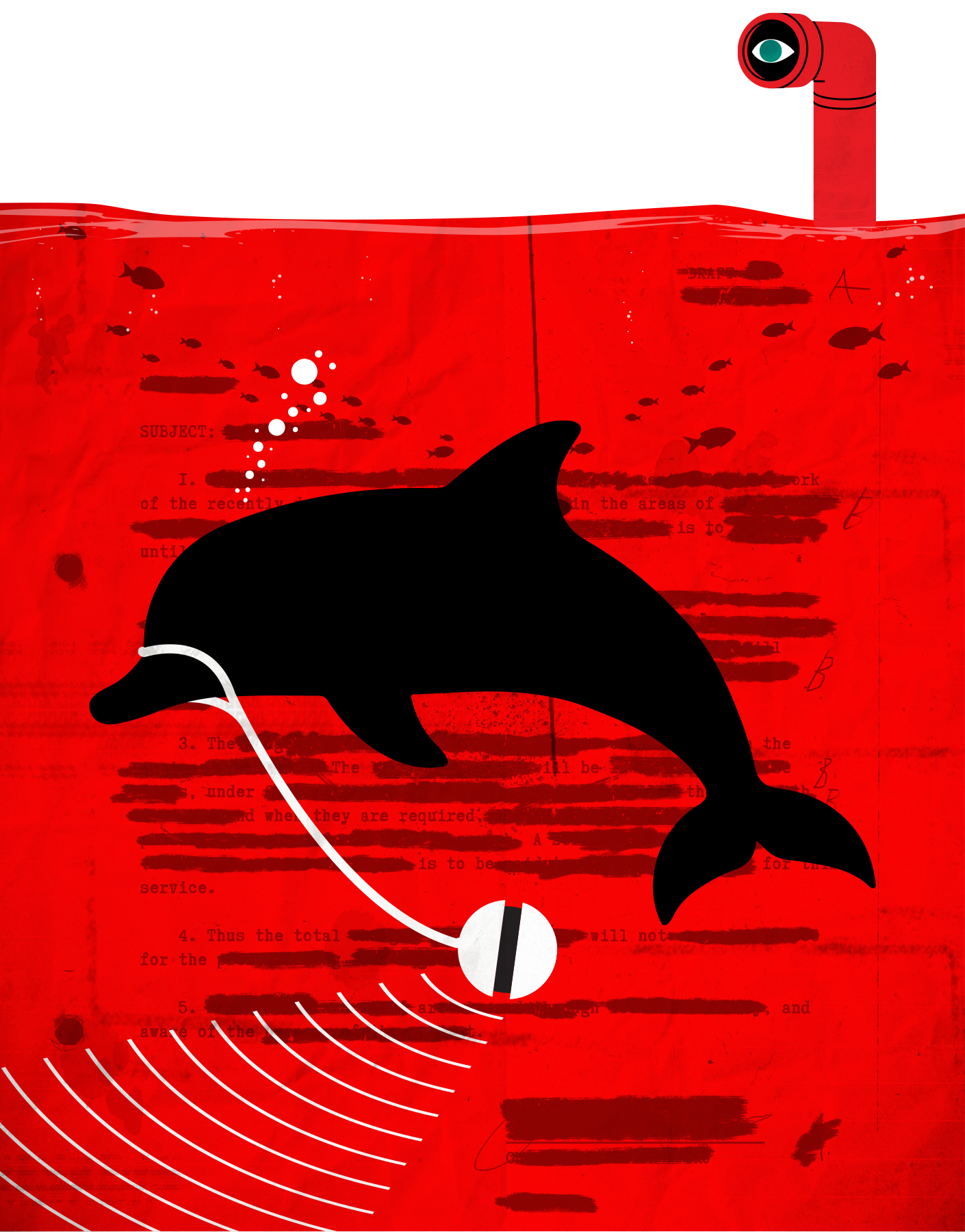
“Our life science division here at CIA started studying the feasibility of using dolphins as marine targets. The idea was they wanted to see if they could train a dolphin to put a listening device or a tracker on a boat,” the CIA spokesperson told IFLScience.
“Not explosives,” they clarified, dispelling one of the popular myths about the project seen floating around the web. “They definitely had ideas at first about [whether we could] use dolphins to sink enemy ships, then they very quickly pivoted away to an emphasis towards covert harbor penetration.”
The dolphins were given harnesses, with a cone placed on their beaks containing whatever it was that was to be deployed on their target. They were trained to identify boats based on things like color, swimming in from the open ocean, and planting the devices while the boats were in harbor. Seeing if they could retrieve objects left in shallow water by human agents was another avenue of exploration.
The project was quickly successful.
“Quite frankly, this project has progressed more rapidly than we anticipated,” reads a declassified 1964 CIA memo. But there were still issues to overcome in these early stages, including the potential operational range of the dolphins, and communication problems between the dolphins and handlers.
When cats become potential espionage devices, those with something to hide have a plausible argument that they're justified in hurting or killing cats, just in case these cats are 'listening in'.
Dr Josh Milburn
There was also a question of how well they might work when the dolphins had to be handed over to field agents.
OXYGAS was still considered feasible, but by 1970, the CIA decided to cease its funding. The program was handed over to the US military, said the CIA spokesperson, which continued to work with the same dolphins and build upon the agency's research and files.
Something must’ve gone right, because the US military continues to use dolphins to this day as part of the Navy’s Marine Mammal Program, utilizing their remarkable sonar and underwater vision capabilities to detect mines, track targets, and even help to detect and apprehend potential enemies diving in nearby waters. Ethan Hunt, eat your heart out.
Just because you can, does it mean you should?
There are certainly some hurdles to overcome, but it seems fairly safe to say that yes, some animals can be trained as spies to some degree.
But there’s also another important question we should be discussing – and perhaps it’s the first one that anyone planning to turn an animal into a spy should consider. Sure, there’s a chance that we might be able to use animals for espionage, but should we?
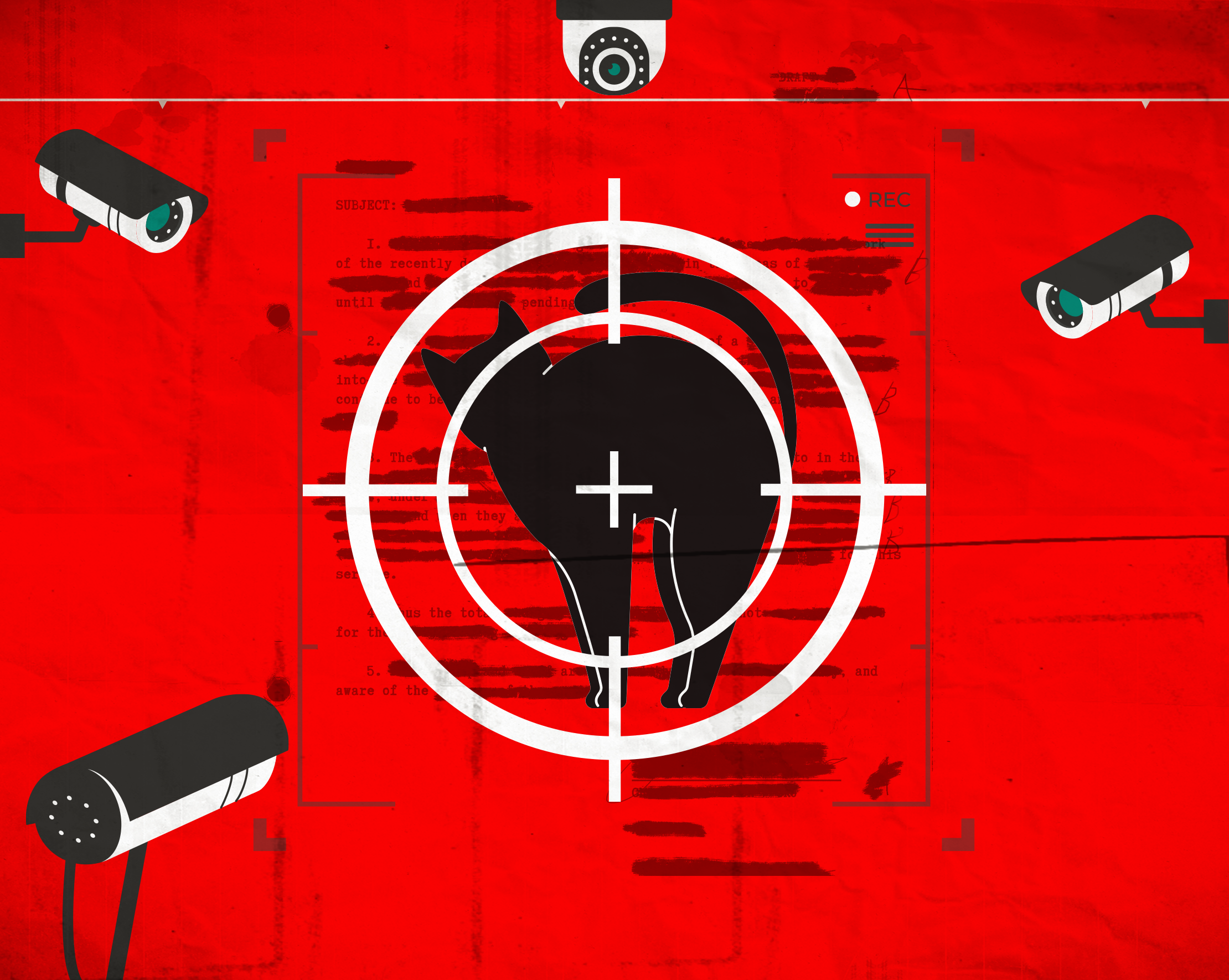
Let’s take the example of Acoustic Kitty. “In principle, we could imagine ways to 'wire up' cats that aren't particularly harmful to them,” Dr Josh Milburn, Senior Lecturer in Political Philosophy at Loughborough University and an expert in animal ethics, told IFLScience.
“We could also imagine, in principle, that these cats would have good lives outside of their use in espionage.”
“Presumably, however, if the handlers of these cats had any kind of control over their activities, the cats would have to undergo some quite rigorous training, which may be very bad for them – not only because it might involve pain or frustration for the cats, but also because it involves denying their agency and shaping their will around our purposes.”
That’s an ethical conundrum faced in animal training in general – but there are espionage-specific issues too.
“One distinctive feature of this particular situation is turning cats into recording devices; it potentially makes cats (all cats) into legitimate military targets,” Milburn explained.
“We wouldn't, I hope, have any problem in recognizing that individuals hurting or killing cats for fun are behaving in a morally problematic way. But when cats become potential espionage devices, those with something to hide have a plausible argument that they're justified in hurting or killing cats, just in case these cats are 'listening in'.”
“All cats are thus put at risk by this programme.”
These are far from the only potential ethical issues surrounding the use of animals in espionage – their continued use when we have ever-more sophisticated spy tech springs up many – but the difference between the early days of spy animals and today is that it seems much more likely that they’ll be acknowledged and discussed – even if it’s just a matter of trying to avoid negative press.
“The public often responds badly to military experiments on animals, especially dogs and cats,” said Milburn.
Whether feasible or not, there’s plenty to think about before you sign little Pebbles up for a life in the shadows.
This Deep Dive first appeared in Issue 46 of our digital magazine CURIOUS. To access exclusive CURIOUS content first and receive the quarterly digital magazine, become an All Access Member.



 1
1