Nature
 PUBLISHED
 3
3


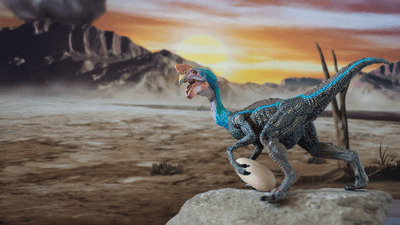


Ancient deserts were treacherous terrain for dinosaurs, as the environment had a nasty habit of burying its inhabitants. Their loss would be palaeontologists gain a few tens of millions of years down the line, as the unique fossils reveal animal behavior in a way that more scattered remains just can’t, helping us to tackle a big question about Oviraptor: were they egg thieves, or just great parents?
The best Oviraptor fossils
The moment of death can have a big impact on our capacity to learn about extinct animals, particularly when it comes to their behavior, which is rarely captured in fossils. Exceptions to this have been found in Mongolia’s Gobi Desert where ancient animals sometimes died from sudden dune collapse.
“Say there was a rainstorm, and the dunes collapsed on top of dinosaurs, you often get them [preserved] in these life positions, which is really neat,” Dr Darla Zelenitsky of the University of Calgary told IFLScience. “So you'll [find] Oviraptors sitting on a clutch of their eggs actually brooding them. The famous specimen that's known from Mongolia was a dune collapse, and it's the Velociraptor and Protoceratops that are actually physically interlocked and fighting one another.”
Oviraptor: egg thief?
The oviraptor “egg thief” idea also began in the Gobi Desert, where the fossil of an as-of-yet unnamed theropod was discovered in incriminating proximity to a clutch of eggs. The eggs were believed to belong to Protoceratops, meanwhile, the theropod with jaws perfect for egg crushing was thought to be the invader, and so it was named Oviraptor by palaeontologist Henry Fairfield Osborn back in 1924.

Oviraptor is, however, a misnomer, as subsequent research has concluded they weren’t thieving eggs, but trying to protect them. That realization came with the discovery of more eggs in the mid-1990s that contained the precious preserved remains of dinosaur embryos.
Oviraptor embryo "Baby Louie"
Looking at the most famous embryo specimen nicknamed "Baby Louie" proved they weren’t Protoceratops as the palaeontologists of Osborn’s time had believed, but instead, an Oviraptor. That “thief” that earned them their name was, in all likelihood, the creator of the eggs it was accused of stealing.
We’ve since discovered several fossils that show Oviraptor sitting atop their eggs like birds, including one world-first specimen that included embryo-bearing eggs and was also the first nesting oviraptorid to be discovered outside of the Gobi Desert.
Oviraptors: actually great parents
So in the case of Oviraptor: egg thief or parent of the year? It seems these dinosaurs fall into the latter category. As scientists, we must resist the urge to anthropomorphize animals, but as a fan of fluffy dinosaurs, it’s hard not to like these guys.
Oviraptor were also behind arguably the first evidence that dinosaurs liked snuggling, as three 70-million-year-old Oviraptor fossils were discovered preserved as if sleeping in a group. It seems they were just doing what they could do to survive, which as the first discovery of fossilized theropod stomach contents demonstrated, wasn’t a guarantee for these dinosaurs and their chicken-drumstick-like gams.
Stupid delicious Citipes legs.