Nature
 PUBLISHED





What you'll discover in this article...
- Thanks to a chance photograph on social media, horticulturist and waterlily expert Carlos Magdalena embarked on a journey to discover a new species of giant waterlily in Colombia.
- The team set off on a epic five day adventure to find and retrieve samples of a flowering specimen so it could be scientifically described.
- “Victoria gives away its secrets slowly and one thing at a time," Magdalena told IFLScience.
How far would you go to discover a new species? For waterlily researchers at the UK's Kew Gardens and beyond, the trip involved a late night boat ride, rising flood waters and a journey across Colombia. But let's take a step back.
Giant waterlilies typically belong to the genus Victoria, which has contained three known species since Victoria bolivia joined the gang in 2022. When V. bolivia was identified it was the first giant waterlily species discovered in 177 years, but now it seems researchers have found another member – and they first spotted it by scrolling through Instagram.
A social media star
Horticulturist and waterlily expert Carlos Magdalena first saw the unusual specimen in a picture posted by Jeremiah Harris, who runs a plant nursery in the US. It was obviously a giant waterlily, but something stuck out to Magdalena; the photo had been taken in Colombia’s Inírida region, which wasn't considered part of the known distribution of the Victoria genus.
Harris had mistaken the waterlily for the more common Victoria amazonica, but Magdalena was intrigued.
“The location was promising, since no Victoria was ever detected on the Orinoco drainage, so I had the feeling that we could be looking at something new," Magdalena told IFLScience. "Once Jeremiah Harris sent me more pics, it was clearer that this plant was a bit different and this encouraged us to team up and start planning a collecting trip.”
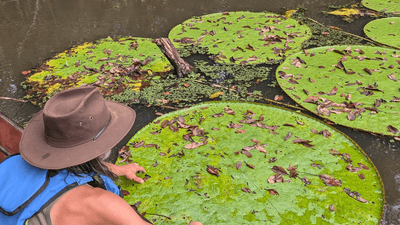
To see if his hunch would prove correct, Magdalena used satellite imagery to scan Inírida and the surrounding lakes looking for waterlily pads. A few pads from a single plant were enough to confirm the presence of a Victoria in the area, but which one was it?
The team planned a five-day expedition into Inírida’s rainforest to look for the waterlilies, but by the fifth day the outlook was poor. They had found two waterlily plants but neither was in flower. Without a flower sample the team couldn’t formally identify the new species, or compare it with the 6.4 million flower samples safely stored at Kew’s Herbarium.
Fortunately, there came a last-minute breakthrough. On their final night, with a 9am flight to catch the next day, Magdalena explained his dilemma to Gustavo Melo, an Indigenous Tucano boatman. Melo said he knew where flowering waterlilies might be found, so the team followed his directions along the waterways at 1am to finally track down their samples.
Race through the waterways
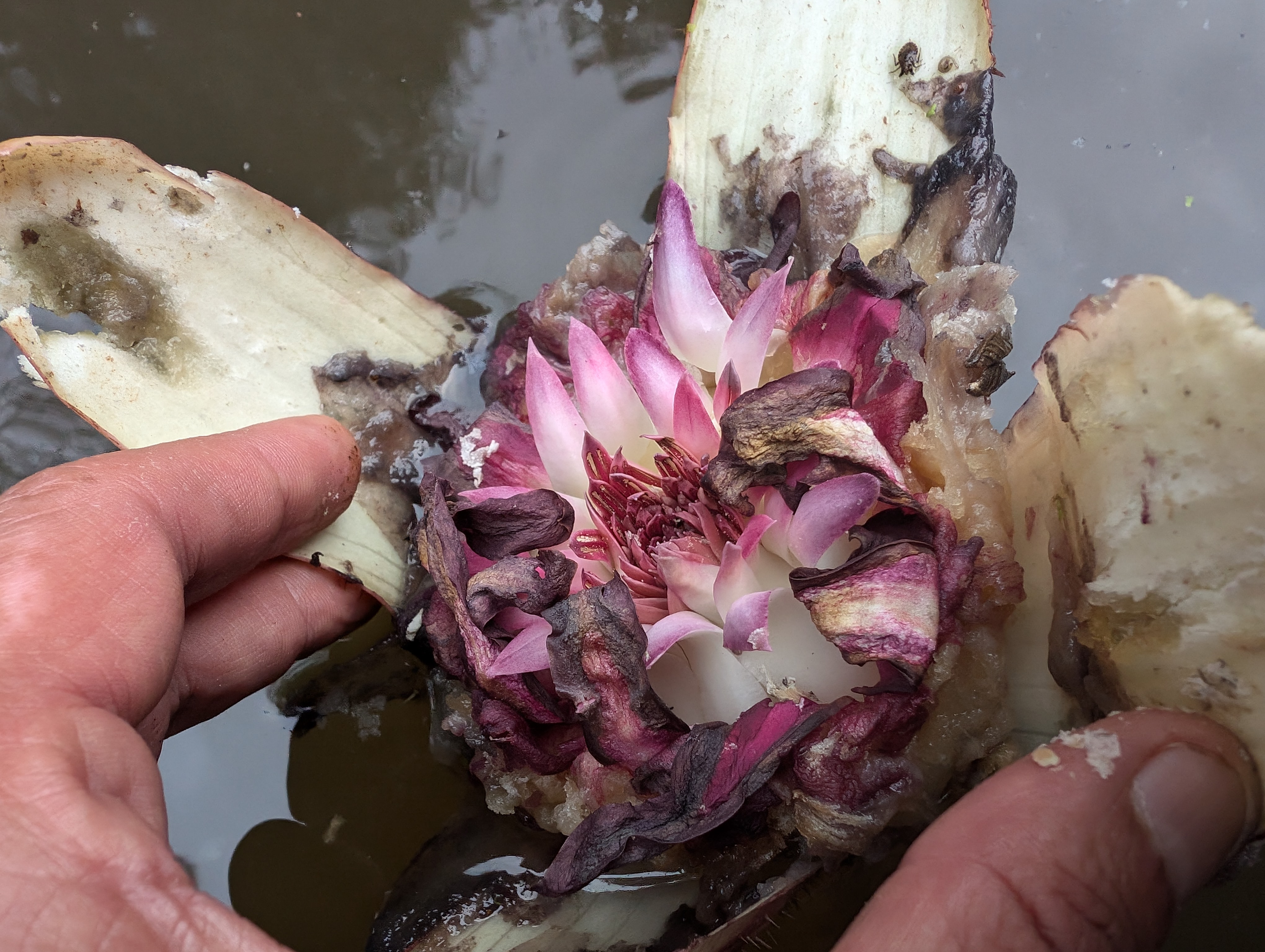
As the sun rose, the researchers arrived in a small lake with five plants of the new waterlily species, including one that was in flower. “After many days looking for it, we managed to find it after sailing all night, reaching a population that was flowering at 5am and then rushed to the airport for a 9am flight,” said Magdalena.
We can only reach the plants when the water levels are high by sailing in the flooded forest to otherwise inaccessible lakes.
Carlos Magdalena
The new species has been named the Colombian giant waterlily (Victoria colombiana) and joins its cousins V. amazonica, V. cruziana and V. boliviana in the genus.
The team estimates there are only between 30 and 50 individual plants in the wild, making it extremely vulnerable to extinction. They'll continue using satellite imagery to find more samples and better establish its population and range.
“[Satellite technology] did help greatly to find a third population, and, remarkably, it allowed us to 'observe the plant during the dry season when the water levels are low. We can only reach the plants when the water levels are high by sailing in the flooded forest to otherwise inaccessible lakes,” said Magdalena.
The movements of the river are extremely important to giant waterlilies. Seeds of Victoria genus plants dry out very fast, but they can remain dormant for a long time in rivers and lake beds, so flooding is the main way the species spreads as the seeds are carried by the rising waters.
Each species, of course, has its quirks: “Even after writing the paper, I have found out a few more differences. Victoria gives away its secrets slowly and one thing at a time,” finished Magdalena.
In their paper, the researchers also make note of a potential fifth species, currently named Victoria mattogrossensis, which was previously thought to be a the same thing as Victoria cruziana.
The paper is published in Phytotaxa.