


 Nature
 PUBLISHED





What you'll discover in this article
- Many animals rely on the Earth's magnetic field, but this has changed direction over geologic history.
- Professor Eric Warrant of Lund University told IFLScience the question of what happens to migrating animals in these circumstances is a "golden oldie".
- Nevertheless, species do survive these events and scientists are looking into what we can learn about how animals might respond.
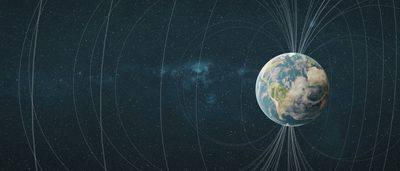
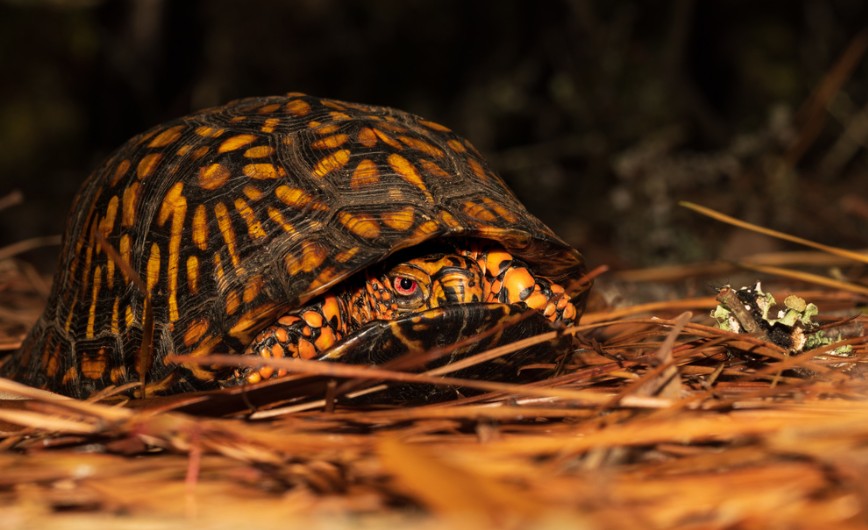
Animals from birds and beetles to turtles and moths make staggering migrations using the Earth’s magnetic field for guidance. Yet sometimes, the Earth’s magnetic poles reverse. This has happened many times during the time when migratory animals have existed, raising the question of how the animals survived.
Due to random mutations, there will always likely be a minuscule fraction of migrants that have a screwed-up compass that is actually better suited to a flipped field rather than the current field.
Professor Eric Warrant
There’s been a lot of research in recent years on these magnetic pole flips, with their history mapped in increasing detail. Geologists are still unsure why these flips happen, let alone why they have been more frequent at some times, and rarer at others, such as the pausing during the Cretaceous.
Contrary to some scaremongering, there’s no reason to think a flip is coming soon – the recent wandering of the poles, and the weakness over the South Atlantic both seem to be normal phenomena.
Nevertheless, it’s natural to wonder what would happen if a flip occurred, both to our technological society, and animals that rely on the magnetic field.
After all, if homing pigeons can be thrown off course by solar activity causing geomagnetic storms, what would they do if the field vanished entirely or pointed the wrong way?
Little moth, mighty migration
We've discussed the question of how satellites would be affected by such a change previously, so IFLScience asked Professor Eric Warrant of the University of Lind about the animal side of the matter.
Warrant has studied one of the most remarkable migrations performed by Australia’s bogong moth, which fly 965 kilometers (600 miles) in vast numbers to locations none of them have ever been before.
That means there is no guidance by elders or use of familiar landmarks, yet the tiny-brained moths still find their way to a few high-altitude caves cool enough to protect them through the summer.
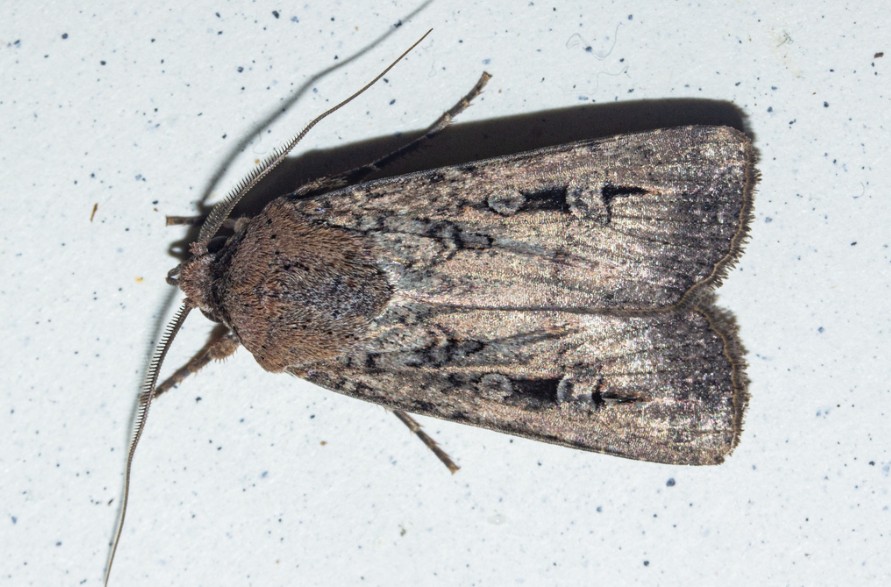
Warrant has shown that the moths do this partly by using the Earth’s magnetic field; if the field weakened sufficiently, or changed direction, they would probably be in trouble.
Yet we know the last complete flip occurred 780,000 years ago, and while the moths’ age is uncertain (they don’t fossilize very well), there were definitely some migrating species around at the time.
Warrant told IFLScience the question of how animals would respond is a “golden oldie”, at least among scientists in his speciality.
“It is impossible to study as these events occur once every 200,000 to 300,000 years or so and can’t be predicted,” Warrant said. “Once the next one occurs, scientists tracking migratory animals would then be in a position to actually determine the effect of the field flip, but until then we can only speculate.”
Regardless, that speculation is based on some established knowledge. “There are three things that bode well for magnetically sensitive migrants in the event of a field flip,” Warrant said.
How can migratory species survive a magnetic flip?
Although a flip would be disastrous for many individual animals, Warrant said natural selection could save the species.
“Due to random mutations, there will always likely be a minuscule fraction of migrants that have a screwed-up compass that is actually better suited to a flipped field rather than the current field,” says Warrant.
“These individuals would possibly lose their way in today’s field and probably perish, but in a flipped field these individuals would be the only ones to get it right, with all others getting lost. These few individuals would rapidly multiply to fill the niche left by the others (especially insects with their short generation times).”
Warrant’s own work sheds light on his second answer.
“Navigation is multimodal,” he explains. “Few migrants rely on magnetic cues alone. Visual cues (e.g. the sun and the stars) and olfactory cues also play an equally important role. If one cue drops out (e.g. due to clouds or a magnetic storm), or becomes unreliable (e.g. a field flip), then other cues can take over without appreciable loss of navigational ability.”
By having moths fly in a planetarium where the Earth’s magnetic field was temporarily cancelled out, Warrant proved that the bogong moths use the brightest part of the Milky Way as a navigation device. How they know where to orientate themselves relative to it is anyone’s guess, but on cloudless nights the magnetic field is not the insects’ only guide.
Warrant’s third answer may get more pushback, however.
“It takes thousands of years (maybe as long as 80,000 years) for the field to flip completely, which means it occurs very gradually, possibly gradually enough for generations of animals to adapt in real time and recalibrate their magnetic compasses genetically.”
The geologic record doesn’t provide the sort of fine resolution we would like, but there are signs flips can occur much quicker than this. Nevertheless, it’s likely these flips are slower in reality than in the popular imagination – a process that takes thousands of years doesn’t make for good disaster movies or scary headlines.
Even if the change takes centuries rather than millennia, that's still enough time for natural selection and alternative navigation techniques to work. If the magnetic field weakens, individuals who place more reliance on other means will flourish, and their offspring will probably follow the same path.
Contradictory cues
Although a definitive answer to what will happen might need to wait for the next flip (and that humans will still be around and conducting research then), it doesn’t mean there is nothing we can do in the meantime.
Warrant has plans to build on his past research. Rather than simply seeing what the moths do when forced to rely on magnetic fields or starry skies alone, he wants to see what happens when these contradict each other.
Powerful magnets could create a local magnetic field opposite to the Earth’s one within the planetarium, leaving the moths to decide which sense they trust most.
In an era when even research with immediate life-saving potential is getting squeezed, let alone curiosity-driven research, we dared not ask if Warrant had received a grant. Maybe he needs to take a leaf out of the researchers studying marmot behavior and open a fundraiser called OnlyMoths.
But in the wider context, Bogong moths are, relatively speaking, small and therefore easy to work with when compared to other animals that make long-distance migrations.
Warrant said he wasn’t aware of anyone else who's tried seeing what other animals do when confronted with reversals of field direction. “It is very difficult to get animals to orient in natural magnetic fields (i.e. at normal strength, not at several times that strength as is often done), and so these experiments would anyway be rare.”
Maybe we need to ensure humanity sticks around until the next flip after all.



 1
1