Nature
 PUBLISHED


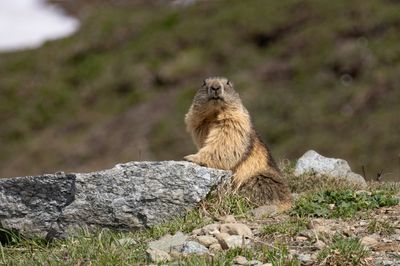


As US government funding cuts to science bite, researchers are getting creative, and for one of the great success stories of American zoology, that comes in the form of an OnlyFans account revealing the daily lives of marmots.
Scientists turning to more unconventional means to fund or highlight their research might become a recurring theme in light of the Trump administration's attitude to science funding, and science in general.
In this case, one ecologist from the Royal Mountain Biological Laboratory (RMBL)’s Marmot Project turned to OnlyFans – a subscription-based social platform usually reserved for adult content – to create an account featuring videos of their adorable subjects. The G-rated OnlyMarms promises "unfiltered yellow-belied marmot content".
Reaching a new audience
The 64-year-old RMBL Marmot Project is the second longest-running study of animals in the wild, behind only the one Jane Goodall established to track Gombe’s chimpanzees in 1960. In that time, it has helped change the way zoologists see social animals, not just marmots. Yellow-bellied marmots were chosen because they can form strong social networks, but also live successfully alone.
When the Vienna Tourist Board established an OnlyFans account, it was an act of protest against social media’s censorship of nudity, even in the form of images of classical Greek statues and Renaissance paintings. OnlyMarms, however, is no raunchier than a David Attenborough documentary, although technically the marmots have only their fur to protect their modesty.
The barrier we now know isn’t about tip versus subscription, it’s about signing up for OnlyFans. Many folks won’t do it.
Prof Dan Blumstein
Subscribing to OnlyMarms is free, but marmot fans are invited to post tips under marmot videos that take their fancy. So far the account, which started in early June, has not exactly proved a funding bonanza; the total would barely cover a junior researcher for a month.
That’s rising, after a recent New York Times article. However, Professor Dan Blumstein of the Department of Ecology and Evolutionary Biology at the University of California, Los Angeles, told IFLScience money is not the only goal.
“We really work hard to connect and translate our work to the public and we figured this could be a new way of doing this to a new audience,” Blumstein said. “The barrier we now know isn’t about tip versus subscription, it’s about signing up for OnlyFans. Many folks won’t do it.”
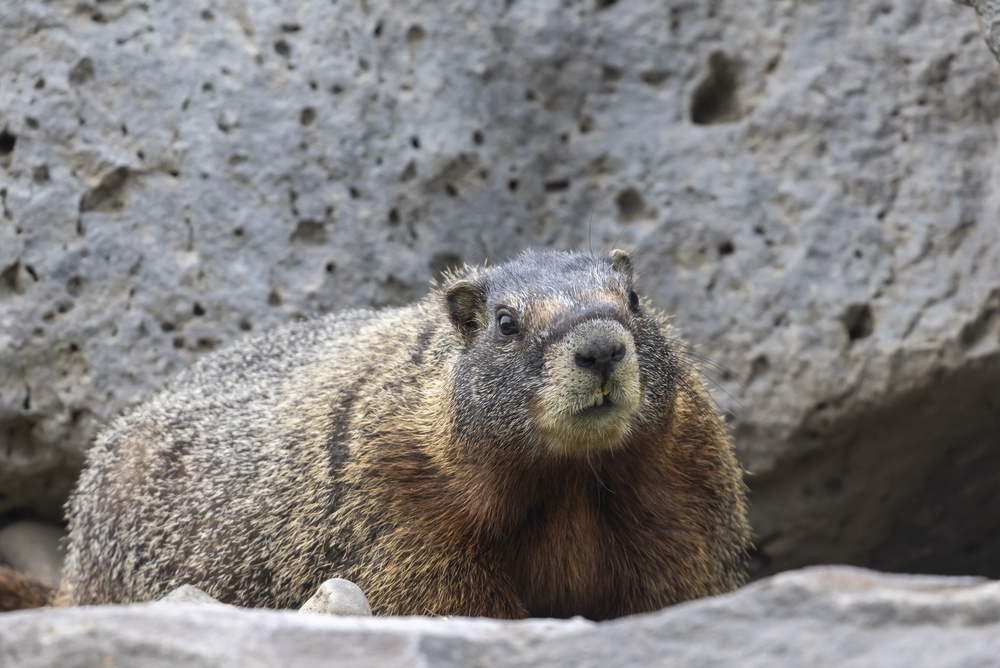
Perhaps “I only have OnlyFans for the marmots” will become the 21st century’s version of “I read Playboy for the articles.” Then again, explaining to a partner that you’re on the site to watch rodents play might not help matters.
Blumstein told the New York Times the team also faced challenges with establishing identification for the account from their own end, given OnlyFans' efforts to ensure their site is only used by consenting adults. “I don’t look like the marmot,” Blumstein told the NYT, in case anyone was confused. “All the marmots are minors, but we have to do this for science education.”
The real issue is funding cuts
Nevertheless, Blumstein told IFLScience, subscribers “Have been remarkably generous, and since we’ll continue to post videos, we hope that there will be some funds coming in over the longer run. Ultimately, and while every dollar we earn from OnlyMarms will help support us, I don’t think we’re going to get the kind of funding that can replace government funding.”
Government funding of research has made America great, rich, and the world’s leader in science and education. It’s a shame to see it being destroyed.
Prof Dan Blumstein
Despite this, Blumstein says this particular form of science communication has been more successful than anticipated.
“We never thought we’d get much money or much publicity, but we are using it to address the real issue: that government funding is being eliminated for important things like long-term ecological research, environmental research, and research in general,” he told IFLScience.
“Government funding of research has made America great, rich, and the world’s leader in science and education. It’s a shame to see it being destroyed.”
In that climate, every dollar (minus OnlyFans’ fee) is a bonus, but Blumstein said no one has analyzed what sort of marmot content is most likely to bring in tips in an effort to maximise yield. That seems an oversight with so many qualified researchers involved. Not only could it help the team improve their posting strategy, but there might even be a research paper in it.
Marmots, never not interesting
Then again, the marmot project is hardly in need of extra publications. Their website lists 53 in the last five years. Asked to choose some highlights, Blumstein drew attention to his graduate student Xochitl Ortiz-Ross’s creation of the early life adversity index for marmots, a counterpart to one used by social scientists to measure the consequences of human childhood disadvantage.
“While most ecologists focus on one or a few challenges animals may face, we tried to come up with many of them and combined them to create a numerical score which explains a lot about longevity, reproductive success, and other important things that animals must do,” Blumstein said.
Blumstein also noted the significance of former graduate student Conner Philson and project co-director Julien Martin showing that “Group social structure is as important or even more important than one’s social position in a group for fitness.”
Like a lot of what the project has revealed, that work has implications far beyond marmots. For more than a century after Darwin, biologists mostly saw survival of the fittest through the lens of the individual, and more recently the gene. Blumstein described Philson and Martin’s work as: “The best demonstration of something we call multi-level selection in the wild.”
Sadly, the message that someone carrying genetic disadvantages in a cooperative social group may have better life prospects than a healthy individual in a dysfunctional community might not be one those defunding projects like this want to hear.
Blumstein also stressed how some of the best research from the project was unplanned. “My entire research program on the sound of fear started when I had a baby marmot scream in my hands when I was gently holding it,” he told IFLScience.
Blumstein attributes the project’s longevity to the fact that its founder, Ken Armitage, “Had 41 years of continuous National Science Foundation support.”
Blumstein added that “Many studies fail to continue because it’s difficult to find someone to pass them on to,” but Armitage “was extremely generous to pass it on to me.” However, funding has been much harder to come by in the subsequent decades, despite recognition from the Long Term Research in Environmental Biology program.
Introducing "Fat Marmot Week"
Besides OnlyMarms, the RMBL is looking for other ways to promote research on their favorite animals.
Taking a leaf out of the wildly popular Fat Bear Week, an annual tournament where the public can vote on the fattest bears in Katmai National Park in preparation for winter, this year they will be running the first Fat Marmot Week starting August 24.
“We hope to educate, amuse, and to drive folks towards helping to support us,” Blumstein told IFLScience. “We’ve finally figured out a way that people can donate directly to UCLA (it’s tax-deductible) and have the money go directly to the marmot project.”
If you love marmots (fat or thin) but don’t want OnlyFans payments appearing on your credit card bills, you now know what to do.