Culture and Society
 PUBLISHED


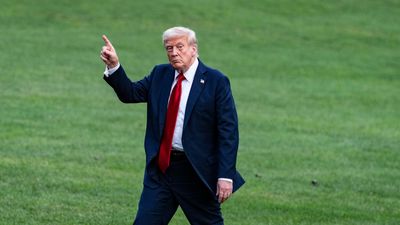


Last week, the Trump White House published a report called "Science: A New Golden Age". Based on the response from scientists and policy experts, if they want it to be golden, they ought to find an alchemist, because the report is going down like a lead balloon.
The report is authored by Trump’s science adviser, Michael Kratsios. Kratsios is not himself a scientist and had not worked in science or science policy before the first Trump administration. He worked for billionaire Peter Thiel, and during the Biden presidency, he worked for artificial intelligence company Scale AI.
The report puts forward a four-point plan. Instead of funding research institutions, the US should fund scientists directly. The federal government should change how grants are given and set clear scientific goals, as well as investing in related industries.
Unsurprisingly, the fourth point is about making research AI-focused, with several bold claims that AI has not delivered yet and some that many experts doubt it would be able to deliver any time soon.
The report, together with the Office of Management’s latest rules for research grants, shows an administration that wants to put the questions that researchers can ask under direct political control.
Rather than freeing science, this shackles scientific research to political whims.
A dramatic shift in funding priorities
The Trump White House announced recently more than $5 billion in investments in AI, while the administration proposed cuts across the board for scientific institutions, including NASA.
The Verge called the proposals the “tech-broification of American science," arguing that the first step of this “Golden Age” begins with dismantling science across the country.
The proposed budget cuts are dramatic. If the cuts are approved by Congress, NASA would lose 23 percent of its overall budget and 47 percent of its science budget, a total loss of $5.6 billion. The National Science Foundation would lose $4.8 billion.
The National Oceanic and Atmospheric Agency – which forecasts extreme weather events, among other things – is set to lose $1.6 billion and the Environmental Protection Agency is set to lose $4.6 billion
Shocking emails from health secretary Robert F. Kennedy, Jr. show his war against the Centers for Disease Control and Prevention (CDC). In the budget, the CDC would lose $2.9 billion, and the National Institutes of Health will be cut by $5.8 billion. All of this is happening at a time when widespread diarrhea is sweeping the country.
Derek Lowe’s commentary in the journal Science does not mince words about the current situation.
“The Trump administration hates academic science funding, full stop. They hate where that money goes, and they hate who it goes to. They want to keep all that money for themselves, to hand out to favored cronies who can help them get elected and to steer yet more money and more power back into their hands.”
“They are naturally not putting it in those words, but instead talking about “gold standard science” and the “reproducibility crisis” and funding “bold inquiry” for “transformational breakthroughs”. This is all bullshit, and it’s important to realize that.”
Congress responds to the plan
Kratsios presented the report last week at a congressional science panel together with a memorandum on what research Trump will favor in next year’s budget request to Congress.
The presentation of the budget earlier this year did not go well, with a bipartisan push against the NASA cuts in particular. Talking to IFLScience back in April, Jack Kiraly, director of government relations for The Planetary Society, stressed how unpopular the cuts are.
“Obviously, we are not big fans of this budget proposal, nor is basically anybody in Congress or even elsewhere in the administration. This is a very unpopular proposal,” Kiraly told IFLScience. “I think the American public has made clear how unpopular these cuts are.”
Republicans appeared to be mollified by the Kratsios presentation, with the committee’s chair, Representative Brian Babin (R–TX), saying, “After years in which Washington too often measured success by dollars obligated rather than by results achieved, this administration has begun to refocus the federal research enterprise on excellence, accountability, and outcomes.”
The Democratic response was diametrically opposite. “The topic of this hearing is Unleashing the Golden Age of Science,” Representative Zoe Lofgren (CA) said. “That title is stunningly ironic, as this administration is systematically destroying U.S. science, while our allies and adversaries alike look on astonished.”
To many, the NASA cuts remain completely baffling. The popularity of NASA, the successes of the agency, and even the bold goals of having a base on the Moon in the coming decade make the cuts short-sighted and on the verge of the absurd.
“NASA is one of the best brands the US has. Artemis II showed just the immense pride people have in having a world-class space program and really showed what we're capable of as a nation,” Kiraly told IFLScience.
“And to have that happening while they're proposing these massive cuts was just such a shift in tone for the administration. It clearly showed that the people that wrote the budget, the Office of Management and Budget, are so out of touch with reality: people love NASA.”
A worsening climate for science in the US
There are many factors at play, from the lack of funding to academic censorship in the current research landscape.
An underappreciated factor is the reduced number of PhD students. Graduate researchers are fundamental not only to doing the research itself but also to having generational turnover. If a country has ambitions to remain a scientific powerhouse, it ought to train and invest in its future experts.
Last year, there was a drop in admission to PhD programs by 13 percent for domestic students and 17 percent for foreign students, according to the Association of American Universities.
From the get go, the Trump administration made false assertions on the impact of climate change, incorrectly defined sex determination as binary, and pushed vaccine misinformation, as well as promoting the “lab leak hypothesis” of COVID-19 without definitive supporting evidence.
A particular case was the "Make America Healthy Again" report, which experts believe to have been written with artificial intelligence. The expert cited the many mistaken scientific references as well as completely invented studies. Large language models are known to hallucinate non-existent work.
Republican Senator Ted Cruz released a list of “woke” research grants. The term "woke" originates from African-American Vernacular English to mean being aware of social and political issues affecting Black Americans.
Now stripped of its original meaning, it's used by right-wing commentators as shorthand for “things I don’t like.”
The examples of “woke” science targeted by politicians were varied and patently absurd.
There was a study on the spread of the mint plant (due to the use of the term "diversify"), work to create biosensors to better treat infectious disease (the woke keyword appearing to be "POC" but not meaning "person of color", rather "point of care").
Incredibly, one of the targeted research works was a device that could stop severe bleeding (woke keywords appearing to be "victims" and "trauma").
Clearly, not wanting to bleed to death is woke.