Health and Medicine
 PUBLISHED






Thousands of people across the US have been struck down in recent weeks by Cyclospora, a microscopic parasite with an outsized impact on the human digestive system. It’s coming from somewhere – probably several different “somewheres” – in the food supply, but figuring out precisely where is an unenviable task.
Cyclosporiasis, the disease caused by Cyclospora infection, has one main symptom that’s hitting headlines across the nation: severe diarrhea that can persist for several days or even weeks at a time.
Stanford Professor David Relman recently described it vividly as “watery diarrhea like all get-out.”
Literally nobody wants that, which has left people scrambling to try to avoid the most likely food-based sources of infection.
The trouble is, without clear guidance to go on from health officials, many have been left to play a sort of Russian roulette where the prize for making the wrong food choice could be days of uncomfortable symptoms.
So, why has it been so hard to pin down the source of these outbreaks?
How food gets contaminated, and stays that way
Cyclospora is a parasite that spreads via the fecal-oral route – yep, that means what you think it does: the microbe makes it into your mouth after having already passed through someone's digestive system and come out the other end. So, we have an obvious first question: why is there poop on our food?
This isn't a simple one to answer, and as author and infectious disease physician Judy Stone recently explored for Forbes, you need to look at every stage of the food production process to figure it out.
One key issue is contaminated water used for irrigation, since chlorination and other disinfection methods don’t work on Cyclospora. Another is poor housing and working conditions afforded to migrant farm workers, with sanitation issues leaving them vulnerable, through no fault of their own, to infectious disease.
The specific kind of Cyclospora parasite that causes disease in humans, C. cayatensis, isn't endemic to the US. It’s generally found in tropical and subtropical regions, so most outbreaks in the US have been linked with imported produce.
When Cyclospora is ejected in feces, it is at a life stage where it isn't yet infectious. This is why there’s a very limited risk of person-to-person transmission. Called oocysts, the infant Cyclospora need to undergo a process called sporulation to become infectious to another host, which can take up to two weeks.
Some types of fruits and vegetables are more likely to harbor parasites for long enough for this to occur. They’re also harder to clean thoroughly – we’re talking things like raspberries, which have lots of nooks and crannies for parasites to cling to.

Since washing the parasite off the food is tough, much of the advice around the recent outbreaks has been to thoroughly cook all food wherever possible.
“If you don’t have a strong need to immediately consume suspicious produce in a raw form and have the option of cooking it, why not?” said Relman.
Other foods that have previously been linked to Cyclospora outbreaks in the US include:
- Snow peas (mangetout)
- Cilantro (coriander)
- Basil
- Green onions (scallions)
- Bagged salads
The Centers for Disease Control and Prevention (CDC) recently confirmed some Cyclospora infections have been linked to shredded iceberg lettuce served at Taco Bell locations in five US states: Indiana, Kentucky, Michigan, Ohio, and West Virginia.
The agency says that more than 1,644 people who’ve come down with the infection reported eating at Taco Bell, and a lettuce supplier based in Mexico has been traced as the probable source.
But this is only the tip of the iceberg (sue me). Other unrelated outbreaks across the country are also being investigated.
Remember everything you ate last week? Me neither
In Michigan alone, the state government had recorded a total of 4,312 cases as of July 16, as well as 102 hospitalizations.
According to Food Safety Magazine, more than 5,000 suspected cases were awaiting analysis by the CDC as of July 15.
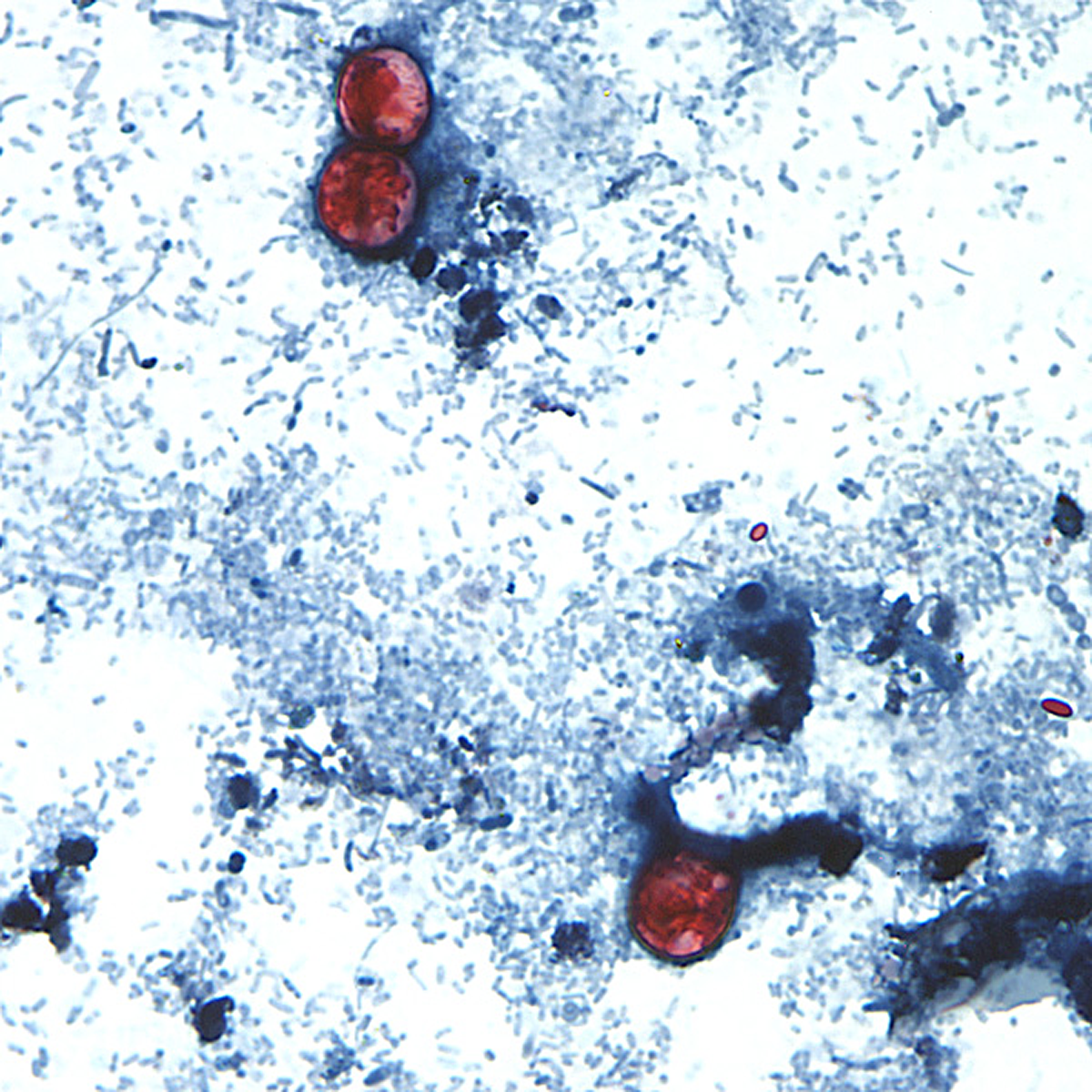
Part of the reason is that cyclosporiasis is not trivial to diagnose. Confirmation of Cyclospora infection typically requires microscopic analysis of a stool sample.
Some people with minor cases may chalk their symptoms up to a stomach virus like norovirus or some other form of food poisoning.
Unlike some other bugs, it typically takes a week for symptoms to appear after eating Cyclospora-contaminated food, and people may simply forget where and what they’ve eaten in that time.
“The incubation period is actually highly variable,” Relman pointed out. “The common understanding is that the incubation period can vary from two days to two weeks.”
Not knowing exactly how many cases they’re dealing with and where they are is just one more headache for public health investigators trying to identify the source of the disease.
Are cuts at the CDC really playing a part?
In 2025, the CDC made cuts to its FoodNet program, which was one system for carrying out surveillance of foodborne pathogens. Citing funding limitations, the program was slashed so that only two pathogens would be covered going forward – previously, it was eight.
Cyclospora was one of the victims of these cuts. Experts at the time raised concerns that a lack of surveillance of these pathogens could pave the way for a rollback of food safety legislation.
“If you want to make foodborne disease go away, then don’t look for foodborne disease. And then you can cheerfully eliminate all of your foodborne disease regulations. My concern is that that is the path down which we appear to be heading,” J. Glenn Morris at the University of Florida, who helped create FoodNet in the 90s, told NBC News.
However, FoodNet only covers about 16 percent of the US population – not including Michigan, where most Cyclospora cases have been this year – and wasn't really intended as a way of identifying outbreaks such as this, as University of Minnesota professor Craig Hedberg explained to CIDRAP.
It's not clear, therefore, how much of an impact these cuts have had on this particular outbreak.
Others have criticized the slow reporting from the CDC on this current situation, with their official case counts lagging far behind states’ own. The lag isn't necessarily unexpected, Hedberg explained, but it does make life harder at the federal level.
“Maybe there’s one person [at the CDC] who’s manning 50 boats instead of the one boat they had before,” Rennai Edwards at the Migrant Clinicians Network told Forbes.
“We’re just going to see more and more of these things, and bigger than they have ever been in the past, and delays that could have stopped things sooner.”
Today it's cyclosporiasis, but tomorrow?
For most people, cyclosporiasis is a short-lived, albeit unpleasant, illness that they will recover from. But some will have serious and even life-threatening cases – and if surveillance systems aren’t functioning well, the fear is that other, even more serious outbreaks, may follow in the future.
“[Surveillance] is the promise a country makes to its citizens that it will notice when they begin to get sick. We are withdrawing that promise quietly, one pathogen at a time, and we are practicing on a parasite that rarely kills,” Robert Shpiner, a professor of medicine at UCLA, wrote for the Guardian.
“The organism that tests this system next may be less forgiving.”


 2
2