Health and Medicine
 PUBLISHED





Artificial intelligence has become an inescapable part of our lives in a way that would have seemed unimaginable even just a few short years ago. But in the realms of medical and scientific research, people have been experimenting with AI approaches for way longer than that.
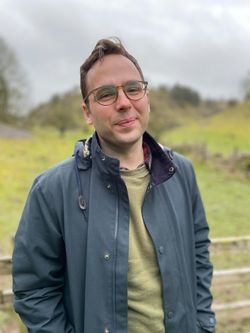
Cancer research is no exception. IFLScience recently spoke with Professor Florian Markowetz, Professor of Computational Oncology at the University of Cambridge and Senior Group Leader at the Cancer Research UK Cambridge Institute.
As someone whose work sits right on the frontier between technology and medicine, he’s perfectly positioned to tell us about how AI is already impacting the detection, diagnosis, and treatment of cancer – and we kicked off our conversation with perhaps the biggest question of them all.
Could AI find a cure for cancer?
FM: There's a lot to unpack in this question. The first part is, will there ever be a cure for cancer? And I think the answer very likely is already no at that stage. And that is not because we're not making progress in treating cancer, in managing cancer, but cancer is such a complex disease, which appears in all parts of the body with many different fundamental mechanisms leading to it.
The idea that we can just completely get rid of it is, I think, very, very unlikely.
We will find better drugs. We will make sure people can live longer, [that] they have healthier lives. We can spot cancers earlier. We will make progress in all kinds of ways, but I don't think it will ever go away.
AI in cancer care sounds futuristic, but it’s actually happening now, right?
FM: Computational analysis methods to understand patterns in images in cancer genomes have a really long tradition in cancer research. They have been used for decades. So, what you currently hear about AI in medicine is just a continuation of a process that has been ongoing for decades.
There are different types of computational methods that fall into this area. What these methods do, what they're very good at is prediction. So, they take in data and they predict a particular outcome.
One of the most basic ones that [has been] used for a long time is called segmentation of images. If you have a radiology image taken, you get like this gray cloud thingy that you need to be a trained radiologist to interpret. What the AI does is it predicts, for example, in there, where is the tumor? It looks at all these gray patterns – it has seen many of those – and suddenly an outline appears and [it] says, this is where I think the tumor is.
Radiology, because it's digital data, has been at the forefront of this for a long time, and these methods are very well established.
Another task might be somebody says, okay, if we see a tumor like this in our radiology images and we follow it over time, can we predict what the risk is that the cancer comes back after we finish chemotherapy? That's another prediction task.
And there [have been] tools for this out there for a very long time, and AI is mostly just a more powerful way to address the same questions.
Can you share any examples from your research that illustrate the power of integrating these approaches?
FM: One [case study] is about the early detection of what might become an esophageal cancer, a cancer in your food pipe, and that started with one of my colleagues here in Cambridge called Rebecca Fitzgerald, who's a professor at the Early Cancer Institute right next door to my institute.
The question she worked on is, when people have reflux, there's this problem that there is acid from the stomach coming up into your food pipe and changing the tissue at the bottom of your food pipe. That can lead to a tissue change, which later on is called Barrett's esophagus, which later on can turn into a full-blown cancer.
People with this change of tissue are at a very high risk of developing cancer – how do we see if at the bottom of your food pipe, just before it goes into the stomach, if the tissue has changed?
The standard way is something called endoscopy, [in which] they push a cable with a camera down your throat. You don’t want this, nobody likes this. So what my colleague thought is, maybe there is an easier way.
She developed something called a capsule sponge, which is a pill on a string. You swallow the pill, it goes into your stomach – don’t let go of the string – [and] in your stomach, the pill dissolves into a little sponge. And then somebody pulls out the sponge through your food pipe – this sounds crazy, but it just takes two seconds.
What the sponge has done on the way is it has collected lots of cells. […] The problem was that you needed very specialized pathologists to analyze the cells.
And so we came in using these new convolutional neural networks, these new AI tools, to analyze the images of the cells that the sponge had detected.
This is a technology that really has patient impact. […] It’s a very simple technology, but it has one bottleneck, and that was solved by AI.
Nobody can predict the future – not even the ancient Mesopotamians, despite some very interesting methods! – so we can’t say for sure what breakthroughs in computational oncology are coming down the tracks.
Cancer is a disease that’s likely to touch most of us at some point. A recent study warned that premature aging could be increasing cancer risk in young people, amid news of a startling rise in colorectal cancer cases in under-50s.
But at the same time, innovation is having a measurable impact. Five-year cancer survival rates reached a record high of 70 percent in the US, in statistics released earlier this year.
From the HPV vaccine slashing the risk of cervical cancer, to new advances in drug treatments extending survival or even curing previously incurable disease, there’s reason for optimism. AI is only part of that, but it has the potential to be a vital part.
This interview has been edited for length and clarity. You can listen to the full podcast above and on our podcast page.