Health and Medicine
 PUBLISHED
 5
5


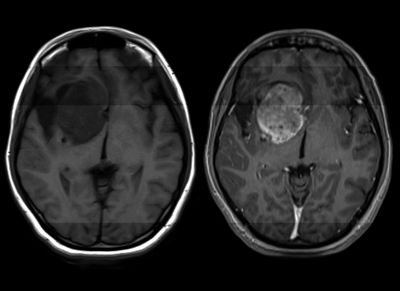


A new breakthrough in the pathology of glioblastoma – the most common type of brain cancer, currently incurable – has been found, opening up the potential for a future treatment that could be as simple as taking a pill.
Each year, more than 14,000 people in the US alone will be diagnosed with glioblastoma, an aggressive, unpredictable, and unpreventable brain cancer. Each one of those new patients will live an average of 12 to 18 more months – without any treatment, it can be much less – and only one in 20 will still be alive after five years.
“Glioblastoma is a devastating disease. Essentially no effective therapy exists,” said Hui Li, a researcher in the University of Virginia School of Medicine’s Department of Pathology, in a statement this week. But back in 2020, Hui and his colleagues made a first step towards finding one: they discovered the so-called “oncogene” that triggers the development of glioblastoma.
“The novel oncogene we discovered promises to be an Achilles’ heel of glioblastoma,” he said at the time, “with its specific targeting potentially an effective approach for the treatment of the disease.”
Now, his team have announced the next stage in the development of a treatment or cure for glioblastoma: the identification of a specific molecule which can block the activity of this oncogene, and which, in mouse studies, was able to destroy glioblastoma cells without affecting healthy tissue.
“What’s novel here is that we’re targeting a protein that [glioblastoma] cells uniquely depend on, and we can do it with a small molecule that has clear in vivo activity,” Li explained. “To our knowledge, this pathway hasn’t been therapeutically exploited before.”
It’s far from a finished product right now – before this new compound makes it into drugs available to patients, it must first go through a barrage of clinical trials and testing; even before that, it needs to be studied more theoretically to figure out how it can best be exploited.
But in principle at least, this seems to be a near-miraculous finding. The molecule is able to break through the blood-brain barrier – a big obstacle for many other potential treatments for brain cancers – and apparently destroys only harmful cells once there. It could even be taken as a simple pill, the researchers say.
“[Glioblastoma] patients desperately need better options,” Li said. “Standard therapy hasn’t fundamentally changed in decades, and survival remains dismal.”
“Our goal is to bring an entirely new mechanism of action into the clinic,” he added – “one that targets a core vulnerability in glioblastoma biology.”
The study is published in Science Translational Medicine.