


 Health and Medicine
 PUBLISHED



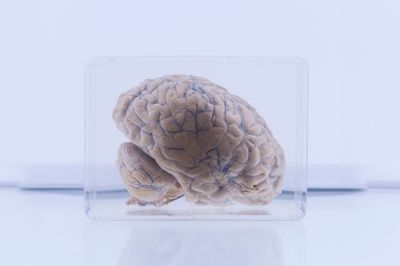


You’re probably not intimately acquainted with the physical state of your own brain, it being inside your skull and all. So, as IFLScience's resident neuro-enthusiast, allow me to make the introductions.
The brain inside your head right now is nothing like the brains you’ll find in an anatomy lab. Those have been chemically treated so they hold their shape and can be neatly sliced up for examination. A living brain is a much wetter affair.
Neurosurgeon Katrina Firlik described it well in her 2006 memoir Another Day In The Frontal Lobe: “Some of my colleagues compare it to toothpaste, but that’s not quite right. It doesn’t spread like toothpaste. It doesn’t adhere to your fingers the way toothpaste does. Tofu – the soft variety, if you know tofu – may be a more accurate comparison.”
Given all this squishiness, it’s reasonable to assume that a brain won't do so well outside of the protective cocoon of your body. And yet, archaeologists and palaeontologists encounter incredibly well-preserved brain tissue with astonishing frequency.
Take, for instance, the recently reported fossil of a 300-million-year-old fish that included not only brain tissue but the braincase it neatly slotted into. Or the perfectly preserved nervous system of Cardiodictyon, a prehistoric creepy crawly that’s helping rewrite the textbook on brain evolution.
In 2024, groundbreaking work revealed the preservation of ancient human brains, some dating back 12,000 years, which upended expectations of what can happen to a brain after death.
“Conventionally, we think of the brain as invariably quick to liquefy – but this newly compiled record of more than 4,000 human brains clearly begs to differ, and rather demonstrates that, in certain circumstances, it’s the last man standing,” Alexandra Seviour (formerly Morton-Hayward), who authored that study, told IFLScience at the time.
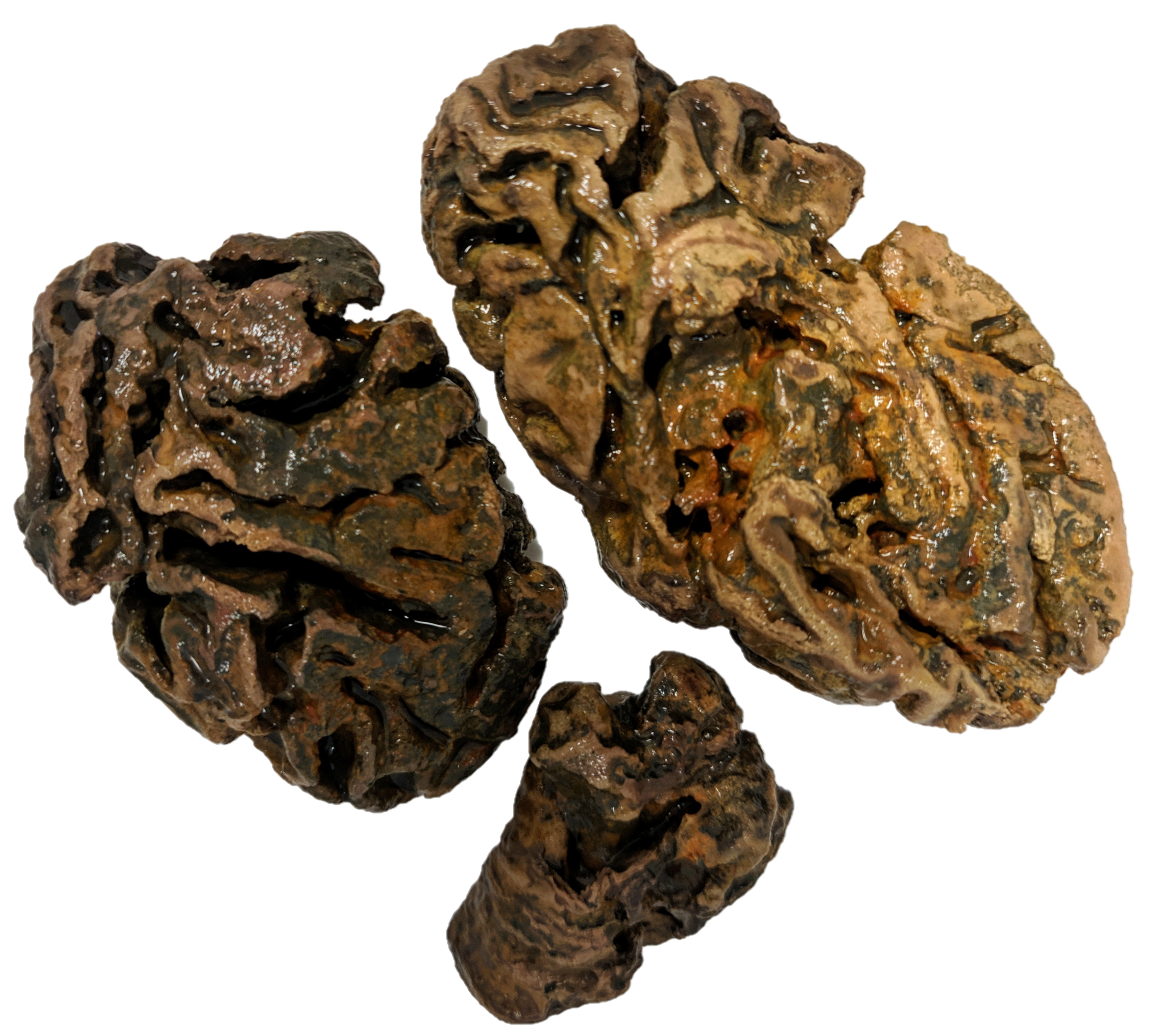
Seviour and co. are now back with a new paper that opens by explaining there are “>1,300 cases of waterlogged, oxygen-poor graves in which the brain is the only preserved soft tissue amongst otherwise skeletonized remains” in the archaeological record.
By all logic, the brain should have decomposed along with the other soft tissue. So that begs the question: how are these brains persisting?
To find out, the team of investigators from the UK and Denmark embarked on an experiment that was, we have to say, a bit on the morbid side.
Seventy-two male mice that had lived and died under identical conditions were donated to the cause by other scientific researchers. The frozen carcasses were thawed, interred in glass jars full of sand, and buried in four different environments.
The team varied the levels of water and oxygen in each environment to see what impact these conditions had on decomposition.
Three mice per condition were exhumed and their brains removed at each of six time points: 24 hours, 72 hours, one week, six weeks, three months, and six months.
While archaeologists are dealing with remains that have stuck around for centuries or even millennia, the authors reasoned that the factors that allow the brains to survive this long must be evident immediately after death.
The mouse brains underwent proteomic analysis, which aims to catalog the proteins present in a particular organ, tissue, or a whole body. From their millions of results, the authors narrowed things down to discover that the absence of oxygen seems to be the key deciding factor.
“Oxygen availability exerted the main control on molecular fate: oxic burials produced widespread protein loss, whereas wet, hypoxic conditions favored retention of a distinctive subset of decay-resistant peptides,” they write.
Preserved by plaque
Under the right conditions (low oxygen, high moisture), the authors discovered that the same protein chemistry that normally drives decay in brain tissue instead results in preservation by stabilizing the protein molecules so they can persist for centuries.
Beyond archaeology, the team writes that this same protein chemistry is also seen in neurodegenerative disease and brain aging, where it stabilizes the structure of pathological proteins. Understanding this better could also help neuroscientists working in these fields.
With these findings, the 1,300 paradoxical brains from the waterlogged grave sites are a paradox no more. “By linking intrinsic tissue chemistry and environmental context, our results move brain preservation from anomaly to expectation”, the authors write.
Now if anyone studying samples of these fascinating ancient cerebra could just hold onto them, that’d be great – we don’t want another Einstein-brain-mayonnaise-theft situation on our hands.
The study is published in the Journal of Proteome Research.



 1
1