Health and Medicine
 PUBLISHED


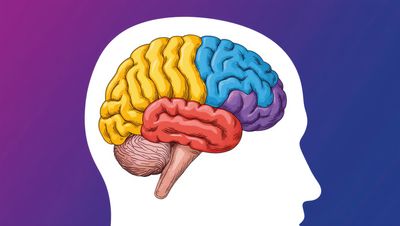


The human brain forms not from a single type of cell, but from two, transforming into separate organs so tightly connected we have not noticed it until now. The process apparently reflects distinct evolutionary origins for the brain regions that control our basic functions, and those responsible for advanced thought.
The finding could open new paths to treating some debilitating brain conditions such as motor neuron disease.
It is often said that the human brain is the most complex object in the known universe, so it hasn’t been entirely surprising that we’re a lot closer to making other organs artificially than we are to growing brains. Nevertheless, scientists’ failure to grow the cells of the relatively simple hindbrain has puzzled them.
Considering the brain to have a single origin cell that needs to be persuaded to diversify into all the different neuron categories might be part of where we’ve gone wrong.
“We’ve shown for the first time that the front of the brain arises from a totally different progenitor cell than the back of the brain,” said Dr Kyle Loh of Stanford in a statement.
“Our discovery means that we can now grow neurons from the back of the brain, the hindbrain, in a petri dish and study their functions.”
The fact that the brain has left and right halves with different functions is well known (albeit widely misrepresented).
Neuroscientists have also long seen the way functions vary from front to back, with the hindbrain known to have deep evolutionary roots, resembling that of animals we diverged from hundreds of millions of years ago. Meanwhile, the forebrain is responsible for things like abstract reasoning we like to think distinguish us from other animals.
We might be most proud of our forebrain’s capacity for philosophy, art, and social interaction, but when the hindbrain’s control over our ability to move, swallow, and even breathe goes wrong, the consequences are devastating. The world watched this happen to Stephen Hawking, but it’s usually a great deal faster. Children with spinal muscular atrophy type 1 never reach that stage, usually dying before their second birthday.
To understand the causes, and learn how to prevent them, neuroscientists have sought to make hindbrain neurons and failed. According to Koh and colleagues, that’s because they were trying to make them out of the neurons that become the fore- and midbrain.
A hypothesis dating back to 1952 that all parts of the brain have a common origin may have been leading neuroscience astray.
No single origin cell
When graduate students Carolyn Dundes and Rayyan Jokhai tracked the development of brains in mouse embryos they found two cells are responsible, which they call the anterior and posterior neural ectoderm (aNE and pNE). These appear within the first two days after the embryo’s cells start to specialize.
The gene Gbx2 is expressed in pNE, but aNE expresses Otx2 instead, leading it to become the midbrain and forebrain – small as the latter is in rodents compared to humans. The two cell populations are mutually dependent, but never overlap.
Moreover, the chromatin, which packages the DNA within the cells, is configured very differently between the two. When the authors tried to persaude pNE cells to become forebrain neurons, they largely failed, and the same went in reverse.
“Previous attempts to make hindbrain neurons likely tried to coax forebrain and midbrain progenitors into hindbrain cells, which our study shows is not possible,” Jokhai said.
“In stem cell biology, people are always fixated with creating the end cell type, like the neuron,” Jokhai added. “But it’s important to begin at the earliest stages of embryonic development. Our careful attention to that early time point allowed us to find this fundamental split in brain development.”
The authors hoped that knowing this they could turn pluripotent stem cells, those that are present in the embryo and can diversify into any type of human cell, into hindbrain motor neurons. They’ve succeeded in part, making neurons that produce proteins responsible for the muscles we use to swallow and move our faces.
Nevertheless, they have yet to replicate the cells responsible for all parts of the hindbrain, and say the cerebellum may originate with a third type of cell.
A division with immensely ancient origins
If rodents have the same division between hindbrain and fore-/midbrain neurons as we do, this independent development must be quite ancient. When the team investigated the brain development of even more distant relatives, they found the same pattern, making the division older still.
Indeed, the team think this division may date back long before anything we would recognize as a fore- or even midbrain, since even jellyfish have two nervous systems built around different types of cells. If jellyfish had been used more extensively as a model organism in neuroscience, we might have spotted the difference earlier, since unlike us, their nervous systems don’t live next to each other, instead, being on opposite sides of their body.
“Our research suggests that evolution took two existing neural systems and pushed them together spatially,” Loh said. “Having the brain as one organ would probably be more efficient, but we rely on this primordial way to make the brain as two separate pieces.”
What evolutionary benefit our common ancestor with jellyfish gained from distinct types of brain cells can only be guessed at, but it’s easy to imagine that this specialization has proven very helpful to more advanced animals. At least, that is, until we tried to understand what was going wrong with pNE.
“I was surprised at our findings because the word ‘brain’ implies a contiguous organ that likely has a singular origin,” Jokhai said. “But even 500 million years ago, there were these separate neural systems, which now almost operate as one, which is very cool.”
Perhaps we should have expected something like this, however. The authors note that “the heart derives from two parallel progenitors, the first and second heart fields, which converge to form a single organ.” Deep inside, we’re all timelords with two hearts.
Moreover, it has previously been shown that cells of the forebrain and midbrain can swap roles, but that flexibility does not apply to the hindbrain.
The authors note that the hindbrain regulates hunger, making it the target for weight-control drugs, and sleep. Those may be the most profitable targets for future research, but being able to grow hindbrain neurons outside a functioning brain should speed the frustratingly slow pace at which we have advanced our understanding of hindbrain degenerative diseases.
“Now we have a model to better understand these devastating diseases, and work toward regenerative therapies for them,” Jokhai said. “This is a very exciting new frontier in brain research.”
The study is published in Nature Neuroscience.