Technology
 PUBLISHED




We’ve never been able to copy the human brain. Evolution resulted in something that’s too complex for us to recreate – not even in 2026, in a world where robots do surgery and drones go invisible (and AI kills crops, just for a bit of balance).
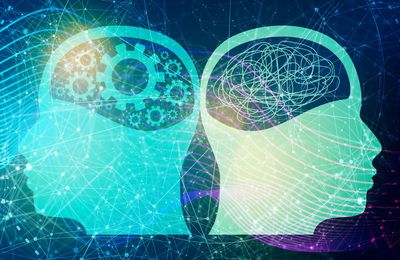
Scientists aspire to create a “digital twin” of the human brain. This would be a model that takes data from one person’s individual brain and that could exist alongside the original but outside of a body.
A digital twin could learn and respond to the world around it in much the same way as an organic brain does. It is, as the authors of a new review explain, “not a complete or exact duplicate of the biological brain at every scale [but] an individualized and updatable model.”
One possible application of this sounds a bit sci-fi, but as IFLScience recently learned from Dr Ariel Zeleznikow-Johnston, it might not always be so far-fetched. In an episode of our podcast We Have Questions, we asked: Could A Human Brain Be Uploaded After Death?
Aside from somewhat grandiose notions of keeping going – in computerized form – way beyond the natural end of your life, digital twins could be incredible tools for research.
Impressive strides have already been made in far simpler brains than ours. In 2024, scientists unveiled the complete fly connectome, a “Google maps” of all the neurons in a fruit fly brain and how they’re wired together.
This has already been used to start exploring digital models, though a lot of interpretation has to be done on the part of the researchers, since the connectome "map" doesn't necessarily tell us everything we need to know about how activity propagates through the brain. Still, there have been some exciting results so far.
“If you make an artificial, digital model of the fly connectome, if you stimulate its sugar-sensing neurons, the digital brain will try and stick out its proboscis,” Zeleznikow-Johnston told IFLScience.
But a human brain contains some 86 billion neurons. That would be one hefty wiring diagram.
More than a model
In their new review, a team of researchers from the UK and China seek to answer the question of how close we are to making human brain digital twins a reality.
“A digital twin brain is more than a large-scale simulation of the brain,” said lead author Dr Ruohan Zhang in a statement. “The key distinction is that it represents a specific individual and remains connected to the biological brain through data.”
“The reality of creating a digital twin brain changes the question from ‘How many brain cells can we simulate?’ to ‘How much of an individual living brain can we actually observe, constrain and update in order to create a true digital twin?’”
It’s not only the sheer number of neurons to consider – it’s the “resolution, completeness and updatability” of measurements of an individual brain, the authors explain.
Our computing isn’t quite up to the challenge yet, either in terms of the hardware or handling and integrating the amount of data that would be required, though they do suggest that “emerging hardware” could help change that.
A true digital twin must also be able to adapt and change, rather than simply capture the brain on which it was based at a moment in time. Right now, the models we can make can’t really achieve this.
“Efforts to model the brain range from whole-brain simulations informed by [connectome] maps to neuromorphic systems and data-driven surrogate models. Each captures part of brain function, yet none delivers an individualized model that is dynamically coupled to a specific living brain and updated as new measurements arrive.”
The models we do have also generalize across individuals or only capture population-level data – there’s not yet been a way to digitize an individual human mind.
“The limits that now govern progress are as much scientific as computational,” the authors write. They highlight three main bottlenecks:
- We can’t yet image the brain at the resolution we would need to
- We can’t yet handle all the data we’d need to
- We haven’t solved the question of updatability
If we do it, what then?
So, it’s going to be a tall order. But if we can get to a point where digital twins are a reality, what could we do with them?
In neuroscience, the team suggest, digital twins could allow researchers to perform experiments that would be ethically impossible to do on a living organic brain, potentially bringing new insights into brain diseases.
In healthcare, digital twins could allow for predictions of how an individual patient might respond to a particular treatment, making them a useful tool in personalized medicine.
And in AI, there’s the potential offered by brain-inspired computing. So-called neuromorphic systems aim to rethink the way computers process information and take their inspiration from the brain, and in so doing catapult the technology beyond the limits of conventional computing.
Neuromorphic computers promise faster, more powerful, and more efficient computing. They’ve been posited as a way out of the burgeoning crisis caused by the incredibly high energy demands of AI data centers.
“Governance, legal and ethical frameworks will matter as much as any technical advance in shaping how DTBs develop,” the team caution in their conclusion.
“If developed responsibly, digital twin brains could become a shared technological and scientific infrastructure spanning healthcare, neuroscience and brain-inspired artificial intelligence,” Zhang said.
The review is published in Nature Electrical Engineering.