Technology
 PUBLISHED



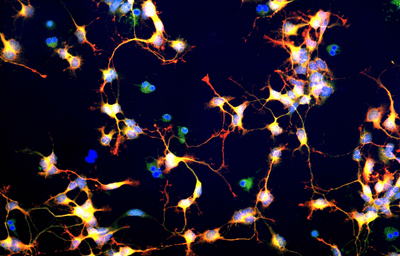


In a very on-brand move for the 2020s, Singapore is building a “Biological Data Center” that uses millions of living human brain cells to compute information.
Human neurons meet silicon chips
The project is a collaboration between the School of Medicine at the National University of Singapore (NUS Medicine), data center developer DayOne, and Melbourne-based startup Cortical Labs.
The latter is one of the world’s only companies that is developing commercial biological computers. Their flagship product is called CL1, a system that uses “wetware” – AKA living biological neurons derived from stem cells – and conventional silicon chips to process data.
In August 2026, NUS Life Sciences Institute received 20 of these units as part of what they called a “Biological Data Center.” Each CL1 contains hundreds of thousands of living human-derived neurons (the true number has been reported as 200,000 or 800,000 by different outlets), which equates to millions of brain cells that will be working away in the lab.
“By growing living human neurons from stem cells and pairing them with rigorous engineering, we’re not only building a more efficient alternative to silicon; we’re creating a platform that can help us understand learning and adaptation at their biological source,” Professor Rickie Patani, director of the neurobiology programme at NUS Medicine, said in a statement.
“That dual promise is what makes this collaboration sustainable and scientifically generative. It gives us a real route to accelerate drug discovery and neurological disease research, turning laboratory insight into real-world impact far faster than we could before,” he added.
The neuron-driven data center is the first of its kind outside Australia, where a facility in Melbourne houses 120 CL1 units. Each unit contains a "life-support system" designed to keep the neurons alive for up to six months, according to Cortical Labs.
This technology is still in its infancy, but the idea is that biological systems could potentially be more efficient at processing data with a fraction of the power required by digital computers. Cortical says its devices are "low power, to the extreme" and require "a fraction of energy other technologies use", but as of yet it's unclear how that translates into actual numbers.
NUS Medicine suggests the biological data center will be used to “supplement AI in areas where data is sparse,” such as drug discovery, robotics, cybersecurity, and fraud detection. For now, however, it is essentially a prototype that will be used to explore how the technology can be scaled.
To Pong or not to Pong
In 2021, scientists at Cortical Labs published a peer-reviewed paper in the journal Neuron describing how they had developed a computer system interlaced with 800,000 brain cells that could play the video game Pong.
In the paper, they proposed that the human and mouse-derived brain cells were coaxed into playing the game because of the “free energy principle,” which posits that any self-organizing system, like a brain, will always attempt to minimize surprise and unpredictability in its environment.
In the context of Pong, a miss resets the game, resulting in the ball heading in a random direction and increasing unpredictability. A hit, on the other hand, sends the ball in a more predictable direction. The researchers suggest the cells are incentivized to minimize unpredictability in feedback signals from the game, which is why they become better at controlling the paddle, thus preventing the ball from hitting the edge of the screen.
It's not yet proven that this is really what is going on, but that hasn't stopped Cortical Labs from building on their success. Earlier this year, the team demonstrated that an array of CL1 chips was able to play the classic first-person shooter game DOOM.
It's worth saying, however, that it was the silicon side of things that rendered the game's graphics and ran its logic; Cortical are only claiming that the neurons processed the inputs and outputted commands to the player character.
For the moment, conventional computers with good-old-fashioned silicon chips are far, far better at general computer tasks. However, Cortical Labs has lofty hopes for the technology.
Musing in the book Science for a Better Tomorrow, the team write that natural neural systems could offer a way to develop better and more efficient AI.
“Since biological brains operate with power and data efficiencies otherwise unparalleled, along with the capability for rapid real-time adaptation, it may be beneficial to reconsider neural systems in the current search for AI,” they write.
Bioethical conundrums
Brain organoids are becoming increasingly common in scientific research, but they pose a conundrum for bioethicists over the theoretical risk of consciousness. If a network of neurons becomes sophisticated enough to compute complex problems, is it capable of experiencing pain and suffering?
At this point, no one would seriously claim the neurons in Singapore's prototype computer are sentient, and bioethicists overwhelmingly say these things are a long way off from that level of sophistication. But, presumably, if biological data centers do scale up as their advocates wish, there could come a time when questions of consciousness look a little less farcical.