Health and Medicine
 PUBLISHED



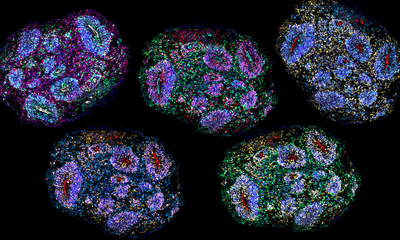


Lab-grown mini brains made of human neurons have been kept alive in a lab for nearly six years, making them the longest-lived organoids made by scientists so far. While these peppercorn-sized balls of tissue aren’t conscious in any real sense, new research suggests they did appear to clock the “passage of time” in a way that made the cells behave differently depending on how long they'd been cultured.
Mini brains with big potential
Organoids are a tiny, three-dimensional bundle of cells engineered in a lab that can be used by researchers as a proxy to study actual organs. In the case of mini brains, they are essentially a tiny ball of neurons that can grow, form connections, and transmit electrical signals similar to those seen in a developing human brain.
They’re typically kept alive in cultures for a few weeks or months, but in a recent breakthrough, scientists at Harvard University and the Broad Institute in Massachusetts report keeping a set of human brain organoids going for nearly six years, beating the previous record of 694 days.
Since they submitted their results for publication some time ago, the lab currently has some brain organoids that are seven years old, they report in a statement.
The feat wasn’t just about breaking records, though. The prospect of having human mini-brains that can survive for several years means scientists will be able to study them beyond the early phases of development.
"We didn’t know how far the development and maturation of human brain tissue could occur outside the context of the normal brain inside the head," Dr Paola Arlotta, senior author of the new paper and a professor at Harvard, said in a statement.
"This work showed that it’s actually possible to not just have these organoids survive in culture, but also continue to change, develop, and mature over stretches of time that had never been reached before," she added.
Marking the "passage of time"
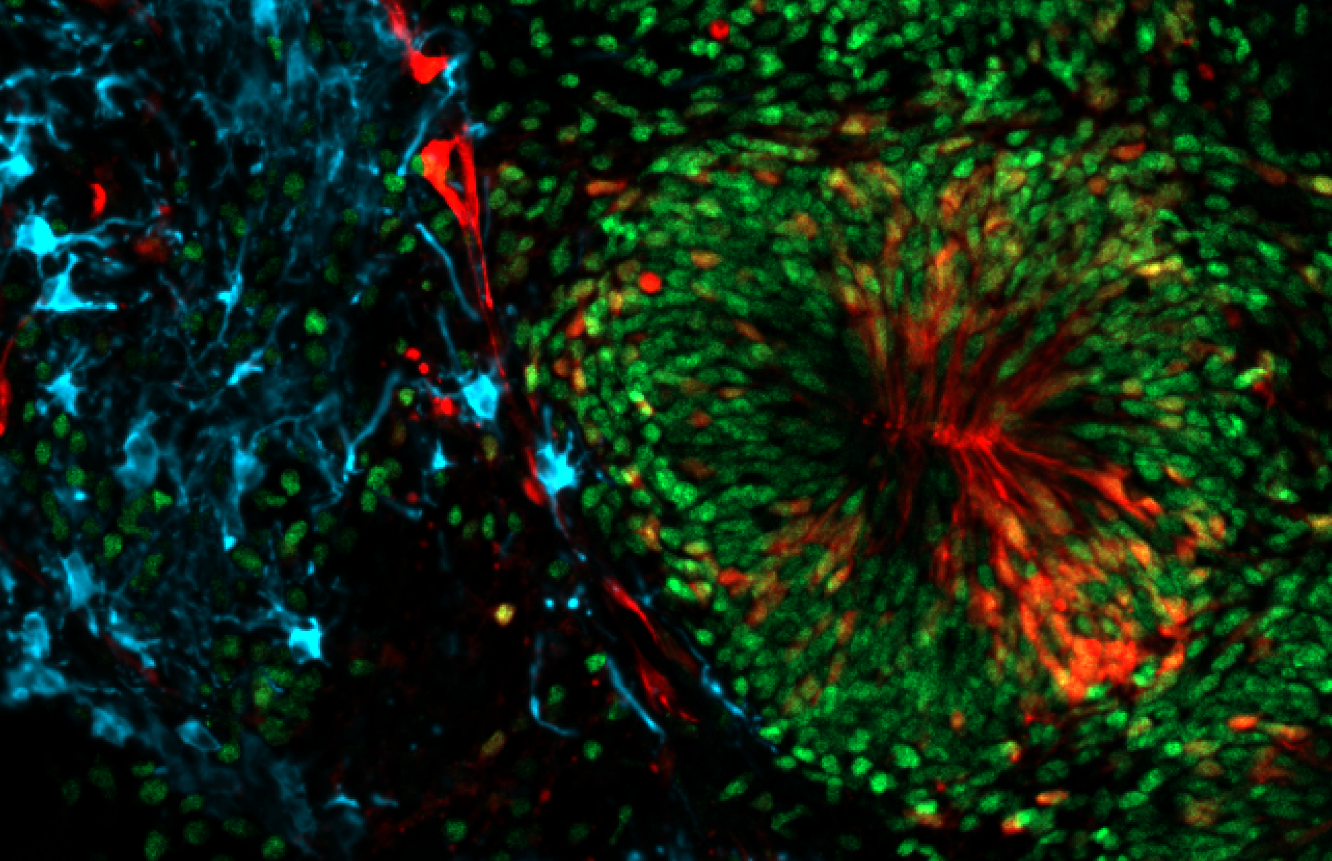
To see how the mini brains changed over time, the researchers looked at their gene expression, chemical alterations to the genome, and the structure of the organoid cells. Just as they would expect with the early development of a “normal” brain, they detected the emergence and maturation of neurons, including the formation of cells called glia, which help to protect and insulate neurons.
They also witnessed neurons forming lasting connections, firing electrical signals in striking patterns that lasted for at least two years.
Given that the mini brain didn’t have the privilege of possessing a body, the team was blown away by how much the organoid mimicked the real deal as it developed over time.
“The brain doesn’t develop in a vacuum. It’s an organ of incredible complexity that interacts with so many other systems. It was not a given at all that our simplified model would match natural development in this many ways,” explained co-first author Irene Faravelli, who conducted this work as a post-doctoral research fellow at Harvard, in another statement.
In a separate experiment, the researchers picked out neurons from older organoids and placed them into fresher specimens. Once this was done, the seasoned cells continued to develop as if they were still in the previous organoid, pumping out cell types that should only appear after two-to-three months of growth in just two weeks.
This indicates that each cell retains a record of its developmental history, and so it knows how old it is even when it is placed in younger surroundings, rather than being influenced by its peers. "We were a little bit shocked by the results," Arlotta said.
“I like to think of this as a sort of ‘warping of developmental time’ indicating that the organoid cells record and recall the time they have already spent in culture. This suggests their development is driven by a cell-intrinsic clock, reflecting mechanisms of endogenous human brain development,” explained Arlotta.
What's next for the organoids?
For now, the team isn’t interested in smashing their own record. They believe this latest step could open up a lot of interesting science in disease, development, and biomedicine, although they would also like to find ways to grow these mature organoids faster.
"We can unlock a whole spectrum of human brain biology that we didn't see before," Arlotta said. "We have shown it’s possible – a proof of principle – but clearly we need to figure out how to use the newly gained knowledge to enable understanding of later stages of development without having to wait years for organoids to grow.”
The new study is published in the journal Nature.