


 Health and Medicine
 PUBLISHED



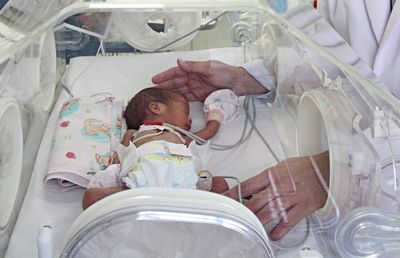


Swedish mothers who had been vaccinated against the human papillomavirus (HPV) have fewer complications during pregnancy, a new study has found, especially lower rates of preterm birth.
The researchers acknowledge their methodology can’t prove vaccination caused the better pregnancy outcomes, but argue that the evidence points that way.
Vaccination helping births
All vaccinations today attract vocal opposition and conspiracy theories, but twenty years ago, when the Gardasil and Cervarix vaccines were introduced, that wasn’t true for the fight against most diseases.
Nevertheless, the two vaccines designed to protect against cervical cancer set off a storm of controversy. Because HPV is primarily a sexually transmitted disease, opponents claimed that saving young people from cancer would “be a license to be promiscuous”.
Opponents tried to mask their opposition with unsupported medical claims, including saying that the vaccines would affect fertility later in life. Now it appears that claim was true, but in the exact opposite way that they meant – vaccination as a teenager may boost the chances of having a healthy baby years later.
Scandinavian researchers used data on all first-time births in Sweden between 2006 and 2023 where the mother was aged 16 to 35. After excluding twins and triplets, mothers who migrated to Sweden after the age of 9, and a few other rare cases, they were left with a sample size of 624,713 births.
Of these, 14.8 percent of the mothers had received the Gardasil vaccine against four strains of HPV before becoming pregnant.
The team then looked at cases where at least one complication was reported during or soon after pregnancy, ranging from babies being born pre-term, to stillbirth or the baby dying in the first few days.
The team concluded that vaccination was associated with lower risk of most, and probably all, of the adverse outcomes they studied. Moreover, in a rebuttal to those who have argued that HPV vaccination should only be given to adults, the risk reduction was usually greatest for those vaccinated before they turned 17.
At 5 to 15 percent, the reduction in risk was modest, but the fall was statistically significant for most cases. Stillbirths were also lower when the mother had been vaccinated, but did not quite meet statistical significance.
Since the study was observational, rather than a controlled trial, it is possible that the vaccinated mothers had some other differences that protected them compared to those who had not been vaccinated.
However, the team randomly matched each adverse pregnancy with ten controls from their sample that matched for other potentially influential factors such as age, smoking, and education level. The association between vaccination and lower risk still held up after this.
Multiple benefits from a one vaccine
The connection may seem surprising, but there was a reason the researchers went looking for it.
Even when HPV does not lead to cancer, there is evidence that the cervical lesions it can produce, and the methods used to treat them, may increase the chances of preterm births, and the health effects that follow. Several previous studies raised the possibility that vaccination might be protective, but were not large enough to be convincing.
“Together with previous research showing the safety of human papillomavirus vaccination during pregnancy, our results suggest that human papillomavirus vaccination is not only safe with respect to pregnancy outcomes but may also confer additional benefits by reducing the risk of adverse events,” the authors write.
Even before the vaccine’s effectiveness as a shield against cancer was showing up on a population-wide basis, research showed the vaccine was causing a dramatic fall in painful and embarrassing genital warts where vaccination was common.
We now know that the vaccines have almost eliminated cervical cancer in certain populations, and there is evidence it is also greatly reducing several rarer cancers in both men and women.
Predictably, the claimed harmful impact on fertility never showed up, but it looks likely thousands of mothers were spared the pain of losing a child. Even larger numbers of children did not have to go through life with the risks associated with premature birth.
“Collectively, this evidence supports the global strategy for human papillomavirus vaccination and its continued implementation in routine immunization programs,” the authors write.
The study is open access in the British Medical Journal


 1
1