Health and Medicine
 PUBLISHED




What you'll discover in this article
- A phase 1 trial of optogenetic therapy to partially restore sight in patients with a genetic form of blindness has shown the technique is safe and promising.
- The technique involves adding light-sensitive proteins to cells, and patients wear special goggles that produce pulses of amber light that the proteins react to.
- First author Professor José-Alain Sahel told IFLScience: "It is great to see the work of pioneers in the field of optogenetics recognized," following the announcement this week that three optogenetics scientists will share a Nobel Prize.
Just days ago, it was announced that the Nobel Prize in Physiology or Medicine for 2026 would be shared by three scientists for their work on optogenetics. The Nobel Assembly spoke of how this technique was a revolution in neuroscience – and today, we’re seeing firsthand the impact it can have on human health.
Led by scientists at the University of Pittsburgh Medical Center and the Institute of Molecular Ophthalmology Basel in Switzerland, a new trial demonstrates that optogenetic therapy can be safely used in people with some types of blindness and is a promising approach to partially restoring their sight.
One hundred genes, one promising treatment
Retinitis pigmentosa (RP) is the name given to a group of genetic conditions in which the retina – the light-sensitive part of the eye – is progressively damaged. Symptoms usually begin with a loss of night vision and progress from there, generally affecting both eyes.
Pinning down the cause is a challenge – there are over 100 genes that have been implicated in different forms of RP. That limits the usefulness of approaches like gene editing or gene replacement therapy, where you would need to know which gene to target for each patient.
For most patients with RP, the reality is that no treatment is available.
“Developing a separate treatment for every genetic cause of retinitis pigmentosa is proving tremendously difficult and costly,” said first author Professor José-Alain Sahel, chair of the Department of Ophthalmology at the University of Pittsburgh, in a statement.
“While we continue working on correcting specific gene defects, our goal is to develop a way to restore visual function regardless of which gene caused the disease.”
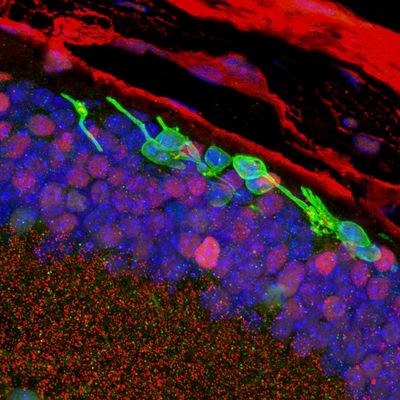
This is where optogenetic therapy comes in. Rather than being specific to a particular genetic mutation, it is directed at the retinal cells themselves, aiming to restore their sensitivity to light. Following promising results from their first patient, as documented in a 2021 paper, the team are now reporting an extended trial in 10 people.
Let there be light
Light is absolutely central to optogenetics. The technique involves altering living cells to produce light-sensitive proteins that can then be manipulated externally for various biological effects.
It started with cultures of neuronal cells that scientists were able to control using flashes of light, thanks to the addition of proteins borrowed from algae called channelrhodopsins.
Then it progressed to living organisms – Caenorhabditis elegans worms, highly useful model organisms in neuroscience thanks to their simple nervous systems, which scientists have been able to completely map.
Over the years, as the technology has advanced, optogenetics approaches have been applied to a whole range of experiments involving everything from restoring lost memories to extending lifespan.
It is great to see the work of pioneers in the field of optogenetics recognized [with the Nobel Prize].
Professor José-Alain Sahel
The idea of treating vision loss also goes back a number of years, with promising results in mice opening the door to the possibility in humans.
A foundation to build on
The 10 participants in this new phase 1 trial were all adults diagnosed with RP and described by the authors as having “profound visual impairment in both eyes”. For most of them, this meant that in their worst-affected eye they had very little light perception remaining.
The treatment involved a single injection into this eye, containing a harmless viral vector carrying the genetic instructions to make a protein called ChrimsonR, which is sensitive to amber light. Three different doses were compared.
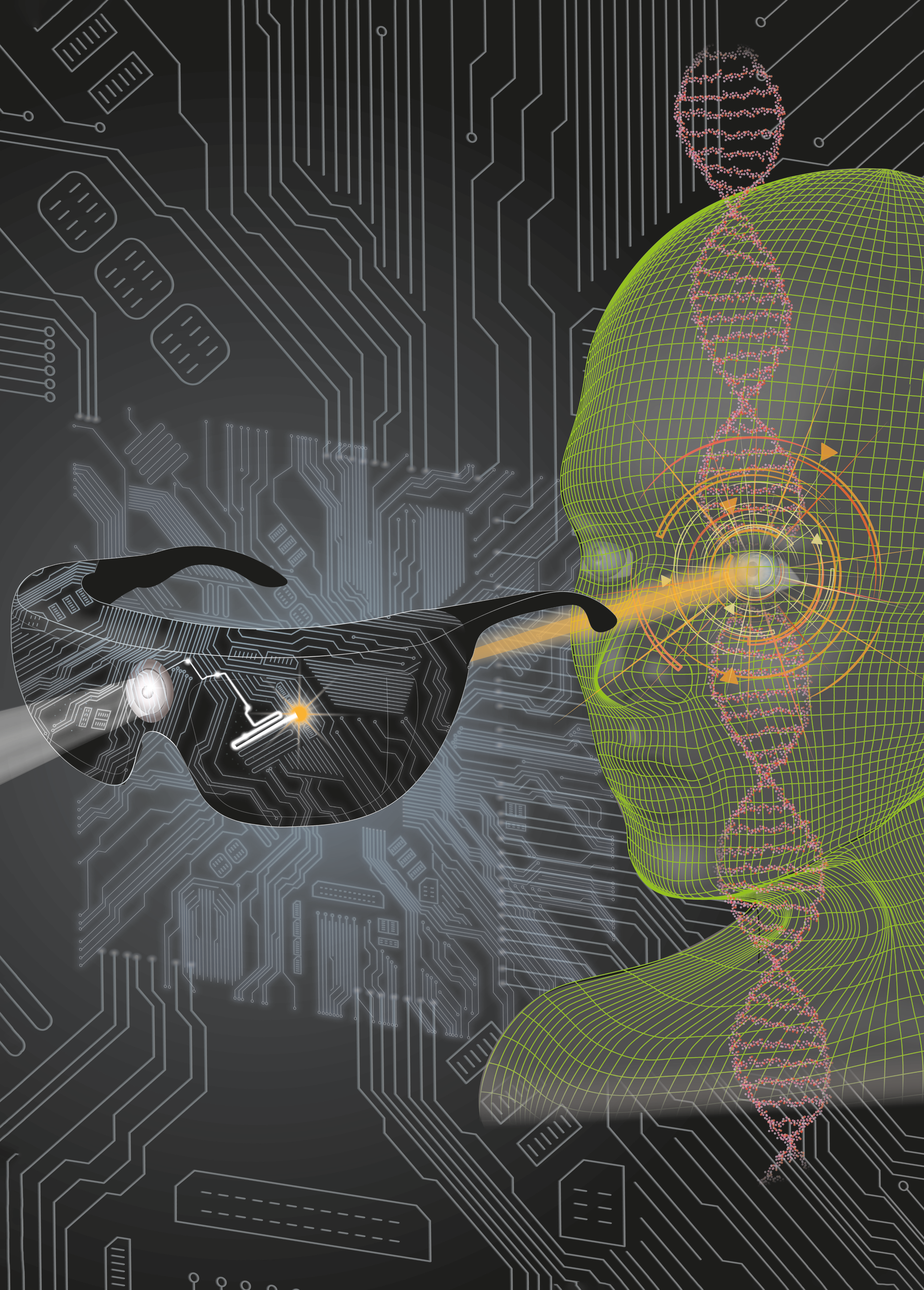
The injection was paired with special goggles worn by the patients that convert visual information into pulses of amber light, which can hopefully be processed by the retinal cells thanks to the addition of the ChrimsonR.
Four of the group were followed up for five years after their treatment, with a further four having been monitored for between two years and four-and-a-half years when the data were collected for analysis.
It’s important to say that the treatment does not restore vision completely. Even the participants who saw positive results were still not able to read or visualize faces. But it’s hoped this very early-stage trial may be a stepping stone to future advances.
What the trial was able to show was that the treatment appears to be safe. This was the primary outcome the authors were investigating.
This encourages us to continue to optimize the implementation of this technology.
Professor José-Alain Sahel
Of the 10 participants, most only experienced mild-to-moderate, temporary side effects such as inflammation of the eye. This inflammation was more common in those receiving higher doses.
Six of the participants saw improvements in light sensitivity in the treated eye that were large enough to be considered “clinically meaningful,” according to the authors.
“These results show that even in people with profound vision loss, the visual system retains a remarkable capacity to process new information,” said Sahel.
After training using the goggles, some of the participants were able to detect or locate objects, find a doorway, or follow a line marking out a route. Those who trained the most saw the most benefit, suggesting that long-term rehabilitation may produce the best results.
These participants, the authors note in the paper, had end-stage RP, meaning they had few remaining cells in the retina to target. If this treatment is applied at an earlier stage of the disease, the results may be even more transformative.
As a phase 1 trial, the sample size here was inevitably very small. There were also lots of different genetic causes of RP represented in the patient group – remember, there are at least 100 possible genes that we know of! – so the generalizability may also be limited by that.
But the team is not stopping here, and they’ve been buoyed by the recent Nobel Prize award for three of the pioneers of the optogenetics approach: Karl Deisseroth, Peter Hegemann, and Georg Nagel.
We asked Sahel how the team had responded to the prize announcement.
“It is great to see the work of pioneers in the field of optogenetics recognized and to see that the Nobel Committee press release referred explicitly to the clinical demonstration in vision restoration trials,” he told IFLScience.
“This encourages us to continue to optimize the implementation of this technology and the next iterations at the core of our efforts.”
The study is published in the New England Journal of Medicine.

 1
1