Health and Medicine
 PUBLISHED


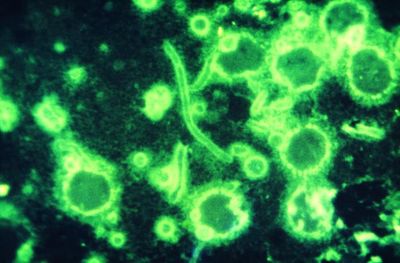


A scientist at a Russian lab researching plague and other pathogens in Siberia has died after developing pneumonia, causing authorities to place around 200 people who may have been in contact under medical observation. Information about the case is scant, but there’s what we know so far.
Plague outbreak in Siberia: what's being reported
The Russian health agency reported the case on October 4, claiming an employee at the Irkutsk Anti-Plague Institute of Siberia and the Far East had been “diagnosed with pneumonia of unknown etiology.”
Unconfirmed local media reports said the patient was a 28-year-old lab technician who allegedly broke a test tube containing the pneumonic plague pathogen. However, other reports suggested she had recently returned from a work trip to Buryatia, where natural reservoirs of plague can be found.
Either way, the health department claims that extensive testing has not yet identified any microorganisms linked to the patient's professional activities.
As per The Moscow Times, at least 189 people who had contact with the lab worker are currently being kept under observation at several hospitals.
“I would like to inform you that all identified contacts have been placed under medical observation. As of today, none of the contacts show any signs of illness, and laboratory test results have come back negative,” Igor Kobzev, Governor of Irkutsk Oblast, said on Telegram.
The White House is keeping an eye on the situation, with an anonymous US official telling Axios they are “aware, monitoring the outbreak, and assessing options."
What is pneumonic plague?
Pneumonic plague is the airborne version of an infection caused by the bacterium Yersinia pestis. It can be highly contagious, spreading through airborne particles loaded with the bacteria.
The other two types of plague – bubonic and septicemic – typically spread from close contact with infected fleas, animals, or infected tissues.
Plague has infected humans for at least 5,500 years, perhaps longer. It's best known as the disease behind the Black Death, which killed somewhere around 25 million people in the 14th century CE.
Plague outbreaks still do occur sporadically throughout the world, typically when a person comes into contact with an infected animal.
However, they rarely erupt into full-blown epidemics because all three forms of plague are treatable with modern antibiotics. The key is to treat the infection quickly, especially with pneumonic, which is the most virulent form and can prove quickly fatal if left untreated.
How worried should you be?
All of this might spark uneasy memories of January 2020 when mysterious cases of pneumonia were appearing around the Chinese city of Wuhan.
With grimly apt timing, the idea of pneumonic plague escaping from a Russian lab is also a hypothetical scenario that’s explored in Annie Jacobsen’s latest book, Biological War: A Scenario.
However, independent experts in the UK have said that this situation is very different to COVID-19. While it’s still a cause for concern, they suggest there's no need to panic.
“Reports from Russia have inevitably drawn comparisons with Covid-19, but it is important to remember that pneumonic plague is a very different disease,” Dr Simon Clarke, associate professor in cellular microbiology in the School of Biological Sciences at the University of Reading, said in a statement.
"Unlike many viral respiratory diseases, plague is caused by bacteria and is generally treatable with antibiotics if identified quickly."
“Plague carries a huge history and is still present in many parts of the world, including Russia, but the living conditions associated with previous spread are no longer generally true, antibiotics are available, and its potential is therefore limited,” echoed Professor Ian Jones, Professor of Virology, also at Reading.
Lab leaks are exceptionally rare
As for the claims about a potential lab leak, Dr Clarke said these events do happen, but they are exceptionally rare. Accordingly, he suggests being cautious about jumping to conclusions until more solid details emerge.
"One claim attracting attention is that a laboratory worker may have been infected after breaking a test tube in the lab. It is not unheard of for pathogens to escape from labs, but an awful lot must have gone wrong for a lab worker to be infected by a broken test tube,” he said.
"Having worked in high-containment laboratories, I know that handling dangerous pathogens involves multiple layers of protection, strict procedures, safety cabinets, airflow systems, and careful procedures carried out by well-trained staff," he explained.
"Lab-acquired infections are rare events, and a broken tube would not automatically lead to exposure or infection. We also don't tend to use test tubes very much."
What happens next requires transparency from Russia, experts agree.
“[L]aboratory-acquired infections with this organism are rare. They are not impossible, and this is why an incident warrants a full account of what happened. That account matters beyond Russia,” Dr Zania Stamataki, Associate Professor of Viral Immunology and Academic Lead for Containment Level 3 Laboratories at the University of Birmingham, said in a statement.
"Around 200 contacts are reportedly under observation, and plague responds well to antibiotics if treatment starts early. Early notification allows effective treatment and outbreak containment.”


 1
1