


 Health and Medicine
 PUBLISHED


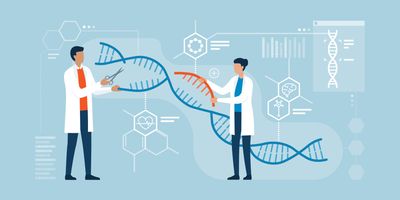


Altering, adding, or removing sections of DNA – the fundamental code underwriting all that we are as human beings – to correct genetic disorders: this was the promise of gene therapy. Just a few years after the discovery of DNA, it was being theorized. The coming decades saw experimental approaches, numerous failures, and some notable successes… bringing us to today, where gene therapy is genuinely transforming the lives of some patients with previously incurable conditions.
Among this year’s Breakthrough Prizes – often called the “Oscars of Science” – are two awards that encapsulate the progress that has been made in gene therapy. IFLScience spoke to the laureates being honored with these awards, to learn about how we made it here, and what challenges still remain.
“They definitely would have been facing a life of darkness”
“In the very beginning, there’s no way I could have imagined that it would progress to the level that it has progressed,” said professor of ophthalmology Jean Bennett, MD PhD. We had met to discuss the Breakthrough Prize in Life Sciences that Bennett is sharing with her husband, Albert Maguire, MD, and their collaborator Katherine A. High, MD, for a gene therapy they developed for a form of inherited blindness.
Leber congenital amaurosis (LCA) belongs to a group of conditions called retinal dystrophies. Gradually, the cells in the eye that detect light stop working. Symptoms include tunnel vision that progressively gets worse, night blindness, and involuntary movements of the eyes called nystagmus. Severe visual impairment from young infanthood is typical, leading to vision loss by early adulthood in many cases.
“LCA was an incurable disease – there were no treatments. People were told they'd go completely blind and they were counseled about canes and seeing eye dogs. That was the treatment,” Maguire, an emeritus professor of ophthalmology, told IFLScience.
“Patients went after anything they could find which meant they were preyed on by charlatans. I understand why – desperation – but felt they deserved better.”
“They definitely would have been facing a life of darkness by the time they're 20 or so,” said Bennett.
This was the situation when the team began their work, but some progress in understanding the causes of the condition had been made.
“It had been possible for a number of years to actually tell people what their genetic defect was, which has some value because you can do prenatal screening. So, it was good that there was genetic testing for it, but there were no treatments,” High, emeritus professor of pediatrics and Founding Director of the Raymond G. Perelman Center for Cellular and Molecular Therapeutics at Children’s Hospital of Philadelphia, explained.
The specific genetic mutation the team wanted to target was in the RPE65 gene. The protein it encodes is critical to functioning photoreception in the retina. Mutations in the RPE65 gene are associated with LCA type 2. The team’s idea was to replace the defective gene with a working copy, carried within a harmless virus vector and injected into the eye. Easy to conceptualize, maybe – but in practice, where do you even begin?
The concept makes so much sense – we needed to prove the naysayers wrong.
Albert Maguire
“Because there were no treatments,” High told IFLScience, “there was no established pathway for showing that a therapeutic worked.” Essentially, the team had to work with the US Food and Drug Administration (FDA) to design a trial protocol from scratch. High co-authored a paper with Kathleen Z. Reape, published in 2022, which details how this process came to fruition.
Before any human trials of a treatment take place, there’s a long process of preclinical testing, generally involving animal models. In this case, the preclinical data were providing a promising foundation, and they came from an unusual animal source. As it happens, inherited blindness is one of many heritable conditions that can arise when you’re breeding dogs, something kennel clubs and breeders work to avoid.
For genetics researchers, however, this is actually a boon.
“We have some collaborators who had the wisdom to collect those dogs and start breeding them and generating a colony of those various conditions, blinding conditions, so that they could be studied and we can understand the science,” Bennett explained.
“That's at the veterinary outpost of the University of Pennsylvania, and they now collect dogs with multiple different genetic forms of blindness. And several of those breeds have been used to develop proofs-of-concept for gene therapy clinical trials that are now ongoing, including the ones that we used.”
Armed with this promising data, and having agreed on suitable trial endpoints with the regulator, the human trials could begin. The treatment is injected, one eye at a time. Just once in each is enough to replace the defective RPE65 genes with functional ones.
High showed us footage from the trials in which a participant was asked to navigate an obstacle course in a dimly lit room. Prior to treatment, this task was very difficult for them. A year later was a whole different story.
“The intervention group at the baseline was taking about 100 seconds to complete the course. And at one year after injection, they were finishing it in 49 seconds,” High explained.
It was pretty hard to believe. But now that I've seen it so many times, it's just cool!
Albert Maguire
The speed with which some of the participants started reporting improvements was surprising.
“I didn’t think there would be much improvement until about 30 days, based on my previous work with animal models,” said Bennett. “But people told us that within a week, in fact less than that, everything became super bright in that one treated eye.”
“I was surprised that things worked at all,” Maguire told us. “When patients complained about it being too bright a few days after surgery (they get used to it quickly), I thought their eyes were just irritated from the surgery. Then the testing confirmed their observations. It was pretty hard to believe. But now that I've seen it so many times, it's just cool!”
Even adults in whom the disease had progressed considerably were benefiting from the treatment.
“There were times I thought that I was injecting old adult retinas that had little chance of improvement,” Maguire recalled. “They just looked... bad, dead. But we'd find that there were significant improvements in vision – objectively and subjectively. And some patients were elated with the results. A little extra vision goes a long way.
The crossover design of the trial meant that after a 1-year observation period, those participants with the genetic mutation who had originally been randomized to the control group could then receive the treatment too. Their results were similarly impressive, leading High and Zeape to describe this as “a second ‘confirmatory’ trial within the original trial.”
The regulatory approval process was somewhat turned on its head compared with other types of drugs. The clinical results, as High explained, were not really in question – it was very clear from the patient data that this treatment worked. What took much more time to review was the data on how you actually produce the treatment safely, since it was such a new type of product.
By the end of 2017, though, the treatment had become the first gene replacement therapy to be approved by the FDA. It’s called Luxturna®, and it’s changing the lives of people with RPE65-associated vision loss, including 6-year-old Saffie Sandford, who recently underwent the treatment in the UK.
More than that, though, the work that Bennett, Maguire, and High did provided a blueprint for how such treatments could be approached for other diseases in the future.
“There was no gene therapy when we started out work. At medical conferences, I'd always be the last presenter, and the only one presenting on the topic of gene therapy. Now there are journals and scientific societies devoted exclusively to gene therapy. There are over a hundred (140) clinical trials for retinal disease alone,” said Maguire.
“I can't tell you how many times and how many people said, 'It will never work.' (I probably said that to myself a few times). Hearing that was great motivation. The concept makes so much sense – we needed to prove the naysayers wrong.”
Taking the “scissors” to genetic disease
CRISPR is one of the biggest buzzwords in 21st-century science – and for good reason.
The 2020 Nobel Prize in Chemistry went to Emmanuelle Charpentier and Jennifer Doudna for their development of a gene editing technique based on CRISPR/Cas9, a natural defense that bacteria evolved to help combat viral infections. It works like a pair of “genetic scissors”, cutting DNA at regions demarcated by short repeating sections.
Bacteria hold onto bits of viral DNA within their own genomes, like “a library of potentially dangerous genetic information” as one review put it. When they encounter a virus with that DNA again, the Cas9 enzyme knows where to cut to neutralize the viral threat.
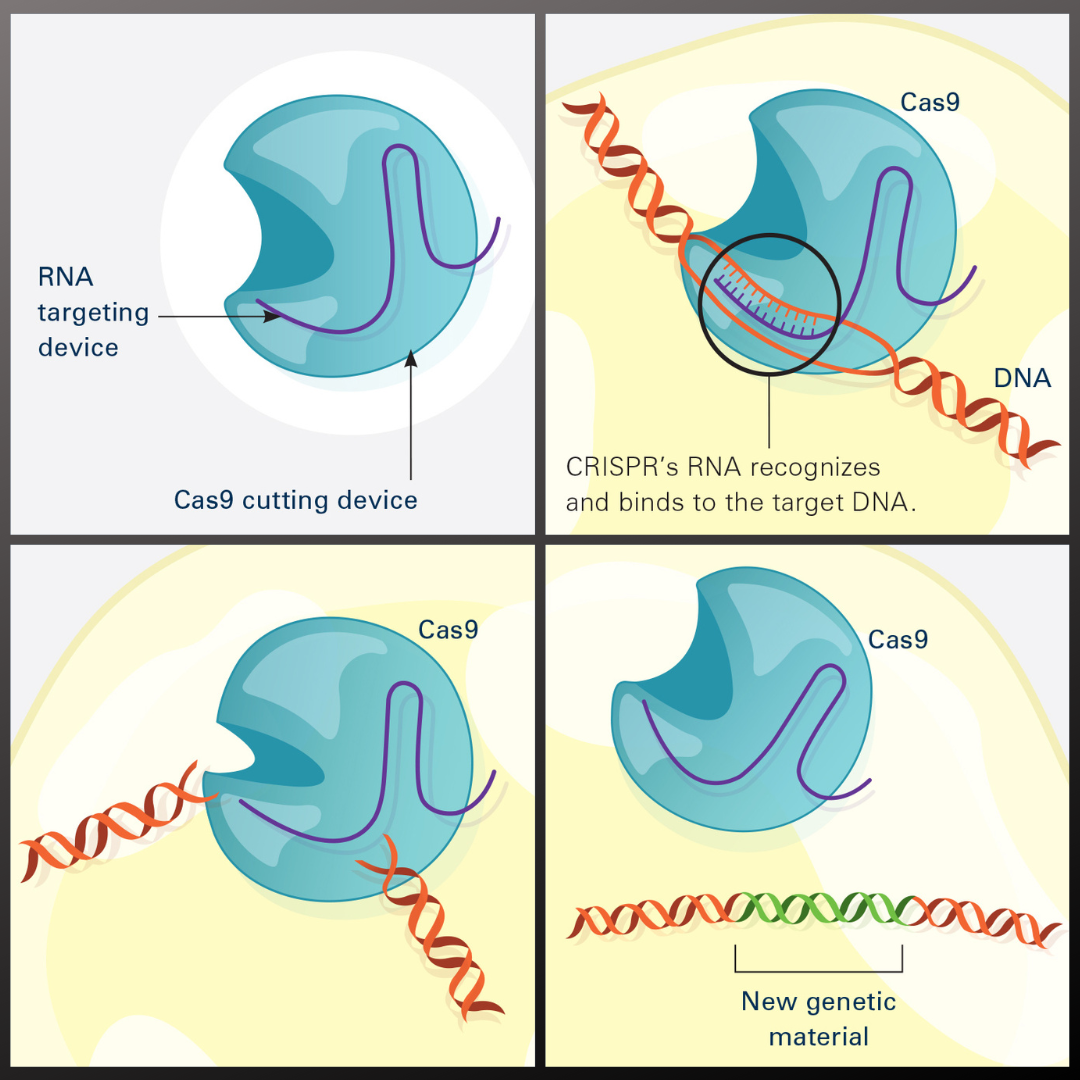
What Charpentier and Doudna did was harness and simplify this system so that it could be applied to any DNA molecule, opening up the theoretical possibility of gene editing in plants, animals, and humans. Scientists have begun exploring these possibilities, from disease-resistant crops to modified animal organs for human transplantation… and even hypoallergenic cats.
But using CRISPR editing to treat human disease has long been a coveted goal.
Another of this year’s Breakthrough Prizes in Life Sciences has been awarded jointly to Stuart H. Orkin and Swee Lay Thein for their work on a gene editing therapy for the blood disorders sickle cell disease and beta-thalassemia.
Both are characterized by issues with hemoglobin, and both are associated with genetic mutations in a single gene: BCL11A. Thein identified this gene as the key driver of the disease, and Orkin performed research that showed how activation of this gene leads to what is termed the “hemoglobin switch”, when the body stops producing fetal hemoglobin in favor of adult hemoglobin.
This is a normal part of human development that happens around the age of 6 months; but in people affected by these two diseases, it signals the beginning of their symptoms.
“Generally, patients with sickle cell disease suffer recurrent, severe, painful episodes. So severe, that we often refer to them as a painful crisis,” Thein, Senior Investigator in Sickle Cell Genetics and Pathophysiology at the National Heart, Lung, and Blood Institute, told IFLScience.
Some people say, it’s sort of like having cancer and being treated all the time and you just never get better.
Stuart H. Orkin
“It’s a miserable disease,” said Orkin, who is the David G. Nathan Distinguished Professor of Pediatrics at Harvard Medical School and a Howard Hughes Medical Institution Investigator at Boston Children’s Hospital.
These excruciating crises are caused by misshapen red blood cells – they’re sickle-shaped rather than the usual discs and can get trapped in veins and arteries, disrupting blood circulation.
“You never know when you’re going to have another event,” Orkin explained. “It’s debilitating. And in addition to that, in the older patients, it prevents them from being able to hold a job and go to work regularly.”
“Some people say, it’s sort of like having cancer and being treated all the time and you just never get better.”
With beta-thalassemia, there is less hemoglobin produced than there should be, so patients develop anemia and may require lifelong blood transfusions to remain well. This “brings its own problems,” Thein said, “mainly that of iron overload, which causes damage to the heart, the liver, and other organs.”
“So, in fact, for both diseases, the existing treatments are really focused on managing the symptoms rather than addressing the underlying cause.”
Previously, the only hope for a cure was a bone marrow transplant, which relies on finding a suitable donor – something that is far from guaranteed, particularly for non-white patients. The National Marrow Donor Program in the US says that African American donors are still underrepresented on the registry, while sickle cell disease disproportionately affects people of African ancestry.
Targeting BCL11A with a gene therapy therefore offered hopes of a functional cure for both of these conditions, and a considerable improvement in quality of life for patients. The problem was that BCL11A has multiple functions, and if you start messing with all of them you could produce some undesirable side effects.
That’s where CRISPR comes in.
“CRISPR […] goes to a specific location in the gene, and then it makes a deliberate targeted edit,” Thein told IFLScience. “So it’s precise.”
“The editing site has no function outside of the red cell lineage,” said Orkin. “It has little chance of having a deleterious effect elsewhere.”
The treatment that Thein and Orkin helped devised, called CASGEVY®, became the first CRISPR-based gene editing therapy to be approved by the FDA. The background work underpinning the treatment took “many, many years, decades if you like, of painstaking basic science”, said Thein – but once the CRISPR tool became available, things moved rapidly.
“As soon as we described really what you needed to do, it was probably only two or three years before it was into a patient,” Orkin said. “It was very quick by the usual drug standards. It took a long time to get through the trials and get the approval, but it certainly made its way to patients rather quickly.”
The gene editing doesn’t “cure” the underlying condition. Effectively, it flips that “hemoglobin switch” back to producing fetal hemoglobin, which as Thein explained, “compensates for the defective hemoglobin.”
“It’s more precise, controllable, and potentially a more durable solution,” she added.
Like Luxturna, CASGEVY is a one-time treatment, but the process is much more involved. It’s what’s known as an ex-vivo treatment, meaning it involves harvesting and modifying a patient’s own stem cells before putting them back into the body.
“You have to harvest stem cells from the patient, edit them in the laboratory, and then re-infuse them back to the patient after he or she has undergone harsh chemotherapy – what we call myeloablative therapy – to make room in the bone marrow for these edited cells. The whole process, at least for sickle cell patients, can take up to a year,” Thein told us.
While this eliminates the need to find a compatible donor, patients need a lot of medical support during the process and are very vulnerable to complications like infection. It’s not something that is accessible to every patient.
With all gene therapies, cost also presents a barrier – the list price for CASGEVY in the US is $2.2 million. Over the course of a patient’s lifetime with sickle cell or beta-thalassemia, that might still represent a substantial saving, when you factor in all the medical treatments they will likely require, but it’s an eye-watering sum to consider.
CRISPR did revolutionize science and it's going to revolutionize medicine in certain areas.
Stuart H. Orkin
However, for those patients who can benefit, the effects are transformative.
“What patients describe after they’re treated and functionally cured is they have a whole new life,” said Orkin. “They can actually plan their future.”
“Nobody thought that one day you could lead to a cure of blood disorders,” said Thein. “But, you know, it's just kind of everything falling into place.”
What’s next for gene therapy?
Both of these Breakthrough Prize awards speak to the strides that have been made in gene therapy so far, so we asked all the laureates about their predictions for what’s next.
“I think there’s now a great deal of hope and optimism for the future,” Bennett told IFLScience.
“What I do want to see is more approvals, because it's great that Luxturna is approved – and it's making a difference in people all around the world – but of course, we want to make sure that gene therapy will work for other forms of inherited retinal disease and common diseases. And I think we're on that road.”
“[Gene therapy] clearly has an important place in therapeutics,” Maguire said, “especially single gene Mendelian disease. But it is also a very powerful 'delivery system' as well for a whole array of conditions. If the economics can be aligned with financial realities, I am very optimistic about the continued progress of gene therapy.”
For the treatment of sickle cell and beta-thalassemia, both Orkin and Thein are looking at other approaches that could make treatment accessible to more patients.
“I'm so happy to see that the profile of the disease has been raised,” said Thein. “And it's not just [about] gene therapy, because pharmaceuticals, academics, and also scientists realize that we need more drugs.”
“[Sickle cell disease is] a disorder that we’ve known about for many, many years,” said Orkin. “It’s a classic genetic disorder in many ways. But for a lot of reasons, it didn’t receive the kind of attention that less common disorders have.”
All of the laureates agreed that we’re still towards the beginning of the road for gene therapy.
“CRISPR did revolutionize science and it's going to revolutionize medicine in certain areas, but, you know, there's a lot more to do,” said Orkin.
“I think gene editing is just getting started,” concurred High, who also spoke about the potential for huge progress to be made in treating rare diseases: “There's something like 7,000 rare diseases, and 6,000 of them are due to genetic conditions.”
One promising avenue was detailed in a 2025 New England Journal of Medicine paper discussing what’s been coined the “rare-in-common paradigm”. It holds that a not insubstantial number of people with diagnoses of chronic disorders like inflammatory bowel disease may actually have rare genetic mutations causing symptoms that look identical to these diseases, but may not respond to standard treatments. If more of these people can be identified, and gene therapies developed to treat them, this could be a radical change in the landscape of chronic disease care.
Ultimately, the approvals of Luxturna and CASGEVY – and any future therapies that may come down the line – would not have been possible without teams of scientists, years of work, and the generosity of the trial participants. Bennett paid tribute to them, saying:
“This kind of work takes incredible teamwork, and it takes a lot of people with a lot of different complementary expertise, the ability to get along well together, and the commitment to see it through. […] And above all, it requires patients who are really the true heroes and pioneers of the studies, the people who are willing to take the chance and participate and put in the time and the travel.”
“They are the real heroes.”


 1
1