


 Health and Medicine
 PUBLISHED
 1
1



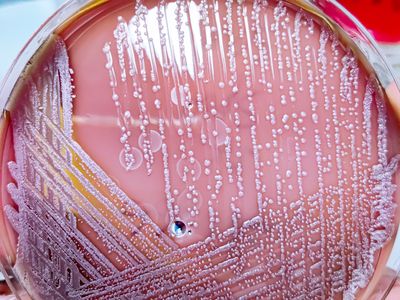


It’s a normal Monday and you’re a college student heading to your microbiology lab class. On the menu today: identifying an unknown bacterium. Pretty bread and butter stuff, right? But what if when all the tests come back, they show that you and your classmates have been exposed to a deadly pathogen?
It’s the stuff of nightmares, and it’s not supposed to happen. But for one group of Utah students last year, it looked very much like that nightmare was coming true.
Let’s rewind to September 22, 2025. On that date, per a new report detailing the situation, university employees began preparing for a lab exercise that was scheduled to begin on September 29.
Students would be asked to use biochemical tests and their knowledge of bacterial morphology to identify an unknown species. The plan was to give them Plesiomonas shigelloides, a waterborne bug that can cause food poisoning in humans via consumption of undercooked shellfish and seafood.
The employees plated up the bacterial isolates wearing lab coats and gloves – no eye protection or other safety measures were put in place – and when the students began their class on September 29, they did the same.
It was when the students’ test results came back on October 1 that things started getting serious. Remember, they had no clue what the bacteria they were looking at were supposed to be. All of them independently reached the same conclusion: Neisseria meningitidis.
A potentially deadly mistake
You might argue, fairly, that the use of personal protective equipment had been a bit lax up to now, even for dealing with P. shigelloides.
But if the bacteria everyone had been handling were really N. meningitidis, as the tests indicated, this had the potential to become a very serious disease outbreak.
N. meningitidis causes meningococcal disease. A proportion of us have these bacteria living harmlessly in our throats, but when an infection happens, it can become life-threatening in a matter of hours.
This was seen in March 2026 during a meningitis outbreak in the city of Canterbury, England. While up to 400 cases of meningococcal disease are seen in a typical year in England, according to the UK Health Security Agency, this outbreak spread unusually quickly, with 15 cases cropping up in a 48-hour period.
Two young people died, and the city was at the center of a massive public health scare for weeks. Preventative antibiotics and vaccines were rolled out to those deemed most at risk – largely university and high school students.
There are multiple strains of meningococcal bacteria (the one in the Canterbury outbreak was MenB), and they spread via close or lengthy contact.
Meningococcal disease can present as meningitis – inflammation of the tissues that protect brain – or septicemia, a bloodstream infection. Both can cause permanent disability and death.
We can probably speculate, therefore, that there was fair amount of panic in that Utah lab class when the classification came back – unanimously – as N. meningitidis.
Timeline from exposure: what happened next?
“N. meningitidis infections (including deaths) acquired through laboratory exposure have been reported,” the paper confirms, so there was reason for students and staff to be fearful.
There should have been no way that such dangerous bacteria could have made it into the hands of students in this way. But when staff re-checked the stockroom, the freezer with all the labeled samples of P. shigelloides contained a vial marked N. meningitidis. It was disposed of without anyone checking the contents.
From the timeline given, we know that the Utah Department of Health and Human Services (DHHS) was formally notified the following day, October 2.
By October 6, state public health officials also got to work on their own analysis of a sample of the bacteria.
Meanwhile, it had been determined that 15 of the 33 people exposed to the bacteria had previously received the MenACWY or MenB vaccines. All of them bar one (who refused) received precautionary antibiotic treatment.
Two people sought emergency care after developing symptoms that could have been consistent with meningococcal disease – a student, and a household contact of one of the stockroom workers. They both had to undergo lumbar punctures to rule out infection.
But on October 7, the tests at the state lab confirmed that none of these treatments had been necessary. The bacteria, they discovered, were not N. meningitidis at all, but a related species called N. sicca that is generally not pathogenic.
They also figured out where the confusion had come from. The particular strain of N. sicca was described as “an atypical carbohydrate fermenter”, meaning that it would have returned a result consistent with that of N. meningitidis on one of the students’ assays.
A cautionary tale
It’s great that nobody came to any lasting physical harm, but it raised some serious questions about stockroom management and lab protocols.
“This event prompted an overhaul of stockroom documentation, supervision, and training protocols, as well as a careful inventory of existing stocks, with recommendations to separate stocks used for research from those used in a classroom,” the paper reads.
An investigation by the university under the supervision of the DHHS found “inadequate inventory controls for identifying, labeling, storing, and segregating biological materials”, as well as “limited stockroom employee supervision, inadequate availability and use of personal protective equipment, and insufficient documentation of sample inventory, disposition, and chain of custody.”
Our verdict: F-minus for the university department at the center of this cautionary tale.
We have not been able to confirm what grades the students themselves received after correctly following their identification tests and spending days thinking they might have caught meningitis, but we hope it was A-pluses all round.
The study is published in the CDC’s Morbidity and Mortality Weekly Report.


