Humans
 PUBLISHED
 1
1


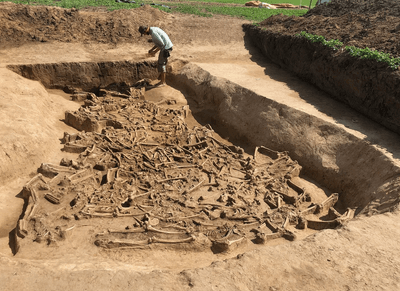


Some 7,000 years ago, something strange occurred here. Near the town of Vráble in Slovakia, archaeologists have unearthed a Neolithic burial site filled with 77 headless skeletons. Was it a vengeful massacre, evidence of a plague, or a ritual from a distant and unfamiliar time?
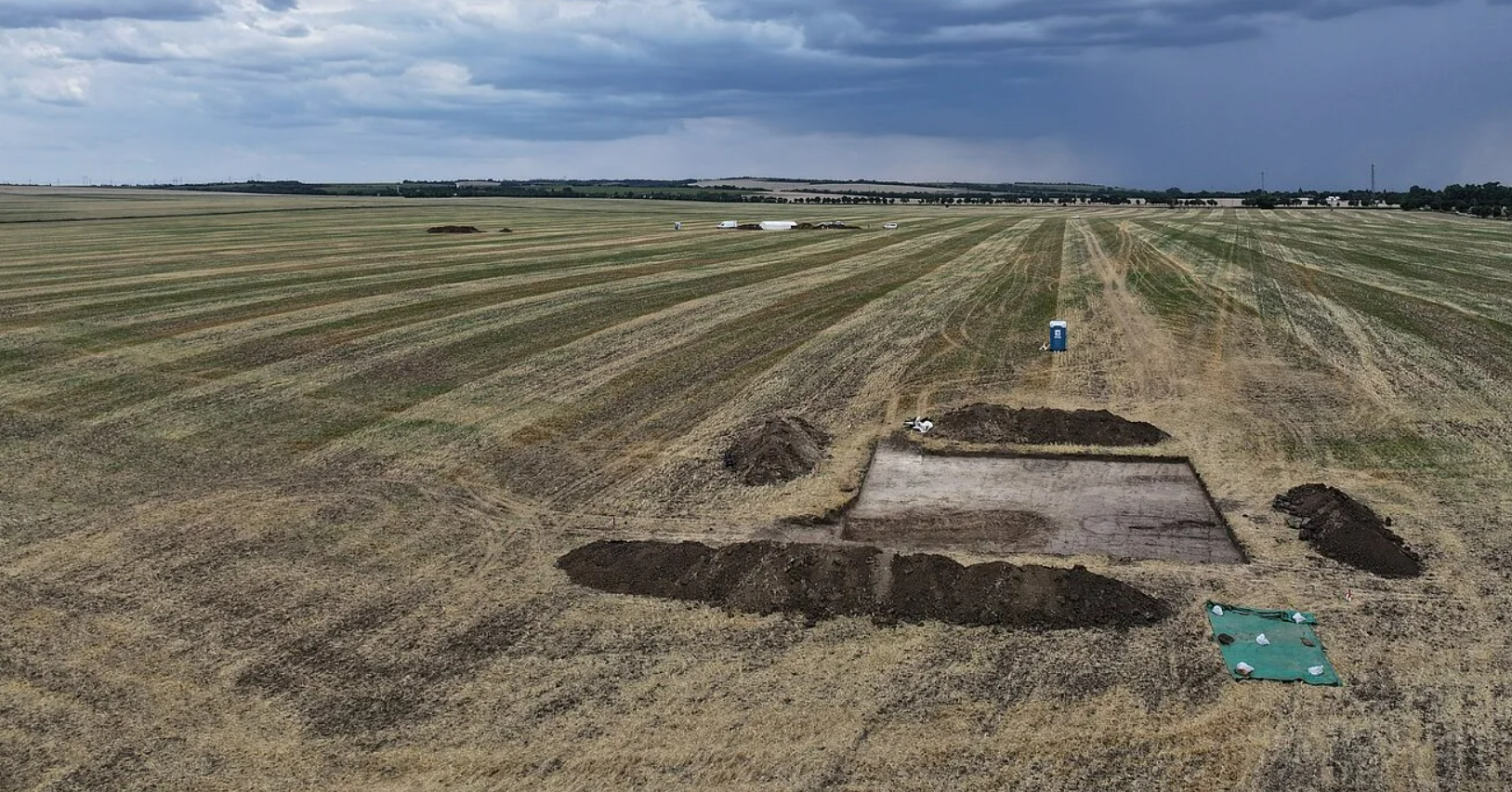
When the dig began in 2012, the site looked interesting but somewhat unassuming: a Neolithic settlement inhabited between 5250 and 4950 BCE, featuring some 300 houses across three neighborhoods and encircled by a perimeter ditch. A handful of burials emerged in 2016 and 2017, but it wasn't until 2022 that archaeologists grasped the true extent of what they had found.
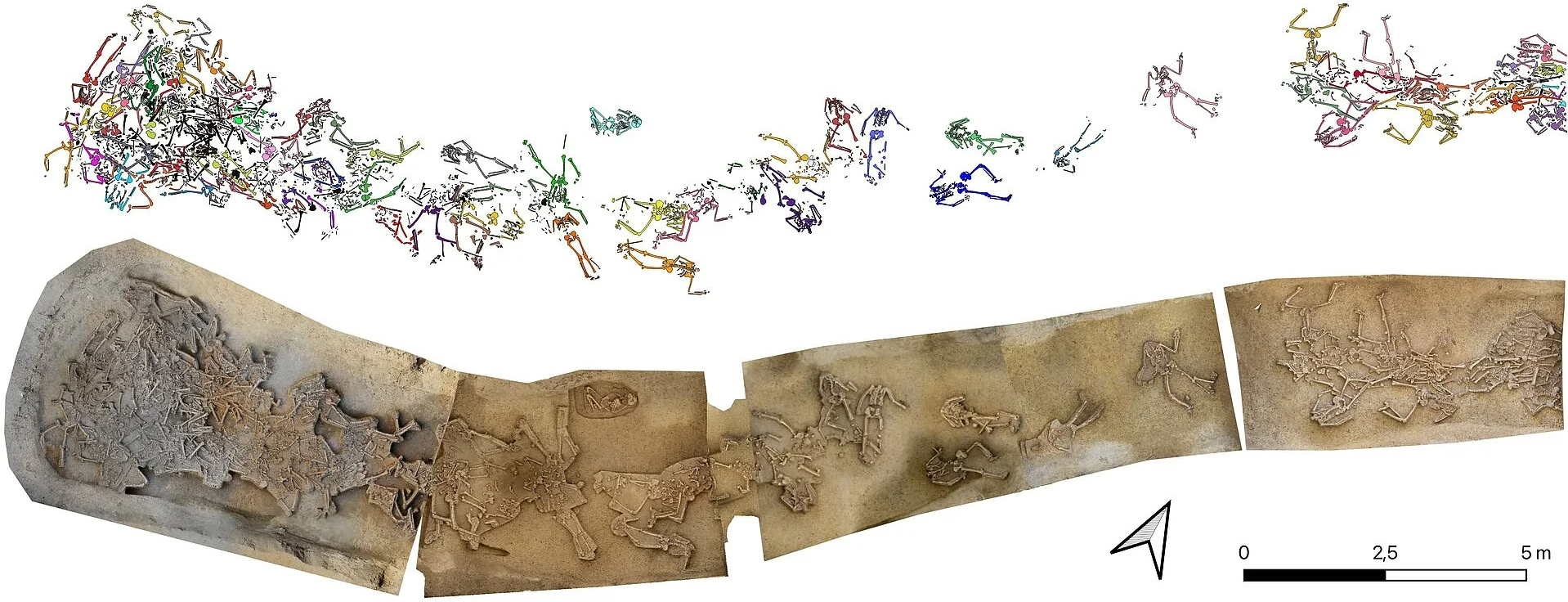
Inside the ditch lay 77 decapitated individuals with their skulls nowhere in sight. The sole exception is one child, whose skull remains intact. What made that individual different is unknown.
All the bodies were buried around the same time, although they were seemingly placed in the grave without any immediately discernible order. It’s a strange and brutal scene, but the researchers believe it doesn’t appear to be a rash act of violence in the fog of war nor a panicked response to catastrophe, such as plague.
A recent examination of the bones suggests the skeletal salad of remains were buried with what researchers describe as "seemingly patterned placements", arranged with care and deliberate intention, not simply dumped in a ditch.
“The features clearly exhibit an intentional manipulation of the bodies. First analyses suggest, above all, that violent ‘decapitations’ were not conducted here, but rather skillful removals of the skulls,” Dr Katharina Fuchs, a biological anthropologist at the Institute of Pre- and Protohistoric Archaeology at Kiel University and co-author of the study, said in a statement.
“The deposition of bodies and body parts may have been part of more complex, meaningful, and recurring practices,” added co-author Dr Nils-Müller-Scheeßel.
“Human sacrifice or the capture of someone’s head, probably in most cultures in one way or the other a symbol for personhood and life, could constitute the motivation for those practices; a burial rite with special attention to the skull is another likely possibility,” the authors write in their study.
“However, since we found only a very small number of skull fragments in the outer ditch, the most obvious and significant problem is that it remains unclear where the heads were taken, placed, or deposited. Currently, the heads are archaeologically ‘invisible’ to us, making an assessment of the role of violence – often visited on the head – as well as ritual practices very difficult.”
So, what it all represents remains unclear. To get a sense of what occurred here, we need to shed the assumptions of a 21st-century person and attempt to inhabit the mind of an early farmer living in Central Europe seven millennia ago.
“We must assume that these practices were embedded in completely different contexts of meaning than those of modern societies. This is what makes an interpretation of them so challenging,” added Furholt.
In the absence of a time machine, the researchers are turning to well-established scientific methods. Future work at the site will focus on isotope and DNA analysis to shed light on the geographical origins, diet, and family relationships of the individuals buried there.
The researchers note that no comparable sites exist in the immediate vicinity of Vráble. To find other headless burials, you have to look further afield to parts of south-east Europe and, most significantly, south-west Asia, where the removal of skulls before burial was a well-documented practice. These parallels, the team argues, suggest that what happened in Slovakia must be understood within a broader, “trans-regional context.”
“The first results already show that Vráble is an exceptional excavation site. It provides us with the keys for the discussion of fundamental questions, for example, how were death and the body understood in the Neolithic and what role did the associated practices play in the social fabric of early farming societies?" concluded Furholt.
The new study is published in the Proceedings of the Prehistoric Society.