Humans
 PUBLISHED


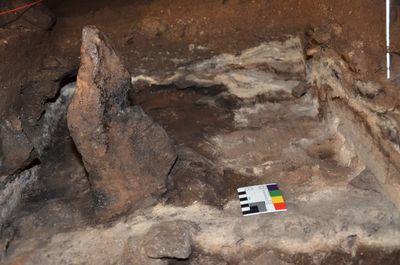


The use of Cloggs Cave in southeastern Australia for rituals dates back at least 25,000 years, archaeological excavations have revealed. The site was being used, probably for similar purposes, as recently as the 19th century, indicating possibly the longest record of continuous cultural practice in the world.
Alfred Howitt, an unusually attentive 19th century ethnographer, recorded rituals of the GunaiKurnai people of what is now called Gippsland, including the smearing of ash and charcoal powder to perform magic and healing or give power to curses.
Archaeologists digging in Cloggs Cave on GunaiKurnai country have found signs that similar rituals may have been performed in the cave since the peak of the last Ice Age.
The first evidence for the continuity of these cultural practices was reported two years ago with the discovery of a 12,000 year-old lightly charred Casuarina stick, smeared in animal fat. This is the same tree and same processing, as Howitt recorded, that was used for cursing in the area.
When the announcement was made, Professor Bruno David of Monash University said, “Nowhere else on Earth has archaeological evidence of a very specific cultural practice previously been tracked so far back in time.” We now know the cave has been used for ritual purposes for twice that long.
A team including Dr Elle Grono of the Australian National University and David analyzed lower layers of sediment in the cave and found thin layers of burnt grass including silica particles known as phytoliths.
There is no archaeological evidence of the cooking of vertebrates or plant foods in the cave, despite the excellent preservation conditions.
Dr Elle Grono and Professor Bruno David
“Unlike pollen, which is dispersed by wind or insects, phytoliths mostly accumulate at the spot where a plant decays. No plants grow inside the cave due to a lack of light, so the phytoliths must have been carried in by people or by animals such as possums on their fur or through their scats,” Grono said in a statement.
“We focused on half-burnt phytoliths from ashy layers, which can only have been brought in by people, as unburnt ones might have arrived through either means.”
The oldest ash layer detected is 25,000 years old, and the content of the older layers looks similar to the more recent ones. For example, the phytoliths are overwhelmingly from grasses, rather than woody plants, and indicate the whole plants were brought in, rather than flowers, stems or roots being selected. The species of grass can be seen to change as the world came out of the last ice age, and local climate conditions responded.
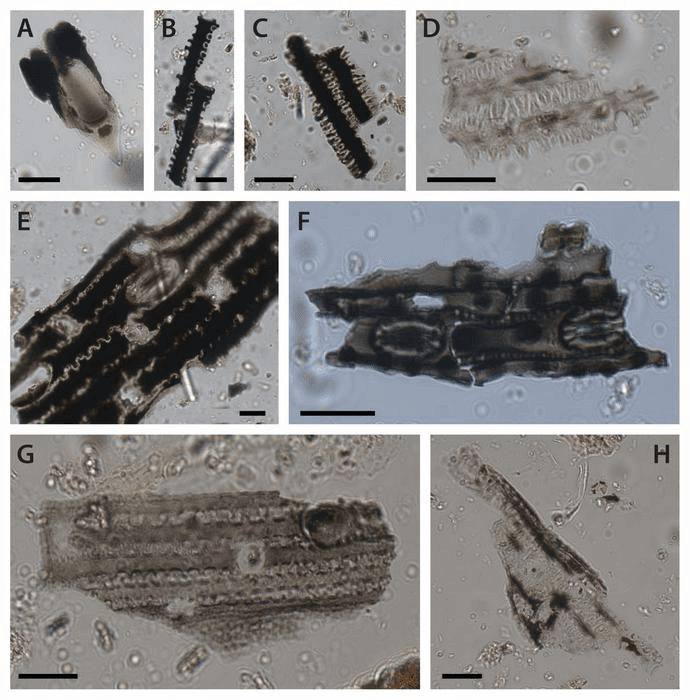
“Their burning is consistent with GunaiKurnai traditional practices of using ash to perform magic and rituals, and also to track the footsteps of anyone coming in, including spirit-Beings,” David said.
Despite the similarity to burning left by more recent cultural practices, Grono and David told IFLScience, “Unfortunately, in our new study on the phytoliths, the burning of grasses alone is not specific enough to be able to determine exactly what kind of ritual or other cultural practice was performed, as the grasses could have been burnt for a number of reasons.”
Consequently, the authors do not think that they can extend David’s previous claim of having tracked a specific cultural practice back another 13,000 years.
Nevertheless, they add, “There is no archaeological evidence of the cooking of vertebrates or plant foods in the cave, despite the excellent preservation conditions,” indicating the burning was most likely for ritual, not cooking or warmth.
2.jpg "GunaiKurnai Elder Uncle Russell Mullett at the entrance to Cloggs Cave")
Sediments have been building in the cave over the full 25,000 years, so layers of burning are interrupted by mud, demonstrating that the practice continued over vast periods of time, rather than taking place intensively more briefly.
The team found 73 layers of ash dating between 4,400 and 1,600 years ago, demonstrating use of the cave over many generations.
This last 4,000 years are particularly well recorded, and the presence of a ceremonial stone, installed around 2,000 years ago, adds to the evidence that cave burning was conducted for ritual, not practical purposes.
Looking further back, Grono and David told IFLScience, “It is possible that the reasons people brought plant matter, including grasses, into the cave and burnt them changed through time.”
“What we can say is that when we look to the past 4,000 years to present, and combine this with ethnographic texts and GurnaiKurnai knowledge, ritual uses appear to dominate in the more recent past. Moreover, from other archaeological evidence in the cave, there is no point at which the cave appeared to be lived in and used for daily mundane activities.”
Howitt published a book of his observations of Indigenous Australian culture, but his notes have turned out to be even more informative, although GunaiKurnai elder Uncle Russell Mullett had to fight a long battle with a museum for access.
The dig was conducted with the approval of GunaiKurnai representatives, who see it as part of the same process of restoring cultural knowledge that was lost when Indigenous Australians on missions were banned from speaking their own languages.
The study is published open access in Frontiers in Environmental Archaeology.