


 Technology
 PUBLISHED





Grief is a complex and hugely personal thing. None of us knows quite how we’ll deal with it until the time comes.
For many people, keepsakes and mementoes are an important bridge between the living and the dead, allowing us to feel we have a piece of our loved ones “with us” after they’re gone.
Some take comfort in the concept of an afterlife where our friends and family members can watch over us. Others may feel the spiritual echoes of their ancestors or see signs they interpret as messages from the beyond.
Losing a significant presence in your life can leave an almost unbearable void. When the people we once turned to for advice or to share our wins are no longer there, it’s understandable that so many of us yearn for one more conversation.
It’s this desire that inspired many of those who sought solace from their grief in the spiritualist practices that rose to prominence in the 19th century. Events like séances offered the tantalizing prospect of having that final conversation and achieving closure.
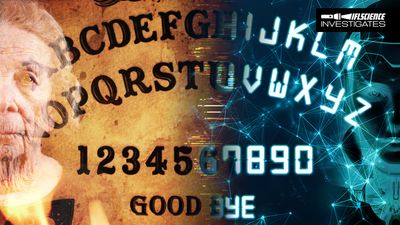
But in the 21st century, technology has progressed to such an extent that some say they can offer more. With the advent of AI large language models (LLMs) has come the “griefbot” – a model trained on someone’s digital data that some claim can act as a lasting avatar after they have died.
[Spiritualism] has this real blending of religion and science.
Dr Jessica Lloyd May
With griefbots, it’s possible to hear a deceased loved one speaking in a digital facsimile of their own voice or to receive messages of comfort and support in something close to their own words. This technology is not hypothetical: while it hasn’t yet received wide adoption, it’s already here for those who can afford it.
Are AI griefbots merely the logical progression from the spirit phones and photos of the past, or something entirely new? We asked experts for their thoughts.
“There’s a lot happening that had previously seemed impossible”
Rewind back to the 1800s. For many people, death was a much more present part of life than it is today.
Mortality rates were higher and more people died at home. Funerals were often held in a person’s home and were much more public affairs than they typically are now. Strict norms around mourning dress meant you could visually see at a glance who in your circle had recently experienced a loss.
On the surface, AI-based grief technology appears a world away from this. But, as historian and folklorist Dr Jessica Lloyd May told IFLScience, it may simply represent “the other side of the coin.”
The 19th century saw the rise of the spiritualism movement. Far from being something “apart” from the scientific and technological advances of the time, Lloyd May explained, the two were inextricably linked.
“The facilitating foundation of spiritualism is that in the 1820s, photography is invented. So for the first time, you can see an exact likeness of someone in your life if you have the means to afford it and to get it. And then in 1844, the telegram is invented. […] So there’s a lot happening that had previously seemed impossible.”
For someone facing the radical possibility of communicating with a friend on the other side of the world via telegram, an unthinkable prospect just decades earlier, it’s not such a leap to then, for instance, believe a medium who claims to be able to commune with the dead.
“It has this real blending of religion and science. Science definitely kind of facilitates it, and it becomes really tied in with it,” Lloyd May told us.
I think people have always struggled to come to terms with the passing of those whom they love, but also with the finality of death in general.
Dr Cristina Voinea
One of the most enduring images of Victorian spiritualism in action is the séance. Picture a cozy parlor filled with chintzy furniture and heavy drapes, lit with candles or oil lamps. The participants crowd around a small table perhaps holding hands, while the medium at the center of proceedings seeks to make contact with any deceased persons who may be present.
Perhaps they begin to speak in unfamiliar ways, channeling the voice of someone’s dead relative. Maybe objects are seen to move on their own or levitate. There could be unexplained noises or flickering lights, things the participants will struggle to explain when they think back on their experience.
Séances are just one example, but spiritualism was practiced in many different ways.
When photography was invented, there was a boom in popularity of “memento mori” photography, where people would have images captured of their loved ones after they had died. Because many people would not have had the chance to have their photo taken in life, this could be the only visual memento someone had.
The spiritualist twist on this was spirit photography, which was “having your picture taken with a ghost or a spirit of a departed person would then be with you in shot once it was developed.” Lloyd May told us of a famous example of Mary Todd Lincoln, Abraham Lincoln’s widow, who had a spirit photo taken of herself with the ghostly apparition of her husband standing behind her.
Similarly, “There was a really famous medium in London called Florence Cook and she had a spirit guide,” Lloyd May told IFLScience. Cook’s pièce de résistance involved this guide, called Katie King, physically emerging from a cabinet, presumably to the mingled horror and delight of attendees.
Perhaps they were so excited that they failed to make the connection that Cook and King were never seen in the same room together…
.jpg "black and white photograph of a woman in victorian dress with the faint ghost image of a man beside her")
Once the telephone and later radio were invented, things moved into the auditory realm, and people could “hear” the disembodied voices of those who had gone before.
Some attendees at séances and other events would be completely converted, fully accepting the validity of what they’d experienced. Others remained confirmed skeptics, and even tried to catch the practitioners out and figure out how it was done.
“I think there's sometimes this assertion when we look back on people who existed [in] the pre-modern age that, you know, they kind of believed everything,” Lloyd May said. “But people were challenging spiritualism from the start.”
But despite the detractors, spiritualism’s popularity didn’t wane. In the UK, there was a big spike in interest in the wake of World War I after the scale of mass death in Europe that was unlike anything ordinary people had witnessed before.
“I think one of the strongest links between spiritualism as a movement and grief tech like grief AI bots is that it all hinges on the idea of having a last conversation,” said Lloyd May. “And that is such a natural part of the grieving process, […] whether we like it or not, it's an essential part of the human existence [and] something that we are faced with.”
Everyone can develop these technologies and they can start selling them without talking to psychologists, without talking to ethicists [...] And it's more and more clear that we can't rely on the good intentions of these developers.
Dr Cristina Voinea
In this way, there’s a natural parallel between picking up a spirit phone or attending a séance and opening up a chat window with a griefbot. It’s the evolution, Lloyd May suggested, of “the memento mori photo versus a camera roll full of 10,000 photos that you’ve never printed off but have at your disposal should you need them.”
“It's a little bit of a Wild West out there”
“I think that the death of our loved ones is one of the most frightening and life-shattering experiences that we, or that one can live through,” Dr Cristina Voinea, Senior Research Fellow at the Uehiro Oxford Institute, told IFLScience.
“I think people have always struggled to come to terms with the passing of those whom they love, but also with the finality of death in general. I always give this example of the Epic of Gilgamesh, which was written more than 4,000 years ago.”
The epic poem is generally accepted as the world’s oldest surviving work of literature though the author is unknown. The remaining fragments were uncovered in the 19th century, inscribed onto clay tablets in the ancient Akkadian language using cuneiform script.
“It's precisely about a grief event, right? It's Gilgamesh being devastated by the loss of his friend Enkidu and then his whole journey into finding a solution to death. And I think this story captures something very enduring about human grief, the difficulty of accepting the loss of those we love, but also our desire to resist this finality or our desire to find a way to continue our relationships with them,” said Voinea.
While the temptation to strike up a conversation with the AI-generated “ghost” of a dead friend or relative may therefore be understandable, Voinea is one of a number of experts who have voiced concerns about grief technology.
One issue, she explained to IFLScience, is a lack of good scientific data.
“[We] don't have enough, or we don't have any empirical data that tracks the effects of these technologies on people's longer term overall wellbeing.” Without that, it’s hard to know for sure whether the use of grief technology has a positive or negative impact on the grieving process – we’re basically flying blind.
I think in general people are not accepting enough about death,” Fry told IFLScience. “And I think that grief is actually a really fundamental part of being alive [so] I still don’t buy the idea that grief is an unnecessary experience to have.
Professor Hannah Fry
“[It’s also] very hard to think of safeguards if you don't have data about what the effects of these technologies are on people who are using them,” Voinea added.
“My feeling is that it's a little bit of a Wild West out there, right? Everyone can develop these technologies and they can start selling them without talking to psychologists, without talking to ethicists, without assuming any sort of responsibility for the potential negative effects. And it's more and more clear that we can't rely on the good intentions of these developers.”
“I'm not saying that they have bad intentions. I'm just saying that they're not prepared to imagine or to foresee all of the negative possible consequences that can stem from the use of these technologies.”
One of these possible negative outcomes is that people may become reliant on griefbots and may therefore be prevented from processing their grief in a healthy way.
The fears that many have raised about the safety of forming strong, parasocial relationships with AI bots are magnified when that bot is a facsimile of a loved one, and when the user is in such a vulnerable time of life.
The topic came up when IFLScience met Professor Hannah Fry earlier this year ahead of her TV series AI Confidential. Grief technology was one of the themes explored in the first episode, when Fry met a developer who had created a digital replica of his own mother that he could speak to on the phone.
“I think in general people are not accepting enough about death,” Fry told IFLScience. “And I think that grief is actually a really fundamental part of being alive [so] I still don’t buy the idea that grief is an unnecessary experience to have.”
“But what I did realize [is] that when you’re in the most critical, acute phases of grief, I can understand how there would be some comfort in being able to converse with something that sounds like your loved one and not just a pre-record, something that can talk back to you.”
“A real kind of connection point between [AI grief tech and spiritualist practices] is that certainly with spiritualism, you can’t really ignore how heavily it was built on hope,” said Lloyd May.
While there were many skeptics during the 19th century, the bar for belief was much lower. Take spirit photos, for example. If you have not seen the likeness of your loved one for many years, even a vague imprint of them on a photo may have been enough for you to suspend your disbelief and take comfort in their perceived presence.
Contrast that with today, where many of us have smartphone camera apps full of photos of family and friends, cards and letters with their handwriting, and even voice notes or recorded messages.
While some spiritualists in the 1800s may have believed that the voice emanating from the spirit phone was truly that of their loved one from beyond the grave, AI griefbot developers today aren’t generally claiming to provide a portal to the afterlife. The fact that the digital avatar or voice is replica of that of a deceased person is not obfuscated.
There will always be something that these technologies miss when they aim to recreate us digitally.
Dr Cristina Voinea
But that may not matter.
“[We] don’t have longitudinal studies,” Voinea is quick to re-emphasize, “but a lot of the users of these technologies say ‘I like to pretend that I’m talking to my father or mother,’ and so on.”
In this way, griefbots may not be so far removed from having an imaginary conversation with a deceased loved one, something many people do in the typical course of their grief.
We also know that “with AI companions, AI friends, AI romantic partners […] people tend to use them less and less after a while,” Voinea explained, though we can’t be sure the same will hold for griefbots.
“We're never more vulnerable than when we are grieving, because we feel like we don't have a good grasp of what's happening. So, pushing these technologies in people's lives without any precautions beforehand, I think it's a little bit reckless.”
“We should think of data in terms of self-ownership”
So far, we’ve talked a lot about the safety of the person using grief technology. But there are also safety issues to consider when it comes to the subject, the person whose data is being used to train the AI bot.
Voinea believes our current data protection legal landscape is simply not ready to meet this new challenge.
“[Even] if you give consent or you say that you don't want the digital recreation of yourself to be created by someone, then what if someone gathers all the information that you've left behind that is publicly available and puts together these griefbots?” she asks.
There’s also the question of who owns the griefbot once it’s created – if you make a digital replica of yourself for your children, what happens years down the line when they, too, are gone? Can the replica be deleted?
“[Our digital data] is important for how we present ourselves to the world. It's important for our identity, so maybe […] we should think of data in terms of self-ownership. We own our bodies, we should own our data.”
In addition, there are questions around data security and whether we can trust private companies to keep our most intimate digital footprints safe.
We’ve seen some of this play out with digital replicas of celebrities. When a famous actor dies, for example, they leave behind a wealth of public domain data that could be used to recreate an AI version of them. But if this recreation is then used in a new film that the actor themselves did not consent to appear in, this opens up a deep philosophical question.
“Maybe we should start taking the idea of posthumous harm seriously,” Voinea mused. “Maybe [digital data] should be treated in the same way as we treat real physical dead bodies, with a little bit of respect.”
Another interesting question is whether these technologies should evolve after you die. Should they be connected to the internet?
Dr Cristina Voinea
“They’re not human”
A ghostly apparition in a photograph or a few words channeled through a medium may have brought great comfort to the bereaved in Victorian times. A message exchange with a bot that replies with the same syntax and tone that your deceased best friend used to use may still bring enormous comfort today.
But what both of these have in common is that they cannot capture the totality of a person.
“However good and persuasive LLMs are, they’re not human,” Voinea said. “They still feel very mechanical. They answer in a way that is very predictable sometimes.”
The authenticity of a griefbot depends entirely on the quality of the data used to train it. Even then, “there will always be something that these technologies miss when they aim to recreate us digitally,” Voinea added.
“[Who you are] and how you will respond to what happens to you is informed by your whole life experience. So in this sense, griefbots will be unable to capture the complexity of people’s identities. But also, another interesting question is whether these technologies should evolve after you die. Should they be connected to the internet?”
“It’s both the retrospective but also the prospective aspects of how we develop [griefbots] that pose serious difficulties […] I think.”
Even assuming the issues around consent and data protection can be resolved, then, are griefbots really worth pursuing when all’s said and done? Most people can come through a process of grief, despite the deep pain it causes, and eventually find a way to move on with their lives – Voinea called it “adapting to the new reality.”
Given that, she added, “maybe there’s no problem there at all. Maybe there’s no problem that technology should address or give us a solution to.”
Perhaps the ghosts are best left at the other end of the spirit phone, safely locked away in the cabinet, or lost in the digital depths of the machine.



 1
1