


 Technology
 PUBLISHED





Tattoos are, typically, permanent. This is both the appeal of the body art, but also one of its major drawbacks.
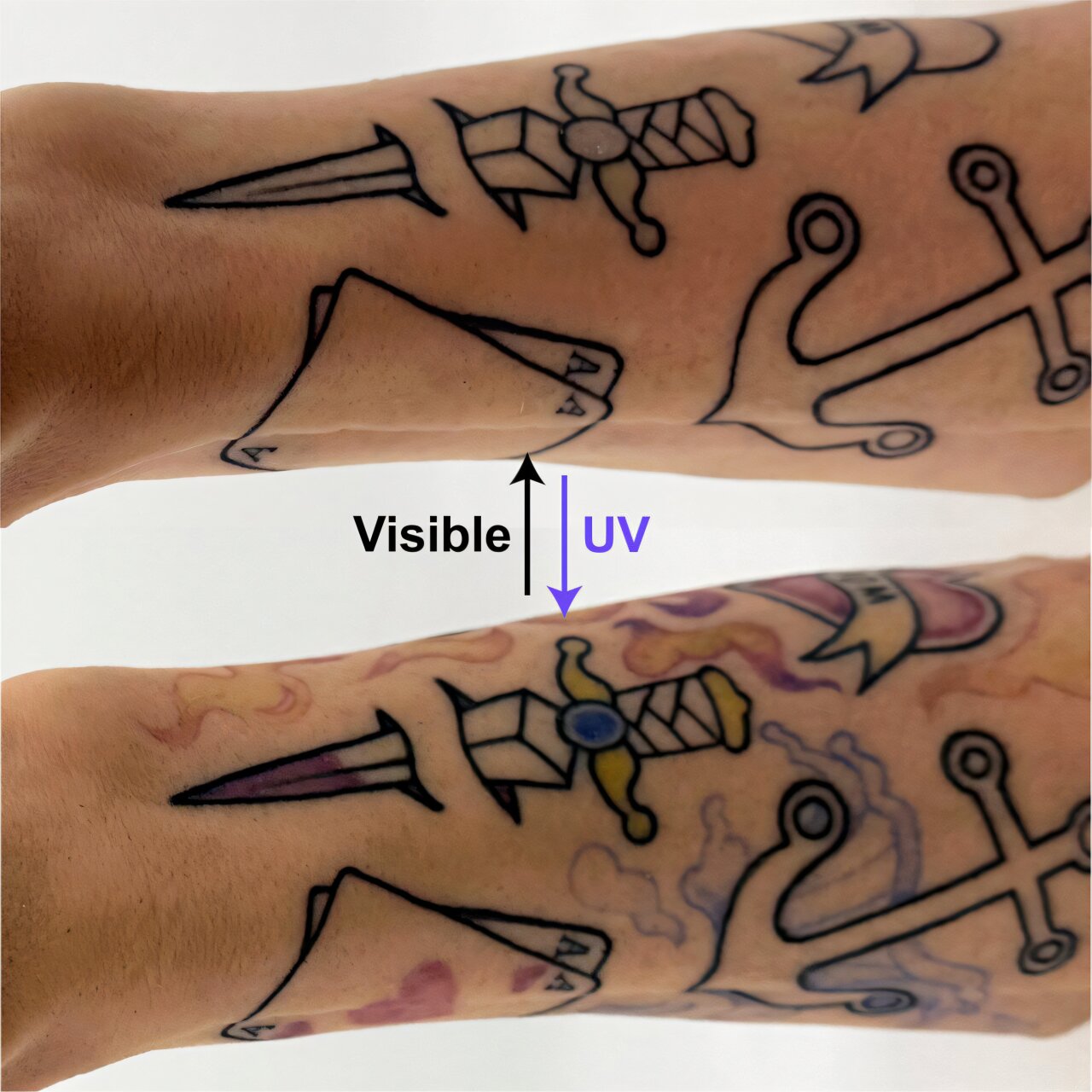
Now a team of researchers from the University of Colorado Boulder have developed a new type of tattoo ink that is almost invisible to the human eye until it is bathed in UV light, when it suddenly reveals a rainbow of colors.
The impressive new tech, known as PhotoTat, could one day help people hide their tattoos when conducting an important business meeting, for example, or maybe cover them up in societies which are less accepting of the art form.
“PhotoTat is like a switch,” explains Carson Bruns, the lead author of this latest study, in a statement. “You turn it on with UV light, but you can turn it off again when you go to grandma's house.”
But there could be even wider applications for this new ink.
When cancer patients are undergoing radiotherapy, for example, they often have to get small tattoos on their bodies to let doctors know where they need to target the radiation beams.
While only small, these tattoos can cause mental and physical scars, even when the cancer may have been treated.
“They're not beautiful, and they become a permanent reminder of a traumatic experience,” Bruns says. “With PhotoTat, we could turn an involuntary medical tattoo into something that's only visible to the doctor when you go into the clinic, and then it can be invisible the rest of the time.”
How to make a reversible ink
The new tattoo ink builds on what are known as photochromic materials. These change color reversibly in response to changes in light, and then go almost clear when that light is removed and the material returns to its original molecular configuration.
These materials have been used already in a range of products, such as paints and plastics, but they have never been added to a tattooable ink.
To do this, the researchers turned to something called polymethyl methacrylate, or PMMA. These form tiny spheres that look almost like glass, but critically, they are already used in a variety of medical settings including bone cement and dermal fillers. This meant the team could be relatively certain of its biocompatibility.
They then inserted the photochromic dyes into the PMMA. When these spheres were then excited by ultraviolet light, they changed color in a matter of seconds and turned either blue, magenta or yellow.
Once this had been achieved the researchers were then able to mix these primary colors in different ratios to create a much wider range of pigments.
“By mixing these primary colors, we can generate a full-color image,” says Bruns.
At first they experimented using the inks on artificial skin. This showed that two to three seconds of exposure to UV light was enough for the colorful tattoos to appear and last for a few hours. But, if they needed to conceal them more quickly, simply shining an LED light made them disappear again.
The team are keen to stress that while this does require exposing yourself to UV light, it is only the equivalent of around 10 seconds of sunlight.
Human subjects
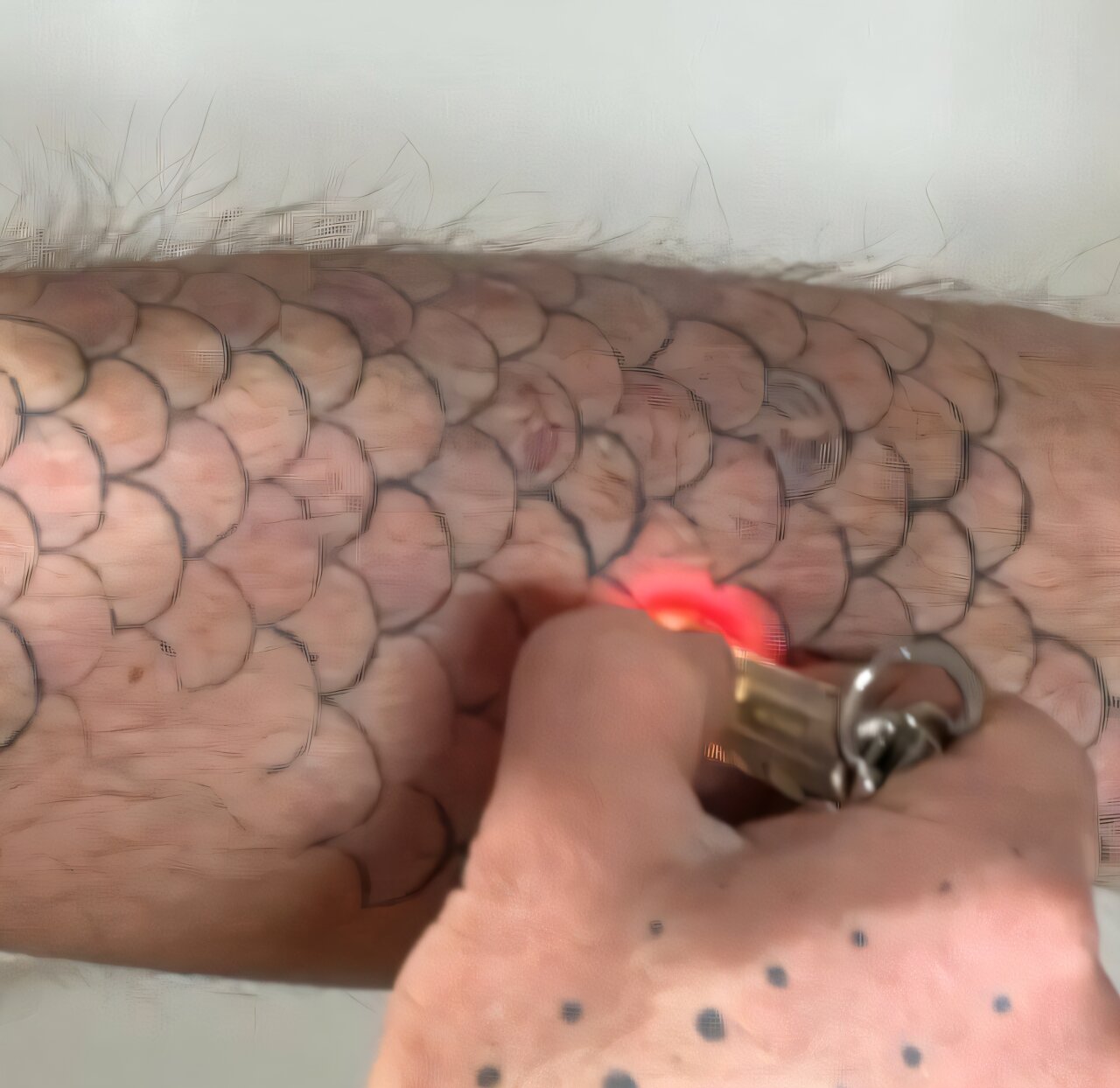
Then, Bruns took the perhaps unconventional approach of using himself as a test subject. He decided to try the new inks on himself, coloring in a fish scale tattoo he already had on his leg. He found no adverse impact from the ink, and two years later they are still working.
“There's a stigma, in science and in many cultures, around body art,” says Bruns. “I'm proud to be pushing against that.”
While the researchers have been working on this tech for the last few years, don’t expect it to be rolling out to tattoo parlours anytime soon. The ink still needs to go through official tests for toxicity, sterility, and purity before it can be injected into the skin of the wider public.
But maybe one day, tattoos won't be quite as permanent as they have been in the past.
The research has been published in the journal Matter & Light.




 1
1