Culture and Society
 PUBLISHED




When someone close to us dies, it can be very hard to adapt to a new world in which that special person isn’t in it. People have reported seeing their loved ones and even speaking to them after they’ve gone, sometimes called “after-death communications” (ADCs).
They’re not uncommon and though seeing people might be the plot to a popular horror film (come on, the statute of limitations has surely passed on The Sixth Sense by now), most people say they’re actually very comforting. A 2021 paper on ADCs found they were associated with an increased feeling of spirituality, but not religiosity. They also weren’t associated with any pathological or psychological conditions and tap into a key coping mechanism of grief.
“For the person experiencing the hallucination, they are important and meaningful events that they interpret in terms of continuing bonds with the deceased,” wrote the authors. “This adaptive outcome may be stymied where mental health professionals trivialise or pathologise disclosures about ADCs.”
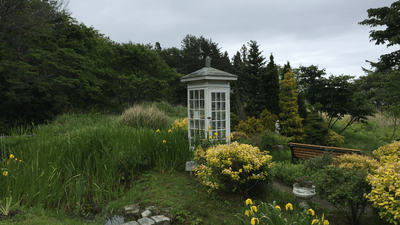
This concept of continuing bonds is one that’s been explored a lot in the context of grief management (though we're not sure if we're ready for "digital clones" of the dead). Of all things, the idea has led to a new red phone box in Dorset that has no connection to a telephone line. Why? Because it’s a “wind phone”.
“Speak to the wind”
The new installation is part of The Final Journey: An Exploration Of Death And Dying, and it was inspired by Japanese garden designer Itaru Sasaki, who in 2010 set up his kaze no denwa (or "wind phone”) to cope with the death of his cousin. Sasaki told NHK Sendai: “Because my thoughts couldn’t be relayed over a regular phone line, I wanted them to be carried on the wind.”
The personal project became public a year later, following the deadly Tōhoku earthquake and tsunami that killed over 15,000 people. Thousands of people have since used the phone, and it’s inspired similar projects all over the world.
In Joshua Tree, California, visitors are invited to take a seat in the privacy of the vast desert and catch up with loved ones who are no longer with us. Another wind phone in Wisconsin is available to people walking the trail in Sturgeon Bay. There’s even a website dedicated to connecting people with their local wind phone to “let the wind take your words”.
Reaching out to the dead
Be it talking on a non-functional telephone or other after-death communication, research has found that having contact with a loved one who has died is reported in a “surprising number of people”. There’s also a cluster of research that suggests it can have many benefits, with individuals who say they have continued that bond reporting coping more effectively with grief and experiencing less death anxiety compared to people who don’t report having any contact with their dead.
It's a phenomenon that’s steeped in unquantifiable contributing factors, such as a person’s religious and spiritual beliefs, mixed in with their lifetime’s worth of experiences. Still, it’s a comforting thought – given the inevitability of death – that a simple chat on the phone with an old, distant friend might be enough to provide some comfort during one of life’s most difficult experiences. Then, there’s always the enduring art of memento mori.