Culture and Society
 PUBLISHED






It was 04:28 am on Friday, 6 May, 2005, and the UK’s Labour Party was celebrating. Confirmation had just come in: they had won the previous day’s general election, securing a comfortable majority of seats in the House of Commons for the next five years.
To their supporters, it was good news. To their opponents, it was an indictment of the entire democratic system – because, while Labour had swept to victory and now controlled over 55 percent of the parliament, the party had only received about 35 percent of the votes cast.
The opposition Conservative Party, meanwhile, hadn’t even cracked 200 members of parliament (MPs) – their 32 percent vote share, less than three points behind their rivals, producing barely more than half the number of seats Labour had received.
The centrist Liberal Democrats fared even worse: they garnered more than one in five votes nationwide but were awarded less than one in 10 parliamentary seats for doing so.
For the smaller parties, the results were even stranger. The Green Party got zero MPs from their one percent of the vote; the Scottish National Party, with a mere 0.5 percent more, got six. The UK Independence Party got about one in every 45 votes cast but zero MPs; the Democratic Unionist Party got less than one in 111 votes cast and nine MPs.
It was, altogether, a strange result – but it was also, crucially, totally unsurprising. Why? Because, as it turns out, fully fair elections are basically impossible to implement in the real world.
“It is essential for the legitimacy of electoral systems that the number of seats in parliament roughly corresponds to the number of votes for each party (proportionality) and different parts of the country get their local candidates represented (regional representation),” write mathematicians Sebastian Tim Holdum at the University of Copenhagen and Frederik Ravn Klausen, a postdoctoral researcher at the University of Cambridge, in a recent paper.
But “mathematical definitions of regionality and guaranteed proportionality enable the statement of an impossibility theorem,” they continue. “No electoral system satisfies regionality, guaranteed proportionality and a fixed parliament size.”
The worst form of government, except for all others
Many of today’s democracies are already centuries old – and that, when you think about it, is pretty impressive. After all, designing an electoral system that can function across an entire nation, operate at least mostly fairly and representatively, and be stable enough to survive over decades or longer is no small feat, even before you take into account that it was all done on an Enlightenment-era education.
But of course, no system is perfect. The US system has produced presidents who lost the popular vote, most recently in 2016 but also back in 2000, 1888, 1876, and 1824. The UK’s system, as mentioned, produces results like those of 2005, and the disparity between votes received and seats earned was even wider in 2024, when Labour got around a third of the vote but took almost two-thirds of the seats.

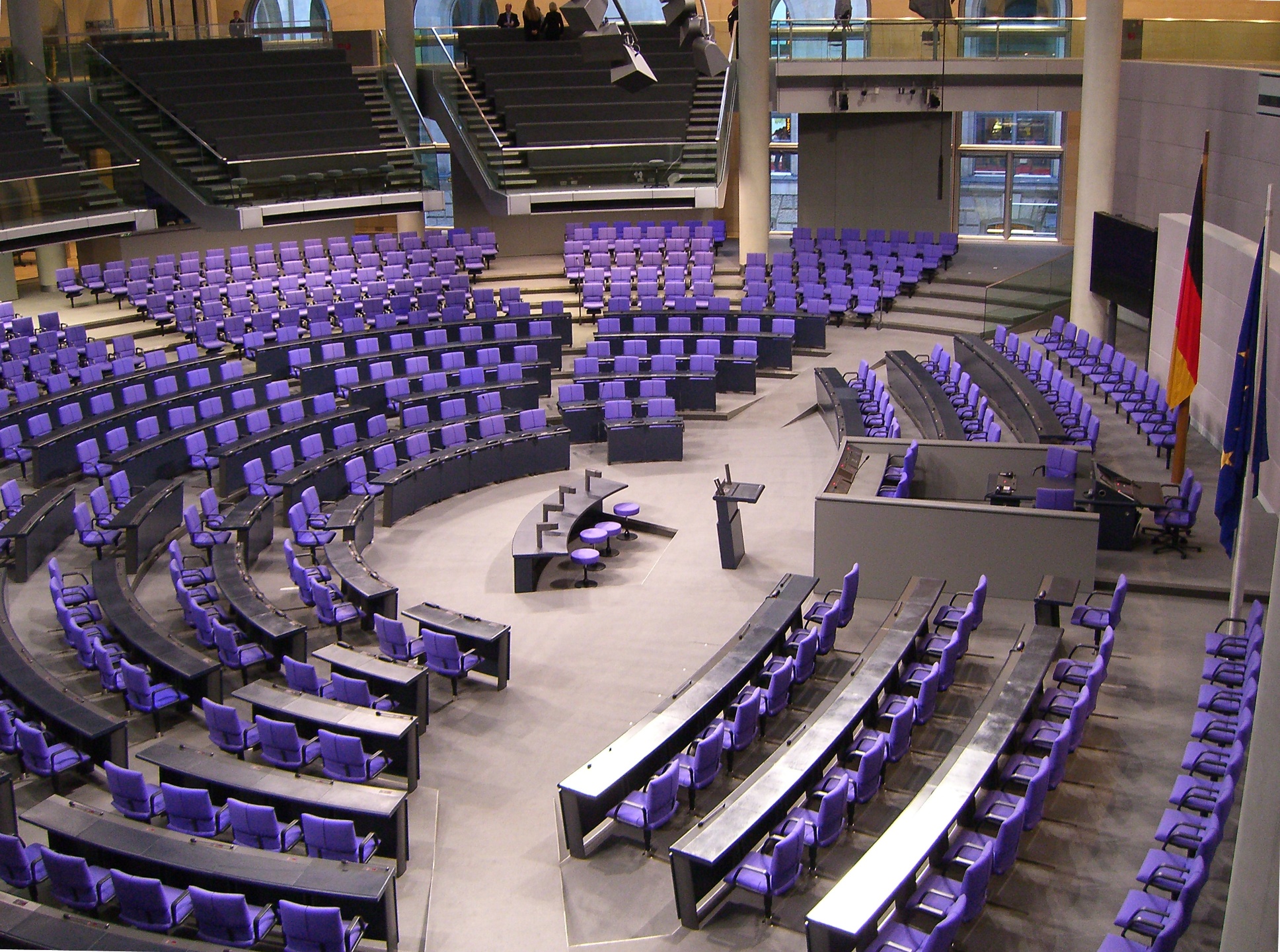
Even systems thought to be more fair, like Germany’s more proportional setup, have some surprising drawbacks – the country had to reform the whole system back in 2023 after rules designed to ensure fair representation forced the expansion of the country's federal parliament (the Bundestag) by 23 percent.
Faced with such problems, generations of political scientists and economists have tried to find the magic fix. All have failed – and, in 1950, economist Kenneth Arrow figured out why.
“Arrow's theorem […] can be interpreted as saying that there is no perfect voting rule,” Edith Elkind, Ginni Rometty Professor of Computer Science at Northwestern University in Illinois and an expert in computational social choice, told IFLScience in March last year.
“In more detail, Arrow's theorem considers the setting where there is a set of at least three candidates, each voter reports a ranking of these candidates (from best to worst, no ties allowed), and the goal is to come up with an overall ranking,” she explained. “The statement of the theorem […] is that no voting rule satisfies all of these conditions.”
But theory is one thing. Klausen and Holdum took a more practical approach: how are elections made fair in the real world? Where are compromises made? And what, exactly, are the results of those choices?
Method in the mathness
Math, generally, isn’t a fan of ambiguity. Sure, we can study messy, fluid, or turbulent phenomena – but we have to define our terms first, even in politics.
Klausen and Holdum’s paper is no exception. In delightfully mathematical terminology, the pair set out precisely which three properties they identify as being present in any “fair” electoral system: first, a fixed parliament size; second, regionality – meaning parties should keep the exact regional seats they win; finally, proportionality – that is, a party’s representation should more or less line up with its vote share.
All noble aims – even if, as you’re likely aware, they’re not always achieved in real-world elections. But could they be? Is it possible to create some hypothetical electoral system that can satisfy all three criteria?
Well, let’s assume it can be done. Our “perfect” system has a fixed parliament size – let’s call it m seats in total – consisting of C constituencies and T additional non-regional seats. Each constituency has some number of seats allocated to it, so any party that wins one of those seats we’ll label "red." Any party that wins some of the vote share but no regional seats, we’ll call "blue."
So, let’s play this out. None of the blue parties got enough votes for a regional seat – but they still won some votes. By the proportionality criterion, that means they need some number of non-regional seats, and with a little mathematical finagling, you can show that number has to be at least C – 1 for each blue party.
What does that mean overall? That T, the number of non-regional seats in the parliament, is at least (C – 1)pb, where pb is the number of blue parties in the system. Which is fine – except if you want to allow any kind of democratic evolution, because T, remember, is fixed.
If it wasn’t, our parliament size would grow and shrink unpredictably with each new session, and, as Germany found out in 2023, that’s just asking for trouble.
In other words, we have a contradiction – meaning that our initial assumption that this electoral system is “perfect” is false. “Once there are a certain number of political parties, one of these three components has to give,” Klausen said in a statement last week. “Otherwise the maths simply [doesn’t] work.”
“It’s not corruption or conspiracy,” he said. “It’s simply mathematics.”
The best of a bad situation
So, as we sit here barely three months out from US midterms, is democracy officially doomed? Not really, according to Klausen and Holdum.
“There is no such thing as a ‘perfect’ system,” said Klausen. Every system has some trade-offs: in the US and UK, proportionality is sacrificed; in Denmark, it’s the fixed parliament requirement; in Germany, it used to be the fixed parliament size, but since those reforms, it’s regionality. Sacrificing some of your ideals is a necessity – but there’s no need to give up more than you have to.
And not all those choices are equally problematic. “One can still say that some systems perform better than others,” Klausen said – take, for example, the “geographically ranked guaranteed proportionality” system, proposed as one “best” solution by him and Holdum.
It’s strong on proportionality and fixed size, but slightly less so on regionality: it works by allotting numbers of seats strictly by vote share, and allocating them specifically by strength of local performance. It’s not perfect – but it’s a pretty good approximation.
Of course, such wholesale electoral changes are unlikely to take place in the near future – but as politics becomes ever-more fractious and unrepresentative, public interest in fairer systems is only likely to increase.
We’ve seen a growing movement in support of proportional representation in the UK and controversial restrictions to enfranchisement in the US; increasingly, people are pushing for changes in how they elect their representatives – so it’s worth asking what, exactly, those changes should be.
“That either proportionality, regionality and fixed parliament size must be sacrificed is no excuse,” Klausen said. “One [electoral system] can have all three principles approximately, yet many systems do not.”
The paper is published in the Annals of Operations Research.