Culture and Society
 PUBLISHED


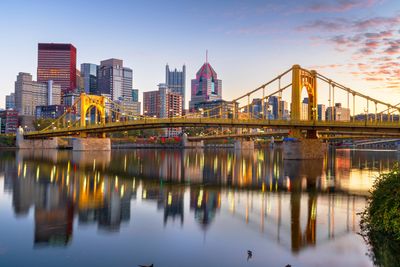


Much can change in 60 years. For decades, Pittcon – the world’s largest laboratory science conference and exposition – has been a hub where industry-defining collaborations begin. But in 2027, the annual event will be returning to the city of its birth, Pittsburgh, Pennsylvania, for the first time since 1967. This is no trivial reunion; by returning to “the city of steel”, the conference will combine its own accumulated network of experts with a city that is now at the cutting edge of modern science.
Parting ways
When it first started in 1950, Pittcon (then known as The Pittsburgh Conference on Analytical Chemistry and Applied Spectroscopy) was so small that it was able to fit into a single hotel: Pittsburgh’s William Penn Hotel. This first meeting attracted around 800 attendees and 14 exhibitors, but over the next decade the conference became increasingly popular.
By 1968, it had outgrown Pittsburgh and a local hotel worker’s strike forced it to relocate to Cleveland for the first time. There it stayed for the next 11 years before relocating to a different North American city every year after that. As it traveled, its scale expanded, gradually developing into the world-leading scientific conference it is today.
At the same time, Pittsburgh underwent its own transformation. Throughout the first half of the 20th century, the city was dominated by steel and heavy manufacturing. In fact, its production was so high that it was recognized as a global center of these industries. But after the Second World War, things started to change. A mix of foreign competition, corporate restructure, and aged technologies led to an economic crash and eventual deindustrialization by the early 1980s.
As significant as this loss was, the city was already beginning to be known for more than its steel. In particular, the University of Pittsburgh contributed breakthrough achievements in healthcare science, including the development of the first polio vaccine during the 1950s, pioneering organ transplantation in the 1980s, redefined breast cancer treatments, and later Alzheimer’s imaging techniques.
At the same time, Carnegie Mellon University became a premier global leader in computer science, robotics, and early artificial intelligence (AI) programs. Decades later, the university remains a leading figure in the AI ecosystem as well as material sciences, especially the development of nanotechnologies.
Pittcon 2027: a reunion decades in the making
Pittcon’s return to Pittsburgh couldn’t be more auspicious. The city’s cutting-edge AI industry is helping transform how chemistry is conducted, allowing researchers to solve problems and perform deeper data analysis faster than ever before. As the field becomes more reliant on AI tools, Pittsburgh and its network of scientists, researchers, and professionals will become more valuable for future innovation, collaboration, and entrepreneurship.
By returning to its roots, Pittcon can connect this thriving scientific community with its own network of international experts – there has rarely been an opportunity for such meaningful interactions to occur.
As with previous events, attendees will benefit from Pittcon’s diverse conference program of specialist talks, symposia, oral and poster presentations, as well as over 100 short courses. These courses cover topics extending across the analytical chemistry and laboratory science fields and are a valuable way to gain personal instruction on specific issues or techniques from experts.
Pittcon is also a nonprofit organization. Ninety percent of its net revenue is committed to fostering science education at local schools and universities. By supporting Pittcon, you can help the next generation experience the joy of science.
Registration opens on October 13, 2026. Come be part of the event that’s shaping the future of chemistry.
Click here to learn more.
This article is an advert and includes sponsored material. Read our transparency policy for more information.