


 Health and Medicine
 PUBLISHED


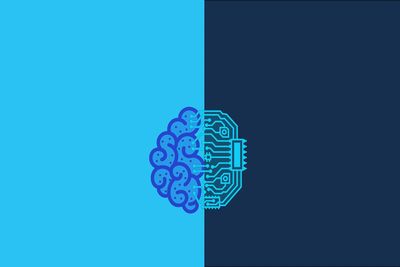


Here in the future, computers are almost frighteningly powerful. They can calculate trillions of digits of pi, they can convince us to kill, the whole lot – and the only cost? The local environment, global climate, enough water to sate six Denmarks, and being driven to insanity by the audio equivalent of water torture.
Now, perhaps you think that’s all a price worth paying for the ability to hallucinate a bunch of nonexistent books or be a Nazi – but here’s the thing: we already have a computer that’s far more powerful than any AI out there, and it uses a fraction of a percent of the energy to do so.
Even better: you already own one. “The human brain is an amazingly energy-efficient device,” wrote Advait Madhavan, a research scientist at the National Institute of Standards and Technology (NIST), back in 2023. “In computing terms, it can perform the equivalent of an exaflop – a billion-billion (1 followed by 18 zeros) mathematical operations per second – with just 20 watts of power.”
Considered as an organ, the brain is admittedly extremely energy-hungry: it accounts for about two percent of your body by weight, but about 20 percent of your basal energy consumption. But objectively, that’s not very much – given an average daily intake of, say, 2,700 calories, it only adds up to a paltry 340 or so to power the brain.
It’s the equivalent of 0.4 kilowatt-hours – enough to power an old-fashioned 60W incandescent lightbulb for less than seven hours. It’s less than the amount of energy you’d get from three bananas. It is, basically, a trifling amount, especially compared to the alternative: “One of the most powerful supercomputers in the world, the Oak Ridge Frontier, has recently demonstrated exaflop computing,” Madhavan pointed out. “But it needs a million times more power [than the brain] – 20 megawatts – to pull off this feat.”
Running the Oak Ridge Frontier, therefore, would take the energy equivalent of – well, three million bananas, for one thing. But perhaps a more sensible comparison is this: to run it for a day, you’d need to burn 207 tonnes of coal, producing 340 tonnes of CO2 in the process. If not that, then 120,000 liters of liquid petroleum would do, and only produces about half as much CO2; alternatively, you could burn 84 million liters of natural gas, and release just 74 tonnes of CO2.
These are cheques that we can’t keep cashing indefinitely. But at the same time, computers and AI – and their ever-increasing energy demands – aren’t going away any time soon. At this point, it’s worth asking: is there something better we could be doing?
Learning from the brain
There’s an oft-repeated factoid – not true, but famous nonetheless – that humans only use 10 percent of our brains at any one time. Of course, in reality, we’re using most of our brains most of the time, and almost all of it some of the time – but the saying, while false, does hint at a slightly more subtle truth.
“When you think about a healthy human brain – it doesn't fire all neurons or use all of its brain power at once,” pointed out Chang Xu, an associate professor in the University of Sydney’s Artificial Intelligence Centre and Net Zero Institute, back in 2024. “It [has] around 100 billion neurons, which it selectively uses from different hemispheres of the brain to perform different tasks or thinking.”
For the cost of just a couple dozen watts, your brain can power your entire body; it can create an inner monologue and conjure images inside your mind out of nothing; it can recognize the shape of a ball thrown toward you, perform complex mathematical calculations to figure out where it will hit, and move your arm to the correct place to catch it, all within the space of a few milliseconds.
It’s a frankly astounding efficiency – one which scientists have struggled to replicate in artificial systems – and it’s thanks, in a large part, to the way things are arranged inside.
“An important difference between [a] computer and the brain is the mode by which information is processed within each system,” explained Liqun Luo, Professor of Biology at Stanford University, in 2018’s Think Tank: Forty Scientists Explore the Biological Roots of Human Experience.
“Computer tasks are performed largely in serial steps,” Luo wrote. “This can be seen by the way engineers program computers by creating a sequential flow of instructions. For this sequential cascade of operations, high precision is necessary at each step, as errors accumulate and amplify in successive steps.”
The brain also uses these kinds of serial steps to complete tasks – but unlike with computers, that’s not the only trick available to it. Your brain “also employs massively parallel processing,” Luo wrote, “taking advantage of the large number of neurons and large number of connections each neuron makes.”
Take that example of catching a ball. A computer would have to notice the ball first, measure its movement second, calculate its trajectory third, estimate an end location fourth, before finally sending your hand to the desired location. Your brain, on the other hand, does all that almost at once: “By the time signals originating in the photoreceptor cells have passed through two to three synaptic connections in the retina, information regarding the location, direction, and speed of the ball has been extracted by parallel neuronal circuits and is transmitted in parallel to the brain,” Luo explained.
“Likewise, the motor cortex (part of the cerebral cortex that is responsible for volitional motor control) sends commands in parallel to control muscle contraction in the legs, the trunk, the arms, and the wrist, such that the body and the arms are simultaneously well positioned to receiving the incoming ball.”
For computer engineers, it raises a tantalizing possibility. Could computers be designed which took their inspiration from this massively parallel setup? And if so, what advantages would they bring?
The next frontier
As uncannily human as modern AI programs can seem, they are, on a very fundamental level, not. It’s not just that they can’t process information in ways we can – the opposite is also true: “Traditional AI models rely heavily on backpropagation,” explained Suin Yi, an assistant professor of electrical and computer engineering at Texas A&M’s College of Engineering, in March last year – “a method used to adjust neural networks during training [which] is not biologically plausible”.
Creating a computer more akin to the human brain, therefore, would require a wholesale redesign. New algorithms would be needed, running on new topographies; a ground-up re-imagining of how connections and processes should be carried out and prioritized.
Luckily, there’s a bunch of people already doing exactly that. “What we did […] is troubleshoot the biological implausibility present in prevailing machine learning algorithms,” Yi said. “Our team explores mechanisms like Hebbian learning and spike-timing-dependent plasticity – processes that help neurons strengthen connections in a way that mimics how real brains learn.”
Yi and his team are just one of many now working on AI systems inspired by nature’s remarkable efficiency.
Researchers at the University of Surrey, for example, are toying with a technique called Topographical Sparse Mapping – a method in which neurons are connected not to all possible, but only those directly nearby, massively reducing a network’s energy requirements. An additional tool, known as Enhanced Topographical Sparse Mapping, can refine this further, pruning away unnecessary connections – just like how our own brains streamline their neural connections as they learn.
“When we mirror [the brain’s] topographical design, we can train AI systems that learn faster, use less energy and perform just as accurately,” explained Mohsen Kamelian Rad, a PhD student in Surrey’s Nature-Inspired Computation and Engineering (NICE) group, last year. “It’s a new way of thinking about neural networks, built on the same biological principles that make natural intelligence so effective.”
Meanwhile, teams at the University of Sydney and the University at Buffalo are chasing similarly brain-inspired neural models. The aim isn’t just to maximize efficiency – though that of course is a priority – but to create computers that are more intuitive; able to use vague or limited data, or process enquiries non-linearly.
In short, “next-generation computers are going to look very different from the computers of yesterday,” Madhavan concluded. “As the quantity and nature of our data gathering changes, the demands from our computing systems must change as well.”
“Hardware that powers tomorrow’s computing applications must keep energy impacts minimal and be good for the planet,” he cautioned. “By being in touch with the latest developments in brain science, next-generation computers can benefit from the recently uncovered secrets of biology and meet the ever-increasing demand for energy-efficient computing hardware.”



 3
3