Health and Medicine
 PUBLISHED
 3
3


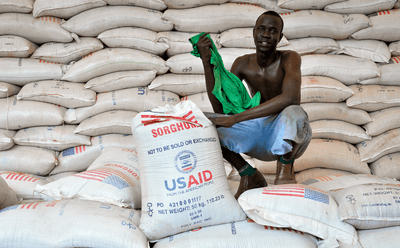


When the world's richest man helped to slash aid for the world's poorest children, he claimed that any harmful impact was minimal, suggesting instead that "deaths in Africa DECREASED" after the cuts. However, peer-reviewed research tells a very different story.
The collapse of USAID
In January 2025, the Trump Administration announced a 90-day freeze on all foreign aid from the US government. Thousands of contracts were dropped, leading to the permanent dismantling of the US Agency for International Development (USAID) in July 2025.
Elon Musk, presidential advisor at the time and then-head of DOGE, played a pivotal part in the cuts, fanning flames by calling USAID "a criminal organization" that had reached the "time for it to die".
One of the most infamous programs to be shaken up was Ebola surveillance and prevention in eastern Democratic Republic of Congo and Uganda. By May 2026, an outbreak of the virus spread through this very region, which many public health experts believe was worsened by the USAID funding withdrawal.
Another big one was the President's Emergency Plan for AIDS Relief (PEPFAR). Launched in 2003, the program had kept more than 20 million people with HIV alive through antiretroviral drugs. Within weeks of the freeze, clinics across Africa went dark and patients were turned away with nowhere else to go.
Some of PEPFAR's work has since returned, but it has been noted that the upset caused “severe and devastating” disruption globally, with thousands of staff being sacked and many clinics closing.
What did the new study find?
In a new study, researchers at Columbia University Mailman School of Public Health have looked to evaluate the global health consequences of the 2025 US foreign aid freeze.
The study revealed an immediate impact on health and humanitarian systems worldwide, most notably among sexual and reproductive health services, HIV treatment access, the collapse of referral networks, and help for people during a mental health crisis.
Those who were most gravely affected were from already vulnerable and marginalized groups, including women, girls, people who identify as LGBTQ+, sex workers, people living with HIV, and migrants.
“For many decades, the U.S. government has been the world’s largest contributor of foreign aid, with much of that funding essential health services," first author Sarah Branoff, from Columbia's Heilbrunn Department of Population and Family Health, said in a statement.
"The abrupt termination of foreign aid in 2025 was a systems-level shock that exposed structural weaknesses in global health financing and governance.”
The human side of the story
The team took a qualitative approach to the issue, gathering their findings through 53 interviews with clinicians, community health workers, government officials, NGO leaders, and humanitarian agents in Nepal, Kenya, and Colombia, as well as an online survey involving almost 100 global health practitioners.
This approach, they say, helps to go beyond the numbers and address the human impact for people living in the midst of the shake-up.
“The findings lay bare what many of us on the ground have known: The funding disruption was a systems-level shock with a deeply human cost," explained co-author Julia Kosgei, MA, co-founder and head of health at a strategy group in Kenya.
"Adolescents lost access to family planning and SRHR services built over years of investment; pregnant women were turned away from facilities; communities that had made hard-won gains in reducing HIV transmission risked losing that progress."
“Each data point represents a real person: a health worker facing financial ruin, a girl without contraception, a mother without prenatal care," she added. "This research ensures those voices are heard, and insists that what appears to be a political decision thousands of miles away is, here in Kenya, a matter of life and death."
The numbers are just as damning
But if it's numbers you're after, other researchers have already worked it out. One impact evaluation found that USAID-supported programs saved 92 million lives across the world from 2001 to 2021, including over 30 million children under the age of five. Without those programs, scientists calculated there could be an additional 14 million avoidable deaths by 2030.
A more recent report in May in The Lancet Global Health projected the mortality consequences if the current trend of defunding foreign aid continues, with a possible staggering 22 million avoidable deaths by 2030, including 5.4 million children under five.
The new study is published in BMJ Public Health.