Health and Medicine
 PUBLISHED


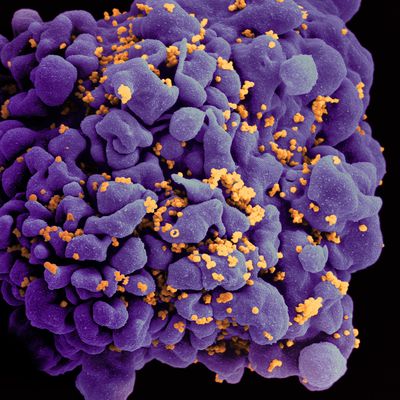


A study of women and girls in a part of South Africa with high levels of HIV infection has shown that the virus has the potential to influence human evolution by selecting for specific immunity genes, but this has been largely prevented by the success of antiretroviral drugs.
Before antiretroviral therapy (ART) first became available in South Africa around 2004, outcomes of HIV infection and rates of transmission of the virus from mother to child – especially in KwaZulu-Natal province, where the prevalence of the virus in antenatal clinics is around 40 percent – were strongly dependent on a gene called HLA-B.
Those who had protective forms of this gene were found to have lower levels of the virus in their bloodstream, correlating with reduced rates of transmission and increased likelihood of survival for both mother and child.
By modeling how these differences in transmission and survivability would have affected the population if KwaZulu-Natal had never got access to ART, the study shows there would have been a 38 percent decrease in disease-susceptible HLA-B variants in the population over a 45-year period between 1990 and 2035, while the frequency of protective variants would have doubled.
Co-evolving with pathogens means things are constantly changing.
Bridget Penman
"Basically, without therapy, many more people die," senior author Philip Goulder at the University of Oxford told IFLScience. "So, if there's a differential effect on survival mediated by the particular HLA genes you have, then you're going to see natural selection happening. And, indeed, we could see it, and we could also see that antiretroviral therapy was blocking that process."
The findings address a long-standing hypothesis in evolutionary biology that infectious diseases help maintain diversity in immunity genes and drive the evolution of our immune systems. Indeed, the HLA region is the most variable in the human genome – a fact thought to reflect eons of co-evolution between humans and the pathogens that threaten us. But direct evidence of this process playing out in real populations has been scarce.
"When you think about general natural selection, you might think of there being an optimum state, like a giraffe's neck having an optimum length," co-author Bridget Penman, also at Oxford, told IFLScience. "But co-evolving with pathogens means things are constantly changing, because if a host has an adaptation, the pathogen can also have an adaptation."
Over the course of evolutionary time, and under the influence of countless pathogens, the idea is that there will have been constant subtle changes to the frequencies of HLA variants across human populations. That HIV alone could have doubled the frequency of some of these variants over just a few decades reveals how exceptionally devastating this virus can be.
According to the World Health Organization, an estimated 40.8 million people were living with HIV at the end of 2024, of which 1.3 million people were infected that year. Though HIV-related deaths have decreased by 54 percent since 2010, 630,000 people still died globally from HIV-related causes in 2024. More than 20 percent of people living with HIV worldwide are in South Africa.
"When I'm talking to people about this in England, pretty much the main response I get is 'I had no idea 40 percent of [mothers attending public antenatal clinics] are infected with HIV today in parts of South Africa'," said Goulder. "You know, I think the scale of the epidemic is something people just think has been dealt with and has gone away."
To both Goulder and Penman, the results are a reminder of the importance of access to ART for vulnerable populations. Over the past 15 years, access to these drugs through HIV clinics and other medical centers in South Africa and elsewhere has been supported in large part by international aid initiatives. It's these interventions that have helped keep the virus in check.
"It's straining at the leash to be released," said Goulder, "and it's being stopped by antiretroviral therapy. But that will change the moment access to antiretroviral therapy changes."
In 2025, the Trump administration significantly cut USAID funding, disrupting HIV services across more than 50 countries. Over a year later, many clinics in countries like South Africa – particularly those serving vulnerable groups – have closed, while others have limped on, though with significantly less funding at their disposal.
"The programmes we've put in place to distribute HIV treatment and PrEP [pre-exposure prophylaxis] globally are the most powerful tools we currently have to end HIV, and it is essential these programmes continue," Zabrina Brumme at Simon Fraser University in Canada, who was not involved in the study, told IFLScience.
The findings are also relevant to researchers developing vaccines against HIV that work through T-cell immunity, the mechanism by which HLA variants have their effect. One such researcher, Bruce Walker at the Ragon Institute, is optimistic that this avenue could lead to future treatments, and he notes that the Ragon Institute currently has a T-cell-mediated vaccine candidate undergoing clinical trials.
"These are the kinds of insights that will ultimately get us to the point where we can harness the immune system to prevent and cure human disease," he told IFLScience, "in a way that will transform medicine."
The study is published in Proceedings of the National Academy of Sciences.
Correction (April 28, 2026): Following a conversation with Philip Goulder, a typo was identified in the quote in paragraph 5. "HIV genes" has been corrected to "HLA genes".