Health and Medicine
 PUBLISHED


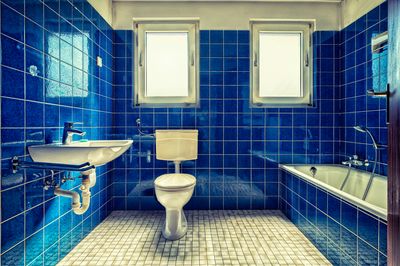


Lid down or lid up? If you’re in the former camp, you probably feel quite strongly about the people in the latter camp… and thanks to a new study, you’re about to be vindicated. Feel free to take a moment to gloat.
The question of whether you should lower the lid before flushing the toilet is a divisive one. You should have seen the expressions on the faces of some of the IFLScience team when it was suggested that some people are lid-leaver-uppers.
The problem at hand is aerosols. When you flush the toilet, it sends everything that was in the bowl swirling around at some speed, and unfortunately not all of it stays safely contained.
“During flushing, high-velocity water impacts surfaces and creates turbulence, generating droplets that can become airborne and remain suspended as aerosols,” explain the authors of the new paper.
“These droplets may contain microorganisms originating both from the water and the user.”
Back in 2022, scientists at the University of Colorado Boulder gave us all some unforgettable visuals of this phenomenon with the help of mesmerizing green lasers.
Those airborne particles could potentially include microbes that can cause human disease, something that came to the fore during the COVID pandemic but has also been flagged as a mode of transmission for viruses like flu and norovirus.
And it’s not just about flinging pathogenic particles all over the surfaces in your bathroom.
“Some studies detected these aerosols at adult breathing height, indicating a potential pathway for inhalation exposure,” said Lira Adiyani, Flinders University PhD student and first author of the latest study, in a statement.
To try and settle things, Adiyani and her co-authors carried out a systematic review of 22 previously published studies of toilet-generated aerosols.
A range of different study designs were included, such as ones where bacteria had been artificially introduced to the toilet water, as well a different flush mechanisms.
Most focused on sit-down toilets, but a few did include data from squat toilets, which are more standard in some parts of the world, and even urinals.
One issue the authors found was that there have been comparatively fewer studies of flushing with the lid down.
“Although a definitive conclusion cannot be drawn from the limited data,” they write, “available evidence suggests that lid position may influence aerosol dispersion rather than overall aerosol generation.”
So, the leaver-uppers aren't totally off base. Putting the lid down doesn’t actually seem to make much difference to the quantity of aerosols that are released. But what it does do – and this is potentially important – is redirect them.
As the paper explains, “when the lid is open, aerosols disperse more broadly into the surrounding environment, whereas with the lid closed, particles may be redirected through gaps between the lid, seat, and bowl rim.”
Aerosols can still escape, but you’re less likely to breathe them in. Depending on the design of your toilet seat and how much of a gap there is, you could theoretically reduce the amount of aerosol escape even more.
Improving the ventilation in the bathroom could also be a factor, though the results were not “statistically conclusive” according to the authors.
If using a toilet with a dual flush, selecting the lower flush volume if possible will also minimize aerosols. Regular cleaning and maintenance of the facilities will help limit the level of microbial contamination that’s there in the first place.
“Further research is needed to develop design and engineering interventions that reduce toilet-generated bioaerosols, particularly in high-risk settings such as hospitals,” said co-author Professor Harriet Whiley.
But until we have new-and-improved loos, and even though the evidence is not definitive, Adiyani said she is firmly in the “lid closed” camp.
“Based on the available evidence, I would recommend closing the toilet lid before flushing, where a lid is available, as a precautionary measure to minimise potential inhalation exposure – while recognising that it does not completely prevent aerosols from escaping.”
Of course, not every toilet does have a lid – plenty of public facilities don’t, so you’ll just have to take your chances with those. Maybe just don’t linger when you’re done.
The study is published in the journal Science of The Total Environment.