


 Health and Medicine
 PUBLISHED


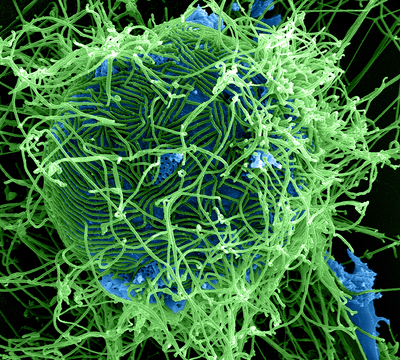


The latest Ebola outbreak was declared in May 2026 – and in less than 100 days, scientists have already vaccinated the first volunteer in the world's first clinical trial of a vaccine designed to protect against the virus.
On July 24, a person became the first human to receive the ChAdOx1 BDBV vaccination, marking a bold new step in the world's first clinical vaccine trials against Bundibugyo ebolavirus.
The shot was developed by scientists at the University of Oxford's Oxford Vaccine Group and Pandemic Sciences Institute, building on the same vaccine technology they used to create the Oxford/AstraZeneca COVID-19 vaccine.
Drawing on the many lessons from the COVID-19 pandemic, the team moved quickly to develop a new Ebola vaccine as soon as the outbreak took hold in May 2026. They launched the BD-Ebov study in early July, and human trials are following hot on its heels.
"Vaccinating the first participants in a first-in-human study is always a significant moment. While these are very early days, they represent an important first step in evaluating this vaccine in humans. Over the coming months, we will continue vaccinating and monitoring participants, and assessing the safety and immune responses generated by the vaccine," Dr Peter Skydmore, Lead Study Doctor for the BD-Ebov trial at the Oxford Vaccine Group, said in a statement.
The Ebola outbreak heats up in Africa
The need to act fast is all too evident. In this latest flare-up, cases of Ebola were first reported in May 2026, in Ituri Province in the northeastern Democratic Republic of the Congo, and across the border in Western Uganda. However, it's suspected that cases had been quietly lurking in the region since the first few months of 2026.
On May 17, 2026, the World Health Organization declared it a Public Health Emergency of International Concern. By the most recent count, close to 3,200 people have reportedly been infected and more than 1,405 people have died, making it the fastest-spreading outbreak of the virus ever recorded.
The outbreak is caused by Bundibugyo virus, one of four ebolavirus species that can trigger haemorrhagic fever in humans, bringing violent fevers, internal bleeding, extreme lethargy, and severe headaches.
Most previous Ebola outbreaks on the African continent have been caused by Zaire ebolavirus, a species for which vaccines and therapeutics already exist. However, Bundibugyo ebolavirus is a different story, with no current vaccines or treatments available.
“With Bundibugyo cases increasing at a concerning rate in the DRC, this epidemic shows no signs of stopping. The need for a vaccine against this specific Ebolavirus becomes more urgent every day,” added Dr Richard Hatchett, CEO of Coalition for Epidemic Preparedness Innovations (CEPI), the funders of this trial.
“The rapid work of the Oxford team to begin early-stage testing of their vaccine is a much-needed step towards developing the tools that could help bring this outbreak to an end.”
A vaccine in 100 days?
IFLScience did a deep dive on the rush to create the Bundibugyo vaccine and spoke to Mark Lucera, Director of Strategy at CEPI, about their dream of developing a vaccine for each new epidemic or pandemic within 100 days.
“Getting to 100 days for us is not about skipping steps. It's not about taking a shortcut. It's really about where can we do the work as a head start in ‘peacetime’,” Lucera told IFLScience
“Our hypothesis is if you know enough about that, the knowledge of an entire virus family, you might have confidence in the data from all these different types of vaccine projects in that family to say, oh, if we look at all this together, that's a pretty strong package of data that says these vaccines are safe,” he added.
“It's not saying that clinical trials aren't important because they're absolutely urgently needed for any product development that you take. But how can you be smart about how you design those when you do them, and the types of data you need in order to make decisions about [the] safety and efficacy of a vaccine?,” Lucera continued, speaking to IFLScience.
Will other vaccines work?
There are other teams on the case too. The Leibniz Institute for Primate Research in Germany has been researching the strain and found evidence that antibodies generated by vaccination against Zaire ebolavirus also neutralize the current Bundibugyo ebolavirus variant.
Markus Hoffmann, head of the study and first author, explained in a statement: “Our results need to be confirmed in studies using infectious Bundibugyo ebolavirus. In addition, further investigations are required to reliably assess the clinical benefit of using Zaire ebolavirus vaccines during the current outbreak.”
Of course, this journey is far from over. Pending regulatory signoff, the team from the University of Oxford will carry out further vaccine trials with teams in Uganda.
All being well, CEPI hopes to work alongside Oxford and the Serum Institute of India to push into late-stage studies, gathering the data needed to support emergency use authorisation in the real world.


 8
8