Health and Medicine
 PUBLISHED


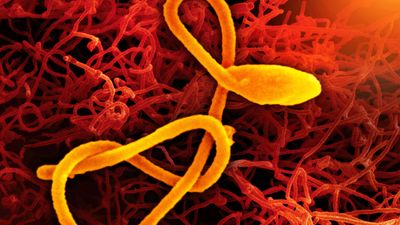


With suspected cases hitting 900 and 220 suspected deaths so far, the Ebola disease outbreak currently hitting the Democratic Republic of the Congo and Uganda is at the forefront of the minds of health authorities the world over. Steps are being taken to bring the situation under control, and you might assume that includes vaccination. It’s true we do have Ebola vaccines – but this outbreak is being driven by a rarer species of the virus, and that’s where the complications begin.
The World Health Organization (WHO) declared the situation in the Democratic Republic of the Congo (DRC) and Uganda a public health emergency of international concern (PHEIC) on May 16.
As of their latest update posted on X, 10 deaths among confirmed cases have been recorded. The disease is spreading primarily in the Ituri, North Kivu, and South Kivu provinces of the DRC, though there are now two additional confirmed cases in health workers in Uganda, bringing the total confirmed cases in the country to seven.
Dr Peter Stafford, a US national who was working in the DRC as a surgeon, is currently receiving treatment in Germany after developing symptoms on May 16 – it’s thought he became infected during a medical procedure.
Modeling from experts at Imperial College London, the WHO, and institutions within the DRC suggests that “the epidemic is larger than currently ascertained” although it’s challenging to know exactly how many cases there may have been – the team say they can’t rule out case numbers over 1,000.
The DRC is unfortunately no stranger to Ebola outbreaks – it was where the first ever cases were identified, back when it was called Zaire – but this one is a bit different. It’s being driven by the rarer Bundibugyo species of ebolavirus.
Most serious epidemics in the past – including the catastrophic 2014-16 West Africa outbreak that claimed over 11,000 lives – were caused by a different member of the same virus family, Orthoebolavirus zairense. Confusingly, this is usually just referred to as the Ebola virus. You’ll sometimes hear people mention “the Zaire strain” or “Zaire virus” too.
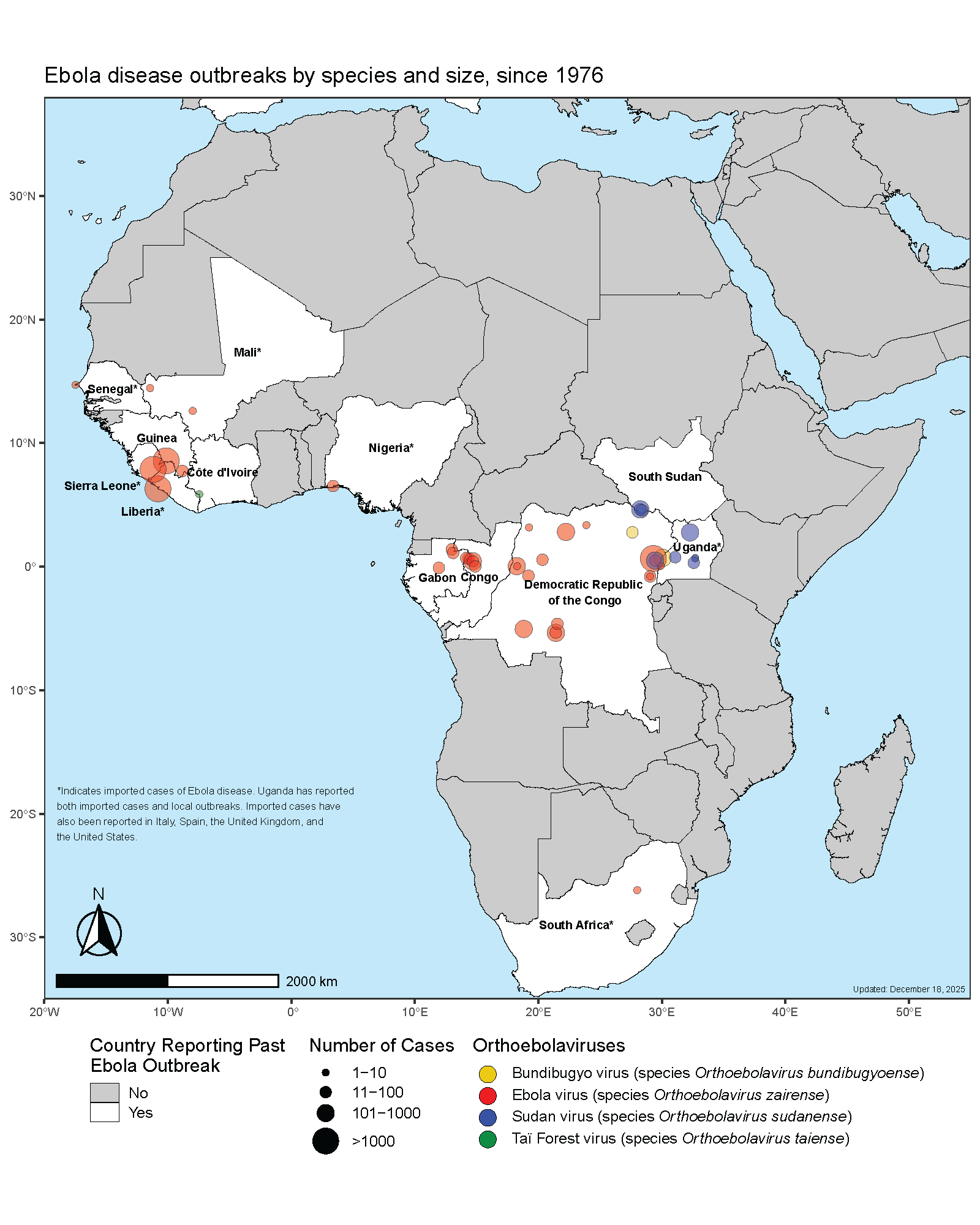
The Ebola virus was identified in 1976 and became infamous for its very high case fatality rate. In some outbreaks, this has reached up to 90 percent. Bundibugyo virus is much newer to science, having only been identified in 2007. The disease symptoms they cause are very similar but Bundibugyo, on average, has a slightly lower case fatality rate (though it can still reach 50 percent).
Ebola vaccines – where are we now?
From an epidemiological perspective, developing an effective vaccine for ebolaviruses was clearly a priority. Economically, however, it wasn’t always the same story.
Ebola outbreaks have been concentrated in Central and West Africa with only a handful of imported cases making their way into more economically developed nations. Until the 2014 outbreak – the devastation of which was writ large across newspapers and broadcasts all over the world for everyone to see – the disease had been an “unattractive target for vaccinemakers”, reported ScienceInsider in 2016.
As the 2014 outbreak was ramping up, there were several vaccine candidates at various stages of development. The unfolding situation on the ground in West Africa galvanized health regulatory bodies and pharmaceutical companies to get trials underway as quickly as possible.
There were notable successes. By the time another outbreak erupted in the DRC in 2018 – which became the second-worst on record – there was an experimental vaccine that was able to be rolled out, which proved effective and likely saved thousands of lives.
Today, there are two licensed Ebola vaccines. One of these, Ervebo®, is recommended by the WHO for use in outbreaks and is kept in a global stockpile, ready to go.
That’s great, you might be thinking – let’s get that stockpile over to the DRC, stat. The problem is both licensed Ebola vaccines are targeted at the Orthoebolavirus zairense, not the Bundibugyo virus, and so they probably won’t work this time round.
“Considering the extremely limited available evidence on cross-protection against non-Zaire species, any decision to use this vaccine in the current BVD outbreak will require further assessments and will occur in accordance with WHO guidance, and only with the explicit informed consent and understanding of affected communities that the benefit of the vaccine against BVD is currently unknown,” explained Gavi, the Vaccine Alliance, in a recent statement.
That doesn’t mean there’s no hope of a vaccine. Gavi is working with CEPI, the Coalition for Epidemic Preparedness Innovations, to assess what vaccine candidates are in the pipeline and what can be done to speed up progress as much as possible.
The world has got some recent experience to draw on here – it was only six years ago that similar efforts were mobilized against SARS-CoV-2. In this case, we have the benefit of tested and approved ebolavirus vaccines to work from.
Two promising candidates that have been highlighted include a vaccine using the same platform as Ervebo®, just targeted against Bundibugyo, and another that uses the ChAdOx platform that powered the Oxford-AstraZeneca COVID-19 vaccine.
“We are evaluating options to rapidly advance vaccine development, including identifying candidates and potential manufacturers to produce doses for clinical trials,” reads a statement from CEPI.
Clinical trials take time. The WHO’s Dr Vasee Moothy said at a press briefing that the most promising candidate – the one based on the same tech as the existing Ervebo® vaccine – will likely not be ready for trials for six to nine months.
ChAdOx vaccine doses could be available within two to three months, Moothy added, “but there is a lot of uncertainty about that. And it will depend on the animal data as to whether that is considered a promising candidate research vaccine for Bundibugyo.”
Looking to the future, one goal would be the development of a pan-ebolavirus vaccine that can provide immunity to all the different viruses in the family. Similar efforts are underway with influenza viruses, which pose a different set of challenges but illustrate the added difficulty of targeting a vaccine at more than one pathogen at a time.
For now, it seems a vaccine is unfortunately not going to be one of the tools available to tackle the Bundibugyo outbreak in the short to medium term. The focus is on supporting authorities on the ground in the affected nations to work with local communities to identify and trace cases, deliver medical care as safely as possible, and hopefully halt the transmission.
“The biggest lesson we've learned through all our Ebola responses is that we can't do this without prioritizing the community,” said Dr Chikwe Ihekweazu, Executive Director of WHO’s Health Emergencies Programme.
“So, if we think that we are going to jump in there and solve all the problems, which is the instinct of many people who work in this field, then we will not have learned the lessons of history.”