Health and Medicine




Update 05/19/2026: In comments made May 19 at the 79th World Health Assembly, posted to X, WHO Director-General Dr Tedros Adhanom Ghebreyesus gave updates on this unfolding situation. At this time, there are now 30 confirmed cases from Ituri Province of the DRC, in addition to more than 500 suspected cases and 130 suspected deaths. As well as the two cases in the Ugandan capital Kampala, there have been cases reported in the DRC city of Goma.
“These numbers will change as field operations are scaling up, including strengthening surveillance, contact tracing and laboratory testing,” the Director-General said.
An Ebola epidemic in the Democratic Republic of the Congo and Uganda has been declared a public health emergency of international concern by the World Health Organization. While it does not meet their criteria for a pandemic, the outbreak is concerning due to difficulties in assessing its scale and spread, and the fact it's being driven by a rarer type of ebolavirus.
As of May 16, there have been eight lab-confirmed cases of Ebola linked to the outbreak and 246 suspected cases. So far, 80 deaths have been reported in Ituri Province of the Democratic Republic of the Congo (DRC). There have also been two lab-confirmed cases, leading to one death, in neighboring Uganda; these two cases do not appear to be linked to each other.
The World Health Organization (WHO) has declared that the situation meets their criteria for a public health emergency of international concern (PHEIC). “There are significant uncertainties to the true number of infected persons and geographic spread associated with this event at the present time,” the WHO said in a statement.
“A PHEIC means the event is extraordinary, poses a public health risk to other countries through international spread, and may require a coordinated international response,” said Jonathan Liberman, Associate Professor in Law and Global Health in Melbourne Law School, to the Science Media Centre (SMC) Australia.
“Determining an event to be a PHEIC sends an important international alert, and enables the WHO to issue temporary recommendations to governments and others on how to prevent or reduce international spread, while minimising unnecessary interference with international travel and trade. The WHO has begun the process to do this.”
Right now, that means advising that national emergency management systems be activated in the two countries where cases are known to be occurring, as well as increased surveillance in countries with which they have land borders. Anyone with a positive test for the virus should be prevented from international travel and cared for in a designated facility where steps have been taken to protect healthcare workers with appropriate personal protective equipment (PPE).
“The affected area is characterised by high population mobility, insecurity, and intense cross-border connectivity with neighbouring countries, including Uganda, said Dr Jean Kaseya, Director-General of Africa CDC, in a statement, adding that the situation underscores “the urgent need for coordinated continental action to prevent further spread and safeguard regional and continental health security.”
Calls for a coordinated response were also echoed by the President of South Africa, Matamela Cyril Ramaphosa: “Africa has the experience, institutions and resolve to contain these outbreaks. What is required now is urgency, unity and collective action.”
The risk to countries farther afield is thought to be low at present. In fact, the WHO specifically states: “No country should close its borders or place any restrictions on travel and trade. Such measures are usually implemented out of fear and have no basis in science.”
What’s different about this Ebola outbreak?
There have been multiple outbreaks of Ebola virus disease in the DRC, due to factors like poverty, limited medical infrastructure, and the humanitarian consequences of ongoing conflict in the country.
“Ituri Province has had previous outbreaks of Ebola. It is also a place where there is a vicious conflict with civilians being targeted even in recent weeks,” explained Professor Paul Hunter of the University of East Anglia to the UK SMC.
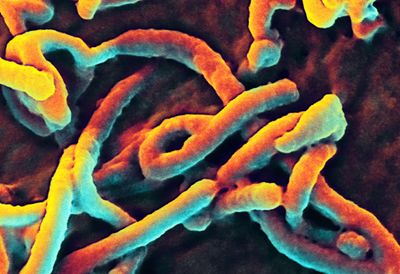
This outbreak is unusual, though, because it involves a rarer member of the ebolavirus family called Bundibugyo virus. The most well-known ebolavirus is the Zaire strain, which is infamous for causing large outbreaks with very high case fatality rates. It’s thought that this current outbreak is likely the largest ever seen with Bundibugyo virus.
All ebolaviruses cause similar symptoms. These can come on suddenly and include fever, fatigue, and headache, progressing to vomiting, diarrhea, and internal and external bleeding. While the case fatality rates for Bundibugyo are lower than are typical for the Zaire strain, they’ve still reached 30-40 percent in recent outbreaks.
Ebolavirus outbreaks in humans generally start when the virus spills over from an animal host, followed by human-to-human transmission through contact with infected bodily fluids. Ebolaviruses are believed to exist naturally in various species of bats, so regions where humans and bats live in close proximity are at increased risk of outbreaks.
There aren’t many treatments or vaccines available for Ebola, and the ones we do have are targeted towards the Zaire strain so may not be effective against this latest outbreak.
“At best, a Zaire-based vaccine may provide limited or partial cross-reactive immunity, but in practical outbreak control we should not assume reliable protection unless this is proven,” commented molecular virologist Vinod Balasubramaniam to the SMC Australia.
The bottom line
While the declaration of a PHEIC is concerning, and strong measures will be taken to try to control this situation in the affected region, the risk to most of the rest of the world is low.
“The WHO declaration is scientifically justified, but it should not be read as a reason for public panic,” said Balasubramaniam.
“Ebola outbreaks can be controlled, but only if the response is early, coordinated and trusted by communities.”
This work has already begun, with the hope that despite the significant challenges in the region, the outbreak can be swiftly contained and brought under control.


 1
1