Health and Medicine
 PUBLISHED





Some of the most feared human diseases in history have been caused by viruses. From smallpox to Ebola to the flu, humanity has been locked in an eternal battle with these microscopic adversaries through the centuries. But unfortunately, as we learned with COVID-19, new ones can still crop up and surprise us.
Lujo virus is another relatively recent addition to the list of known viral pathogens. So far, there have only been a handful of infections, which is why it hasn’t gained wider recognition. But with the original outbreak described as “highly fatal,” it’s worth diving into what this virus does and why it can be so devastating.
What is Lujo virus?
Lujo virus is a zoonotic pathogen, meaning at some point it spilled over from an animal population into humans. The disease it causes is called Lujo virus hemorrhagic fever (LUHF).
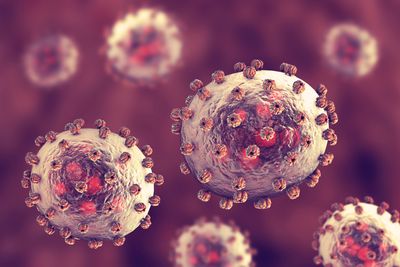
The virus itself is from the Arenavirus family, specifically the Old World subgroup. It is closely related to the Lassa virus, which causes Lassa fever. Viruses in this family, which have an envelope and RNA genomes, get their name from the Latin arenosus, meaning “sandy,” because of their sand-grain-like appearance under the microscope.
.jpg "Scanning electron micrograph of Lassa virus budding off a cell. Lassa virus (LASV) is an arenavirus that causes Lassa hemorrhagic fever, a type of viral hemorrhagic fever (VHF) in humans and other primates. Image captured and colorized at the NIAID Integrated Research Facility (IRF) in Fort Detrick, Maryland.")
There has only been one documented outbreak of LUHF, affecting five people in Zambia and South Africa in 2008. Four of them died, giving a case fatality rate for the outbreak of 80 percent. That’s extremely high, on par with some prior outbreaks of Ebola and Marburg; and it’s only a little behind rabies, widely considered to be the “deadliest” human virus with a case fatality rate of over 99 percent.
The first affected patient was a 36-year-old travel agent from Lusaka, Zambia, who developed mild symptoms prior to flying to South Africa for a family wedding. Only after she returned to Zambia did her symptoms become more severe, but she was originally being treated for suspected influenza and food poisoning. Eventually, her condition became so severe that she was airlifted to Johannesburg for more treatment, but she died 13 days after first showing symptoms.
The second and third patients were a paramedic and nurse who had cared for patient 1 during and after her transfer to Johannesburg, both of whom also died. Because it took some time for the disease to be recognized as a viral hemorrhagic fever, specific infection control procedures had not initially been put in place.
Two further cases emerged – a cleaner who had worked at the hospital where patient 1 was treated and a nurse who had cared for patient 2. This final patient survived after being treated with antiviral drugs, as by this point health authorities had recognized that they were likely dealing with a viral hemorrhagic fever and were taking steps to identify the cause.
Eventually, analysis revealed that the cause of the outbreak was a new virus that had not been documented in humans before. It was the first highly pathogenic Arenavirus to be identified in Africa for 40 years.
What are the symptoms of Lujo virus
LUHF symptoms resemble those of the related Lassa fever.
Around seven to 13 days after infection, a fever, headache, and muscle pain will appear. Patients tend to deteriorate rapidly after that, presenting with a rash, face and neck swelling, diarrhea, and a sore throat.
Although “hemorrhagic” is in the name, the Centers for Disease Control and Prevention explains that bleeding isn’t a typical symptom, unlike with other viral hemorrhagic fevers such as Ebola.
Patients who go on to die from the disease typically experience a brief window where they feel better, before developing breathing issues and heart and nervous system problems. Death typically occurs 10 to 13 days after the symptoms begin.
How is Lujo virus transmitted?
When the first paper documenting the LUHF outbreak was published in 2009, it was still unclear how the first patient had become infected. Arenaviruses are known to jump from rodents into humans – Lassa fever is primarily spread through contact with infected rats of the species Mastomys natalensis – so it’s likely that a rodent host played a role here too.
Later research identified other novel Arenaviruses in both M. natalensis and African pygmy mouse (Mus minutoides) populations near urban settlements. It’s unclear whether any of these viruses might have the capacity to spill over into humans too.
Evidently, human-to-human transmission can occur with LUHF, potentially through contact with an infected person's bodily fluids. A 2016 paper found that it “appears to occur in the late stages of the infection, maybe during the last 3 days before death, a likely smaller window of transmission compared with [Ebola virus disease].”
This is one factor that likely limited the 2008 outbreak to only five people, but future scenarios could see wider spread if an infected person were to, for example, seek help at a crowded clinic in a highly populated area. Other things that could precipitate a bigger outbreak include immune deficiencies in the population due to pre-existing infections like HIV or TB.
“Taking all these factors into consideration, it would be dangerously complacent to think that the magnitude and spread of a potential future LUJV outbreak will be similar to that of 2008,” concluded the authors of the 2016 paper.
In 2024, new insights into how Arenaviruses evolved came from a study that compared the structures of the spike protein complexes of Lujo virus and Lassa virus. These proteins help the viruses bind to human cells and could be promising drug and vaccine targets.
Lujo virus is the only known Arenavirus to use the human protein neuropilin-2 to enter cells. The study authors were able to elucidate how the virus’s spike protein binds to neuropilin-2, which they said could help scientists to develop an “off-the-shelf remedy” for a future LUHF outbreak – something they describe as “highly desired.”