Health and Medicine
 PUBLISHED




The longer a species stays in the wildlife trade, the more likely it is that pathogens will spill over between it and humans. That’s the finding of a new analysis published this month – and the situation is worse than you probably think.
“Long story short: a lot more human diseases are coming from wildlife trade than we thought,” explains Colin J. Carlson, Assistant Professor in the Department of Epidemiology of Microbial Diseases at Yale University School of Public Health and coauthor of the new paper.
“We knew about COVID and HIV,” he tells IFLScience, “but it turns out, wildlife trade gives all sorts of microbes and parasites a shortcut to jump from animals to humans.”
To a certain extent, this isn’t surprising. After all, share a lot of time in the proximity of anybody, and eventually you’ll end up sharing germs with them, right? But here’s the thing: plenty of wild animals live close to humans – raccoons, for example; pigeons; urban foxes – but have far fewer human-transmissible pathogens than their traded compatriots.
Traded mammals in particular, the study found, are more than six times as likely than non-traded ones to share at least one pathogen with humans. Even after controlling for just about every confounding variable possible – things like geography, proximity to humans, how far away on the evolutionary tree they are from humans, and even just how much attention a species has received from researchers over the years – being traded still raises the likelihood of a species being a zoonotic host by a full 50 percent.
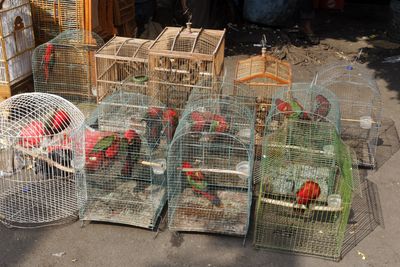
Trade an animal illegally, and that figure goes up further. Trade it live, and it rises again. In short, “if we spend enough time with a mammal – and keep it in poor conditions – something might make the jump sooner or later,” Carlson says.
But it gets worse. “What we found is that the longer we trade animals, the more pathogens make the jump,” Carlson tells IFLScience – specifically, at the rate of about one pathogen per decade. In other words: those pathogens that do infect traded animals but have not made it into humans? They probably will, soon.
If it all sounds like the perfect recipe for the next big pandemic, then, well, it is: experts have long warned that the next zoonotic pandemic is more a question of “when” rather than “if”. But humans aren’t the only animals at risk: “Primates are having a hard time – a lot are at risk of extinction, and a lot are in the wildlife trade,” Carlson says. “They’re able to share a lot of diseases with us, and vice versa – sometimes a human’s common cold can be deadly in a chimpanzee.”
It is, in total, Not Great. But neither is it all bad news. Since COVID-19 reminded the world just how important pandemic preparedness really is, interest in potential zoonotic pathways has shot up – and while the gaps in our knowledge may have been wide, it’s analyses like this that help us to figure out what to do about it.
“Here’s some good news: the world just agreed to do something about spillover,” Carlson tells IFLScience, “when they adopted the new pandemic treaty [in May 2025].”
That agreement explicitly included commitments to greater transparency, surveillance, and safeguarding of wildlife, and improving governments’ ability to measure zoonosis risk in the wildlife trade, markets, farms, and supply chains.
It’s a good start – but to really minimize the risk of future zoonotic spillover, the wildlife trade will need to be significantly reduced, both now and in the future, for species that have so far escaped being traded.
“The truth is, there are hundreds of species we trade – think of an animal, and we probably eat it, keep it as a pet, or sell parts of it,” says Carlson. “Wildlife trade is a big-picture problem for all of the animals we share the planet with.”
The study is published in Science.