Health and Medicine
 PUBLISHED
 1
1


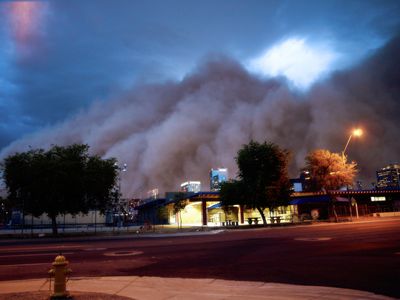


Between tornadoes, haboobs, and that one time it rained meat in Kentucky, the US enjoys – or, at least, experiences – some truly scary weather phenomena. Increasingly, though, there’s a new kind of storm sweeping the nation, particularly in the Southwest – and they’re bringing illnesses and infection that few doctors know how to identify.
Valley fever – or, to use its formal name, coccidioidomycosis – is a disease whose prevalence has shot up over the past few decades. The number of reported cases in 2023 was more than 21,000 – up from about 7,500 in 2008 – though the true burden is suspected to be as much as 360,000 cases per year; in California alone, in 2024, the statewide caseload rose by more than 72 percent in a single year.
The reason for this precipitous increase? Dust storms – or, more specifically, the spores of the Coccidioides fungus that hitch a ride within them.
Valley fever: the infection taking the US by storm
Even just a few decades ago, Coccidioides was basically unheard of outside of the Southwest. The fungus is native to the dusty soils of states like Arizona and California, where even today almost all valley fever cases are reported, though it can thrive as far north as Utah and as far east as Texas.
Increasingly, though, it’s breaking out of even this loose definition of the Southwest. It’s already been found as far north as Oregon and Washington; some analyses predict that, by the end of the century, it could spread as far as North Dakota and Minnesota, and potentially cross the border into Canada.
Why? Well, mostly, it’s our old friend climate change.
We’re already seeing how this plays out in real-time: in Utah, the Great Salt Lake is currently just one-fourth its normal volume, resulting in clouds of dust invading the surrounding towns and cities; in California’s Central Valley, drought and water restrictions have turned farmland into dustbowls; overall, the entire Southwest has not been this dry for more than 1,200 years thanks to human-driven climate change, and things don’t look likely to get better any time soon.
That would be bleak enough, but here’s the kicker: all these changes are just perfect for Coccidioides spores.
“Fungi are incredible adapters. They are great at finding their niches and spreading and growing and surviving. That’s what they’ve done for tens of millions of years,” Tom Chiller, former Chief of the Mycotic Diseases Branch at the Centers for Disease Control and Prevention, told Stanford University’s & the West last year.
“Because of environmental changes, we’re seeing more areas perfectly adapted for these spores to grow.”
Now, the spores aren’t too dangerous to the general public when they’re in the ground – but with soaring temperatures, increasingly arid environments, and poor land and water management only compounding the problem, they just aren’t staying below our feet.
“The intensified onset of climate change has caused frequencies and possibly intensities of natural hazard events like dust storms and drought to increase,” confirms a 2024 study published in the journal Environment International.
“These events, followed by changes in patterns of precipitation, not only pick up dust and spread it throughout the air, but also boost the growth and spread of Coccidioides.”
These rising temperatures and drying up of water reserves “has been correlated with greater prevalence of [valley fever],” the authors write. “[M]ore infections are predicted to occur due to a changing climate, [and] deaths are expected to rise.”
The toll of valley fever
Not everyone who breathes in some fungus-laden dust will get sick – and even if you do, chances are you’ll be fine. After all, the vast majority of cases are thought to go entirely unreported, and even among those with confirmed cases of valley fever, about three in five are asymptomatic or suffer just mild, flu-like symptoms.
But for an unlucky minority, valley fever can develop into a really gnarly illness.
“In many patients it's more debilitating than mononucleosis,” explained John Galgiani, a University of Arizona professor who has studied valley fever since the 1980s, back in 2016. “These patients feel horrible, they can't get out of bed or go to work and often they are sick for weeks or months. Many worry they have cancer or another disease”.
While it’s technically a lung infection, valley fever can cause quite the range of troubling symptoms: fevers, fatigue, rashes, joint aches, and headaches, alongside the more expected coughs and chest pain.
For some patients, it can develop into severe pneumonia – “about a third of cases of pneumonia in Arizona are caused by valley fever,” Galgiani pointed out – while others can develop nodules or holes in their lungs. It can spread to your brain and spinal cord; it can lead to meningitis. For a couple hundred people a year, it’s fatal.
The good news is, it’s treatable. As a fungal infection, it should clear up with a course of an antifungal such as fluconazole, or itraconazole if something stronger is needed. But any antifungal tends to have pretty serious side effects, ranging from an upset stomach to straight-up organ damage – and, it should be noted, these meds may need to be taken for life, if you’re stricken badly enough by the illness.
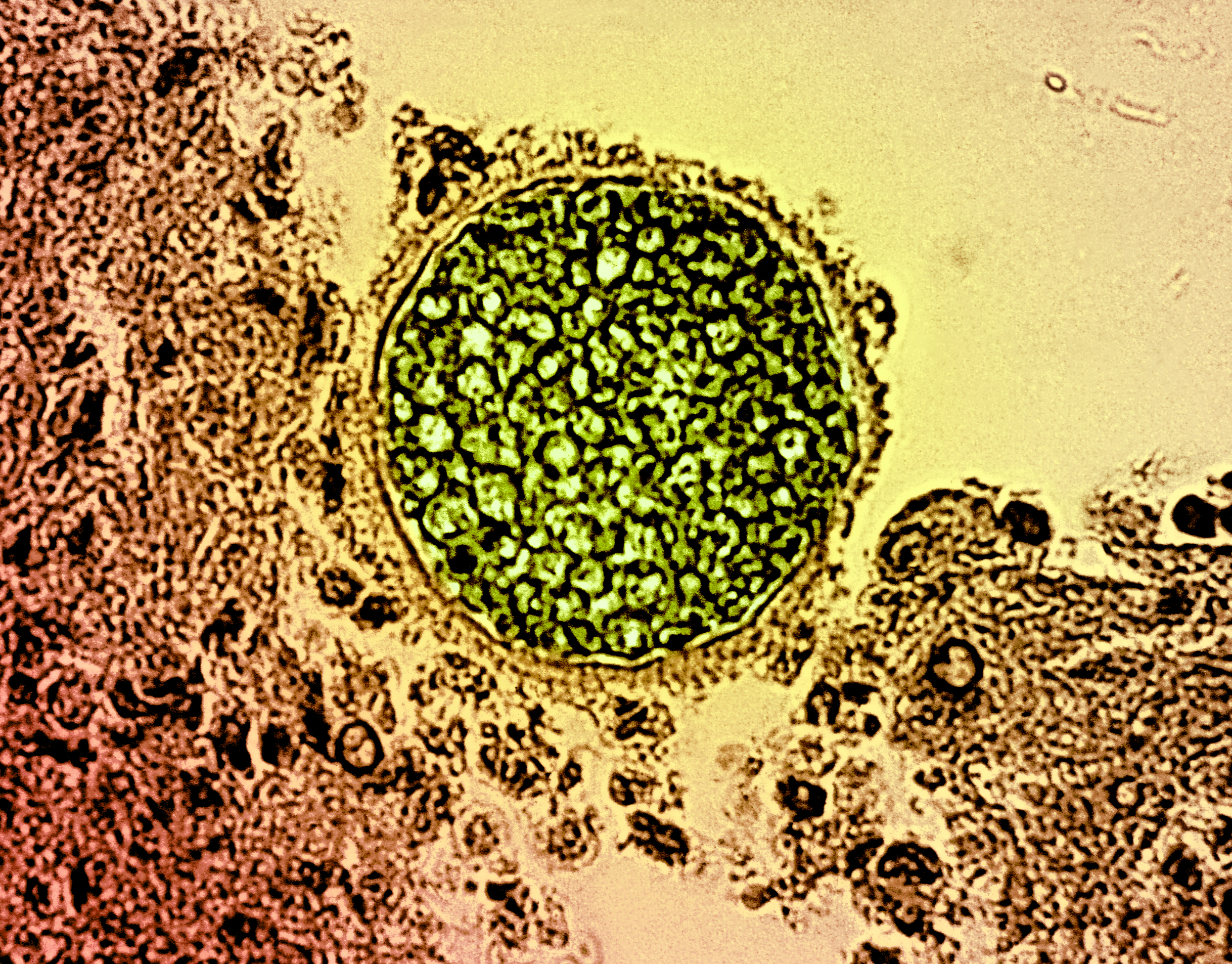
And all that is just if you manage to get the right diagnosis.
“This is a disease that isn’t getting enough attention and doesn’t get the attention it deserves,” Chiller told Stanford. Even in areas where it’s most common, he said, “we still see patients who will be misdiagnosed and given multiple courses of antibiotics before someone thinks to […] test for Valley fever.”
Trying to stay safe
Virtually anybody can get valley fever: “It's an equal opportunity bug,” said Galgiani, who is also director of the Valley Fever Center for Excellence in Tucson. “Everyone who is exposed has the same chance of getting infected.”
Avoiding it, therefore, is really a question of limiting your exposure, if you can. “You definitely lower your risk of breathing in harmful dust if you stay indoors during dust storms, if your doors and windows are closed,” said Dave Engelthaler, executive director of the Health Observatory at Arizona State University, in August last year. “It is not healthy to breathe in the fine particles that are flying around in the air, so air purifiers also help.”
Of course, for some people, avoiding risk is almost impossible.
According to one 2020 study, farm workers are three times as likely as the average person to be exposed; firefighters are particularly susceptible, particularly with the increasing bouts of wildfires forcing them to dig and move soils; so, too, are construction workers, archaeologists, military personnel, and anybody else who regularly gets down and dirty in the dust.
Prisoners, too, are highly susceptible, partly just because the local prisons were built in highly endemic areas.
What is worth mentioning, however, is this: while anybody can get valley fever, it does seem to hit Black and Filipino people worse. Nobody’s sure why that is – it “may relate to underlying health conditions, health inequities, or other causes,” suggests the California Department of Public Health – but combined with the US’s longstanding and well-documented racist policing and judicial system, it does exacerbate the issue for prisoners.
For most of us, however, the most we can do is be aware of the danger and how to limit our exposure. While researchers at Galgiani’s Center search for a better understanding of the disease – and perhaps one day, a vaccine – national and state-level health departments are aiming to raise awareness for both the public and doctors.
With more attention on the increasing prevalence of the disease, diagnoses may speed up – and perhaps funding for research might increase. We can hope, hey?
“As climate change intensifies, it is crucial for public health officials to implement diverse strategies to prevent [valley fever] outbreaks,” advised the 2024 paper.
“With projected increases in case numbers and expansion of endemic regions, the consequences of [valley fever] are imperative to be aware of, as the fungus may one day cost the country billions of dollars and the lives of countless individuals.”