Health and Medicine
 PUBLISHED



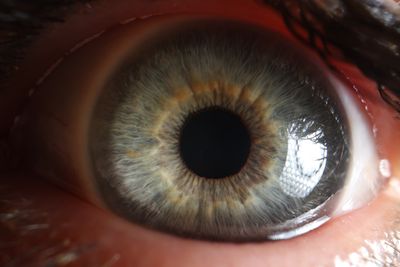


Eye problems such as extreme sensitivity to light and difficulty reading are among the many symptoms of long COVID. But they have proven particularly difficult to diagnose.
New research, however, not only offers partial answers as to how the virus damages the eyes, but it also provides a better path to establishing infection as the cause.
The symptoms of long COVID are so diverse, and often so lacking in biological explanations, that even getting their existence acknowledged is a major challenge. That has proven particularly acute for ocular issues, because standard tests seldom detect there's a problem, let alone figure out the cause.
Fortunately, Professor Neil Lagali of Linköping University, Sweden, has been researching those reporting the symptoms, and with colleagues found that those for affected the impact on quality of life can be severe. Not only were patients sometimes suffering extreme eye pain they had no way to treat, but they often could not focus – literally rather than mentally – to the point of being unable to read text.
When Lagali’s co-authors examined the proteins in tear fluid from affected individuals, they observed “chronic dysregulation” of proteins that regulate CD4+ T cells, crucial to the immune system.
They found that reactions to the virus, such as inflammation, were concentrated in the eyes and the nerves that control them. The extreme inflammation impeded the capacity of the pupil to narrow, letting in too much light and hindering efforts to focus the eyes. This in turn caused headaches and pain in the eyeballs themselves.
A variety of other issues were also observed, such as an impaired blink reflex. Sometimes the eyes also became unable to coordinate to look in the same direction, something usually far more common in children than adults.
Out of 100 patients in the study, none of whom had been hospitalized for COVID, a third were on full-time or part-time sick leave, and some had been suffering the effects for three years.
“We found that the problems experienced by those affected were not detectable by standard tests," Lagali said in a statement. " We had to perform specialized examinations to detect deviations."
"The puzzle pieces then fell into place, and we found explanations for the symptoms.”
Although a trigger for some of the symptoms couldn't be found, in many cases the team were able to determine exactly what caused specific problems. For example, high levels of the transcription factor JUN were found to correlate with increased pupil size under bright light. Enhanced JUN can be caused by the demyelination of the protective coating around nerves, similar to what occurs in multiple sclerosis.
Lagali and co-authors have now developed two diagnosis protocols. One relies on instruments available at eye clinics in major hospitals, and has an estimated accuracy of 77 percent. This improved to 91 percent when tear fluid proteins were also analyzed, but this can require sending samples away.
“These people are really struggling in their daily lives. Now we know what’s wrong with their eyes, and have several clues as to how COVID-19 may have caused these problems,” Legali said. “We hope that the findings can lead to effective treatment and that in the long run their problems will ease, but unfortunately we don’t know yet.”
The patients Lagali and co-authors studied may have been at the extreme end of the scale, but seven months after infection, 31 to 35 percent of patients who have either suffered severe COVID-19 or long COVID report some form of ocular symptoms.
“I think it’s very important that the problem is recognized and that we show that it can be measured by objective testing. Patients don’t have access to that today. We’ve studied people in Sweden, but believe that many people around the world are experiencing these problems,” Lagali said.
Perhaps the work will also lead specialists in other fields to consider a wider range of ways in which long COVID may manifest.
The study is open access in Nature Communications

 1
1