Health and Medicine
 PUBLISHED
 1
1



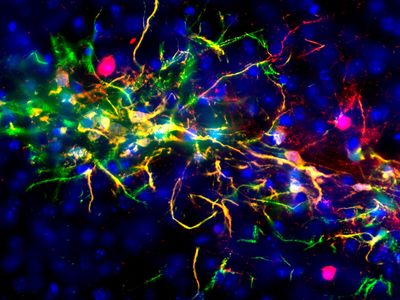


More women than men get Alzheimer’s disease – this has been clearly demonstrated in clinical research, but we know less about why it is the case. Now, a research team from Waseda University and the RIKEN Center for Brain Science in Japan believe they have begun to unravel this mystery, thanks to their discoveries about a particular group of proteins.
“A growing body of evidence indicates that adult neurogenesis is closely associated with the onset and progression of Alzheimer’s disease, as well as with cognitive impairment,” lead author Xingyu Su, a doctoral student in the lab of Professor Toshio Ohshima, told IFLScience. “Based on this, we focused on impaired neurogenesis as an entry point to investigate the neurobiological mechanisms underlying sex differences and their roles in the course of the disease.”
Neurogenesis is the process of producing new neurons. For many years, it was thought this really only happened in young, developing brains, but now we know it can continue into adulthood. It’s part of what makes the human brain so incredibly plastic, allowing it to change and adapt to our experiences of the world around us.
Problems with neurogenesis, especially in the hippocampus, are one hallmark of Alzheimer’s disease.
“In Alzheimer’s disease, the hippocampus is one of the earliest and most vulnerable brain regions and is essential for memory formation. When neurogenesis is impaired, hippocampal function is further weakened, which can accelerate memory loss and overall cognitive decline,” Su explained.
“Evidence from both patients and animal models shows that Alzheimer’s disease is accompanied by reduced proliferation of neural stem/progenitor cells and a decreased number of newly generated neurons, and these changes are closely associated with the severity of cognitive impairment.”
In their study, Su and the team worked with two different mouse models of Alzheimer’s disease. They zeroed in on the expression of a group of proteins called bone morphogenetic proteins (BMPs) because recent research has suggested that higher levels of these proteins may be linked to impaired neurogenesis.
We propose that the sex differences observed in [Alzheimer’s] may originate, at least in part, from sex-specific regulation of the BMP signaling pathway at the molecular level.
Xingyu Su
As predicted, both mouse models showed signs of impaired neurogenesis. The expression of three BMPs – BMP4, BMP6, and BMP7 – was notably increased in the model mice compared with controls. There was also a clear sex difference in one of the models, with females showing more severe impairment of neurogenesis coupled with higher BMP levels.
“Based on this, we propose that the sex differences observed in [Alzheimer’s] may originate, at least in part, from sex-specific regulation of the BMP signaling pathway at the molecular level,” said Su.
The team treated the female mice with a drug to inhibit BMPs and found this effectively improved neurogenesis in these mice to the point that they were on a par with control mice.
They also did some experiments in a neuron-like cell line, which demonstrated that stimulating the cells with estrogen led to upregulation of BMP6, hinting at an underlying mechanism behind the sex differences.
When asked if these findings might also apply to other types of dementia, beyond Alzheimer’s disease, Su said: “From a mechanistic perspective, impaired adult neurogenesis is not unique to Alzheimer’s disease. In vascular dementia, dementia with Lewy bodies, frontotemporal dementia, and other forms of dementia, the hippocampus and related neural circuits are also affected.”
“However, since the core pathologies differ among these disorders (such as vascular injury, α-synuclein aggregation, and TDP-43 pathology), direct evidence for a shared BMP–neurogenesis axis in these conditions is still lacking.”
Sex differences are widespread in neurodegenerative diseases and are not limited to hormonal effects; they may also involve differences in gene expression, inflammatory responses, and immune function.
Xingyu Su
Su said other forms of dementia also show differences between the sexes. Certain forms are more likely in women, while others are more likely in men, and there can even be different symptoms and different patterns in the way the disease progresses. Women, according to Su, generally experience Alzheimer's at higher rates; whereas men show a stronger link between risk factors for circulatory or heart conditions and vascular dementia, and they also have a higher prevalence of Parkinson's disease and dementia with Lewy bodies.
So, it’s a mixed picture across the board. But the results certainly suggest that in the context of Alzheimer’s specifically, BMP regulation merits further research and could yield new drug targets and even inform the development of sex-specific precision medicine approaches. Future work will also have to confirm that the findings in mice translate to humans.
“Sex differences are widespread in neurodegenerative diseases and are not limited to hormonal effects; they may also involve differences in gene expression, inflammatory responses, and immune function,” Su told IFLScience.
“Both biological sex and social gender factors influence the risk, clinical manifestations, and treatment responses of Alzheimer’s disease, and therefore comprehensive research needs to take both aspects into account.”
The study is published in the journal Biology of Sex Differences.