Health and Medicine
 PUBLISHED


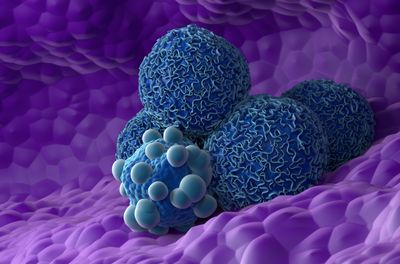


A new experimental pancreatic cancer drug is inspiring hope as it may help extend the lives of terminal patients. Although the gains are modest, they represent a significant “gamechanger” for a field that has not seen meaningful advances in decades.
Although it is rare, with around 60,000 new cases being diagnosed in the US each year, pancreatic cancer has the lowest five-year survival rate of all cancers.
This largely to do with the way it develops. Unlike some other cancers, pancreatic cancer generally develops silently with no symptoms. Once symptoms such as jaundice, abdominal pain, and weight loss begin to appear, the tumor has usually already progressed to an advanced stage, making it harder to treat.
As with any other cancer, the later it is caught, the lower the chances that interventions will help. This problem is made worse by the fact that there are no effective screening tools for this type of cancer. While there are ways to detect breast or colon cancer early, there is currently no screening test for pancreatic cancer that is reliable enough to be used routinely.
At present, patients with this disease have very few treatment options available to them, and they are all limited.
Surgery is often a good approach for many cancers, but it is harder to achieve effectively for the pancreas due to the sensitivity of the surrounding area. At the same time, chemotherapy and radiation therapy have been shown to have limited success in slowing down this cancer’s progression. For decades, doctors have sought new ways to treat patients despite there having been few meaningful advances in this field.
But this is potentially about to change. In April this year, Revolution Medicines, a late-stage clinical oncology company, announced early results for a new treatment for pancreatic cancer that has nearly doubled the survival time for trial patients.
Over 95 percent of pancreatic cancers are pancreatic ductal adenocarcinoma (PDAC), and over 90 percent of those that have spread – metastasized – are caused by a mutation in the KRAS gene RAS G12 variant. This is a result of an overactive KRAS protein.
The new drug, called daraxonrasib, which was taken once daily by patents, is a new kind of RAS inhibitor that can turn off the KRAS protein. The RAS(ON) multi-selective inhibitor, as it's known, can stop cancer growth regardless of whether there is a KRAS variant or not, and regardless of which variant it is.
In a recent Phase III clinical trial, 500 patients with metastatic pancreatic cancer took daraxonrasib. Their experience was compared with that of patients who were given standard intravenous chemotherapy. Those who took the new drug had nearly double the survival time of those on chemotherapy and had few side effects.
During the trial, only one patient stopped taking the drug because of the side effects, whereas 11 patients stopped receiving chemotherapy. In addition, the drug seemed to help patients control their pain.
“In this pivotal trial, daraxonrasib as a targeted medicine delivered a dramatic improvement in overall survival in patients with previously treated metastatic pancreatic cancer compared to standard of care chemotherapy, consistent with earlier findings. These results represent a potentially transformative advance for patients and underscore daraxonrasib’s potential to redefine the treatment landscape,” Dr Mark A. Goldsmith, chief executive officer and chairman of Revolution Medicines, explained in a statement in April.
“We are moving with urgency toward global regulatory submissions and remain committed to rapidly advancing this therapy for patients with a broad range of RAS-addicted cancers. We are deeply grateful to the patients, families, investigators, and study teams whose participation made the RASolute 302 trial possible, and we look forward to sharing detailed results with the scientific and clinical communities.”
Daraxonrasib may well become the new standard treatment for this form of cancer, especially after detailed results from the Phase III trial were released at the American Society of Clinical Oncology’s annual meeting last weekend, earning it multiple rounds of applause. However, its ability to treat patients should not be overstated.
The drug does not cure pancreatic cancer. It has been shown to substantially extend the survival time of patients who took it. Nevertheless, it represents a massive advancement in patient care and provides clinicians with a new foothold for further research.
“We believe these results firmly validate our pioneering approach to targeting common RAS-addicted cancers through RAS(ON) inhibition, exemplified today by four clinical-stage, investigational drugs with differentiated profiles,” Goldsmith added.
“This class of inhibitors reflects more than 15 years of investment in groundbreaking scientific research, including creative work from Warp Drive Bio, acquired by Revolution Medicines in 2018, which established the initial technology foundation we have developed into a robust innovation engine for delivering and sustaining our compelling pipeline.”
From here, the results from the trial will be submitted to the US Food and Drug Administration for approval. At the same time, other researchers are beginning to explore the use of this type of inhibitor to treat other cancers.
The study is published in the New England Journal of Medicine and was presented at the American Society of Clinical Oncology Annual Meeting 2026.