Health and Medicine
 PUBLISHED




Synesthesia, to someone who doesn't have it, sounds like an odd phenomenon. In a typical brain, for instance, the word Tuesday does not come with experience of the color blue.
In the most common form of synesthesia, known as grapheme-color synesthesia, this is what happens, and it is no less odd if you have it. Letters, words, and numbers are involuntarily associated with a color, and seeing those characters will consistently trigger the same experience of a color.
"When I imagine days of the week, I almost visualize a calendar, and the days have different colors," IFLScience journalist and synesthete Tom Hale explained.
"I think I've got quite a visual mind, so I tend to visually imagine most things I'm thinking of, even numbers and days. When I picture those things, they're often depicted in a certain color," he added, "and that color is pretty consistent. So Tuesday will also be blue, Wednesday will also be yellow, Thursday green."
Odd as my colleague's brain truly is, there are other types of synesthesia out there and they are arguably even stranger.
There is sound to color, where noises induce the experience of a color, and "lexical-gustatory" synesthesia, in which specific words are associated with a taste.
Some of these affect sound, too. There is one type of synesthesia in which sounds can be heard following a visual stimulus, and then there is motion-sound synesthesia, in which anomalous sounds are heard in response to movements.
"Motion-sound synesthesia is characterized by illusory auditory sensations linked to the pattern and rhythms of motion (dubbed “Mickey Mousing” as in cinema) of visually experienced but soundless object, like an optical flow array, a ball bouncing or a horse galloping," a paper on the topic explains.
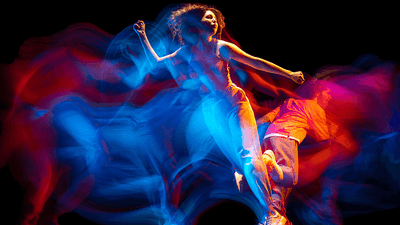
Then there is the reverse: auditory-motor synesthesia, in which sounds such as music or speech trigger physical movements and motor impulses in different parts of the body. This also happens to be the type that I have, and so I can attempt to describe it to you all.
Here goes it: All sound and music feels like it has a particular motion associated with it. The birds tweeting in the sky, the train going past at 3-goddamn-AM, all of them feel like they are supposed to induce particular movements in your body.
It feels like there is a sort of path that the music or sounds are taking, and is simply easier (and fairly pleasing) to follow.
For me, this largely takes place in my hands, though pretty much any body part can get involved if I let it. It largely feels like a sort of pressure in the air, pushing my limbs in a certain direction. A certain song or sound might push my hands and arms in a particular swooping direction, whilst another might induce a wild type of beat-tapping, e.g. on my chest.
As well as the pressure, it feels like there is a sort of path that the music or sounds are taking, and is simply easier (and fairly pleasing) to follow. These paths tend to be pretty consistent, with the same songs and sounds producing the same sorts of movements, or even the exact same movement in certain songs (no, I am not talking about the Macarena, or other songs with designated Moves).
At times, it can feel as though my body has initiated the motion without my brain being aware of it – though given that my brain is in charge of the majority of movements, that clearly is not the case.
Thankfully, though I allow myself to do it far too often, it largely just looks like I am dancing. Albeit in a horrendous "Rainbow Rhythms" from Peep Show type of way.
What's going on in my clearly slightly different brain? Like the other forms of synesthesia, scientists believe that it is the result of pathways getting mixed up in the brain.
"Although early explanations for synaesthesia suggested that the associations between inducer and concurrent were learned, more recent data showing that synaesthesia is automatic and involuntary have led researchers to propose that it might arise from anomalous connectivity between brain areas, perhaps as a result of the failure of pruning during the development of the nervous system," a review of the topic explains.
"Alternative explanations invoke abnormal sprouting of connections, or disinhibition of feedback within existing pathways."
What's it like at a personal level? Glad you asked. I honestly quite enjoy it.
The most irritating part is that it happens to human speech as well. While I can generally keep it under control, it is more difficult to do so when inebriated, for example, and I can find myself tracing someone's words in the air as they talk to me, which must look more than a tiny bit odd.
But bung on some tunes and I look (fairly) normal again, so who really cares?