Humans
 PUBLISHED



This week, the capacity for language evolved long before modern humans appeared, octopuses from the late Cretaceous reached up to 19 meters long and may have feasted on mosasaurs, and the Nancy Grace Roman Space Telescope is NASA’s next great off-world observatory – and it’s ready for launch. Finally, we take a look at the plans for ESA’s Ramses mission, which will take us close to one of the most dangerous known asteroids.
Create an IFLScience account to get all the biggest science news delivered straight to your inbox every Wednesday and Saturday.
3.5-Billion-Year-Old Organic Molecules Freed Thanks To First-Of-Its-Kind Experiment On Another World
An international team of researchers reports the result of an incredible experiment performed on Mars. It had never been done before on another planet and revealed more than 20 organic molecules that had been trapped in clay for 3.5 billion years, seven of which had never been seen on Mars before, including one that is a precursor to DNA. This has enormous implications for the search for ancient life on the Red Planet. Read the full story here
“The Old ‘Did Neanderthals Even Speak?’ Question" Is "Very Hard To Sustain”: Genetic Hardware For Language Abilities Evolved Long Before Modern Humans Appeared
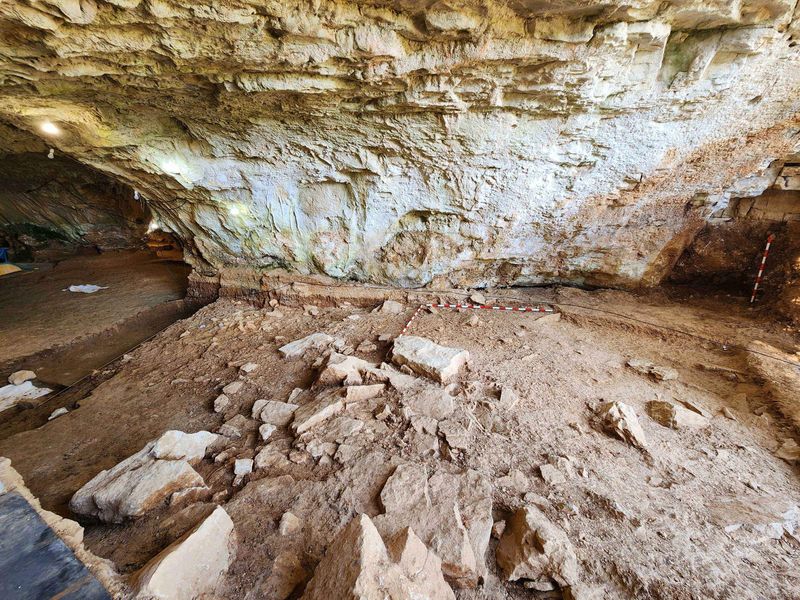
The capacity for complex language may not be unique to modern humans, as new research shows that the genetic regions underpinning this ability emerged before our species diverged from the Neanderthal and Denisovan lineages. Combined with the growing evidence for complex behaviors in these archaic hominins, these findings suggest that our extinct relatives may have possessed advanced linguistic capabilities. Read the full story here
Cretaceous Octopuses Were Kraken-Like Giants That Reached Up To 19 Meters And May Have Feasted On Mosasaurs
As if the seas of the late Cretaceous era didn’t already have enough enormous predators, new research indicates they also contained giant octopuses that make the ship-sinking kraken of Norse mythology believable. Fossils indicate these beasts grew up to 19 meters (63 feet) long. At that size, they would have contested the bounty of the seas with plesiosaurs and mosasaurs, and possibly even eaten these giant reptiles. Read the full story here
NASA’s Revolutionary Roman Telescope, That Can Chart 200 Times More Sky Than Hubble, Is Complete And Ready For Launch
NASA's next great off-world observatory, the Nancy Grace Roman Space Telescope, is complete and ready to be taken to the skies. The observatory will fly into space in early September for a nominal mission of five years, and thanks to its incredible capabilities, is expected to provide new insights into exoplanets, black holes, and even the biggest open questions about the universe itself. Here's what we can look forward to. Read the full story here
Scientists Crack Case Of Strange "Golden Orb" Found On Seabed Off Alaska – And It’s Not An Egg
While snooping around the seabed back in late summer of 2023, scientists stumbled across a very bizarre sight. Using a remotely operated vehicle (ROV), their cameras picked up a "golden orb" nestled among the rocky seafloor. They had no idea what it was. It took over two years of research, but they’ve finally cracked the case. Read the full story here
TWIS is published weekly on our Linkedin page, join us there for even more content.
Feature of the week:
Ramses Vs. Apophis: How A Record-Breaking Spacecraft Will Take Us Close To One Of The Most Dangerous Known Asteroids
In less than three years, "potentially hazardous" asteroid Apophis will pass close enough to Earth that it will be visible to the naked eye by about 2 billion people. It will fly by on April 13, 2029, about 31,600 kilometers (19,600 miles) from the surface. The European Space Agency, with support from the Japan Aerospace Exploration Agency, is now putting together an incredible mission to study this asteroid – once considered the most dangerous to Earth – at a pivotal moment. Read the full story here
More content:
Have you seen our e-magazine, CURIOUS? Issue 45, April 2026, is available now. This month, we asked, “How Do We Know That The Earth Has A Tilt?” – check it out for exclusive interviews, book excerpts, long reads, and more.
PLUS, the We Have Questions podcast – an audio version of our coveted CURIOUS e-magazine column – continues. In episode 20, we ask, “Can You Learn To Roll Your Rs?”
Our Break It Down podcast now has a new monthly format, coming at you in both audio and visual. So tune in each month to hear about some of the wildest science stories and adventures we’ve been on. Kick off this month with “The Science Behind 'Project Hail Mary', Ghost Elephants, And Womb Transplants”.
The Big Questions season 6 returns in June 2026, so here's our season 5 bonus episode to tide you over until then: Can Magic Be Used As A Tool In Science? You can catch up on the whole of season 5 here.