Humans
 PUBLISHED
 1
1



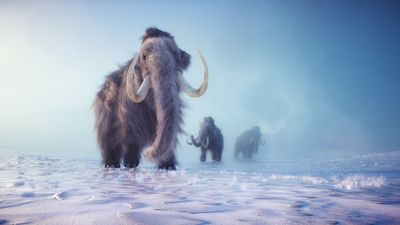


While studying the bones of mammoths hunted by humans, scientists noticed a striking trend: the majority of the slain animals were females.
Conversely, the mammoths that had seemingly died of natural causes were overwhelmingly males.
We certainly weren't expecting to find this, but it was really exciting.
Hannah Moots
This led the researchers to conclude that Ice Age humans were selectively picking out female woolly mammoths to hunt.
However, the team doesn't think females were on the menu simply because they were smaller and easier to bring down. Instead, they believe the behavior of modern elephants may hold the answer.
“If mammoths travelled in herds like modern elephants, they may have moved across the landscape in more predictable or seasonal ways,” Dr. Hannah Moots, a postdoctoral researcher at the Centre for Palaeogenetics and lead author of this new study, told IFLScience.
“Adult males tend to wander more, whereas female-led herds follow more regular movement patterns, which may have made them easier to locate.”
Ancient DNA from hundreds of mammoth bones
The team reached their findings by analyzing the ancient DNA of 521 woolly mammoths from across Eurasia and North America, including 448 individuals that were sequenced for the first time.
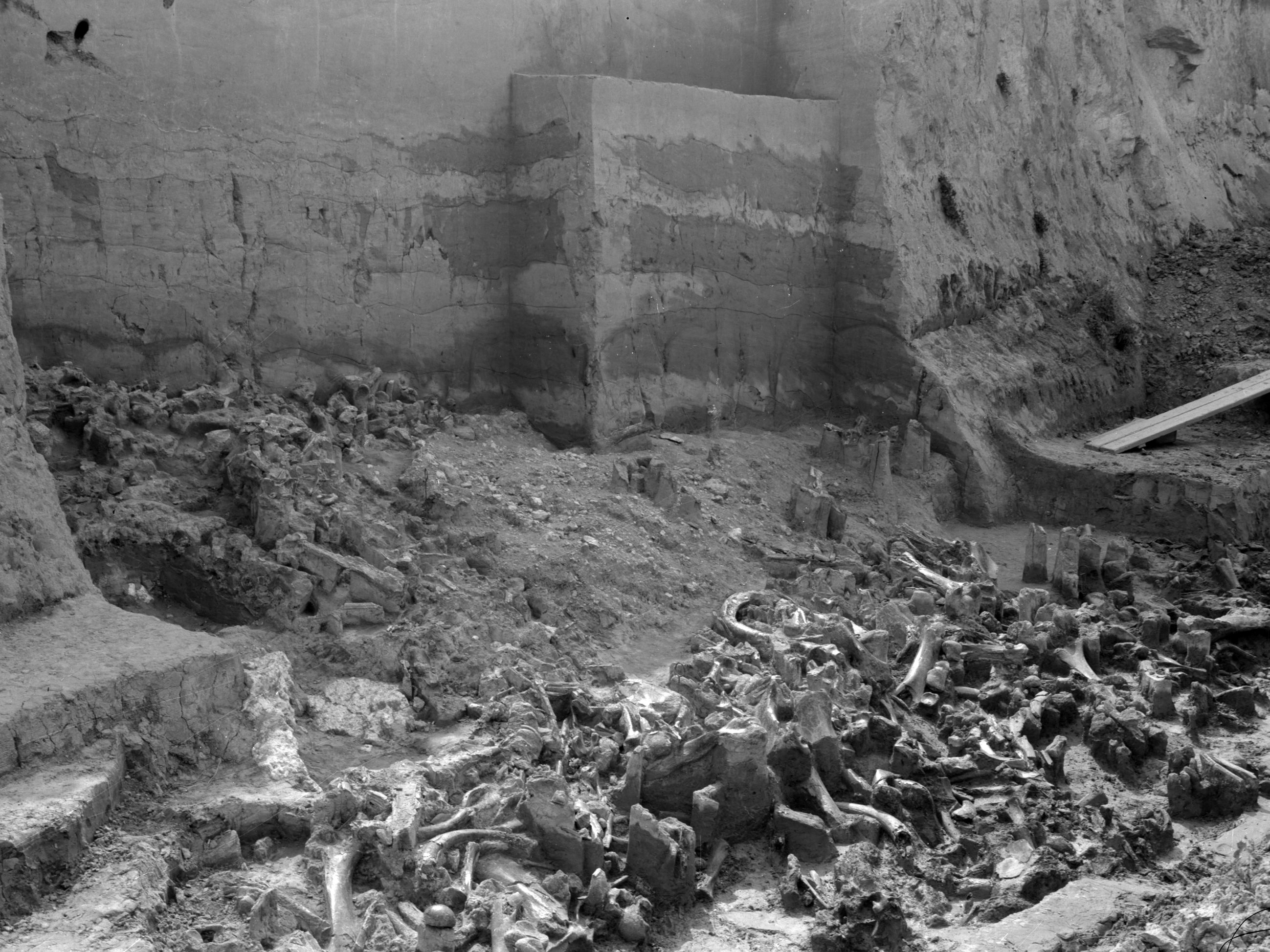
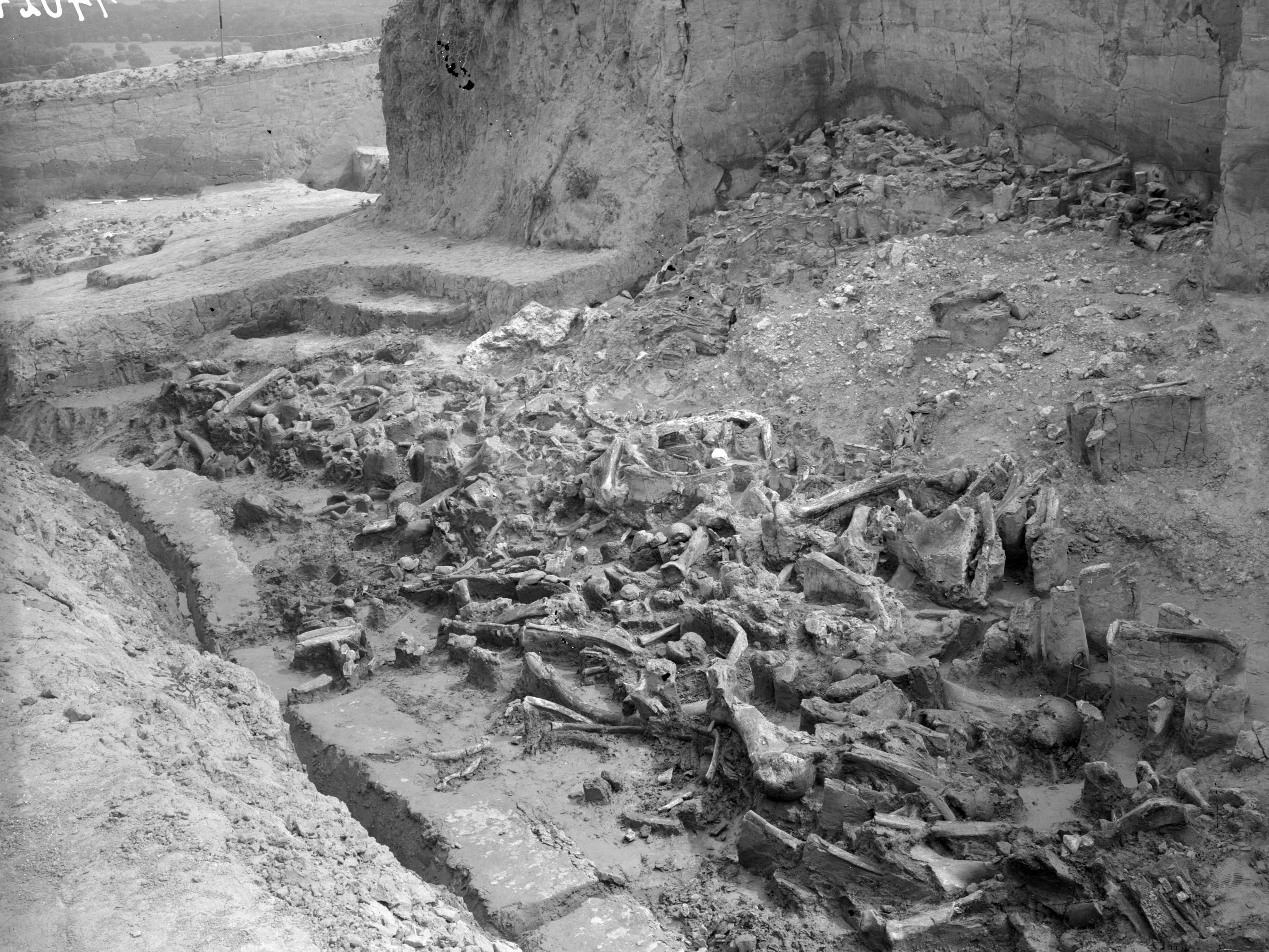
At least 421 of the mammoths were found as isolated remains, seemingly having dropped dead in a natural setting. But 100 of the bones were found in bone beds that appear to have been mammoth butchering sites dating to between 30,000 and 20,000 years ago.
Of the mammoths found in the more natural settings, 34 percent were female, and 66 percent were male. In contrast, the mammoths from the accumulation sites were 70 percent female and only 30 percent male.
But even then, researchers are still not entirely sure how ancient humans were able to fell the giant mammoths, explains Dr. David Díez del Molino, researcher at the Centre for Palaeogenetics and co-senior author of the study, adding that the animals stood up to 3.7 meters (12 feet) tall and could weigh upwards of 8 tons.
Tracking migration patterns and corralling them into dead ends seems like the most intuitive explanation, and would help explain the overabundance of females who likely traveled in larger groups.
The team is now working with other researchers to gather more evidence, including ancient DNA, isotopic data, and archaeological findings, to uncover how this hunting feat was actually achieved.
Neither XX, nor XY
Fascinatingly, not all of the mammoths studied fit neatly in this strict male-female binary.
One individual from Wrangel Island, the last place on Earth where woolly mammoths survived, was neither fully XX female nor XY male.
Instead, the mammoth had a sex chromosome combination known as X0/XX mosaicism. This is where the individual has a single copy of the X chromosome in some cells, and two in others.
Known as Turner syndrome in humans, it is the first time this sex chromosome combination has ever been documented in an extinct species.
“We certainly weren't expecting to find this, but it was really exciting,” Moots remarked.
The individual was certainly special, but it’s difficult to know how this chromosomal difference might have impacted their behavior or appearance.
“It's also difficult to know whether there would have been any visible physical differences at all,” explains Moots. “In other mammals, the effects can vary considerably depending on the species and whether the individual is a complete X0 or an X0/XX mosaic.”
“For example, in horses, X0 individuals generally don't appear to have obvious external morphological differences from typical XX females, although they are often infertile because of abnormalities in ovarian development.”
“Since our mammoth was an X0/XX mosaic and we only have DNA from bone, we can't know how the different cell populations were distributed throughout the body or whether the condition would have affected the animal's appearance or fertility.”
Chance was a factor in discovering this unique mammoth, said Díez del Molino. However, he added that these kinds of discoveries have only been made possible thanks to recent advancements in technology.
“This really wouldn't have been possible until the last couple of years. The combination of improved reference genomes and new ancient DNA methods is what made this discovery possible,” commented Moots.
The new study is published in the journal Current Biology.