Humans
 PUBLISHED

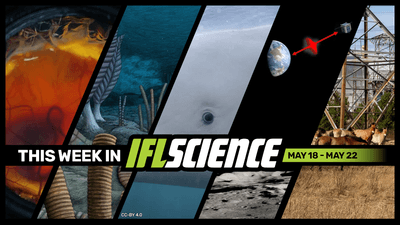


This week, a discovery in North America’s mountains may have pushed back the origins of sex by 10 million years, a study that presented belugas with a mirror suggests they may have a “sense of self”, and 40 years after the Chornobyl disaster, new photos show the site has become a wildlife refuge for extremely rare animals. Finally, we explore why you should make important life decisions when you’re desperate for a pee.
Create an IFLScience account to get all the biggest science news delivered straight to your inbox every Wednesday and Saturday.
“I’ll Put My Money On Moas Before Mars”: Colossal Artificial Egg Successfully Hatches First Chicks. Could It One Day Grow A Moa?
Over 99 percent of all animal species that have ever lived on the planet have emerged from some kind of egg, and a few of them have been huge. Take the South Island giant moa. We were instrumental in its extinction, but there is hope the world could see a moa-like bird again. Thing is, with no animal left alive that’s comparable in size, we’re gonna need a bigger egg. We spoke to Colossal Biosciences' CEO Ben Lamm about their first successful hatching from "artificial eggs". Read the full story here
The Origins Of Sex Have Been Pushed Back By 10 Million Years Thanks To A Discovery In North America's Mountains
Animals have been getting laid for way longer than previously realized. Thanks to a discovery in the far-flung mountains of Canada, the origins of sex have been pushed back by millions of years. The evidence comes from a fossilized Funisia, a deeply unsexy animal that looked a bit like a coral. Although fairly uncharismatic, at 567 million years old, they are the earliest known organisms to reproduce sexually. Read the full story here
Scientists Gave Belugas A Mirror To See How They Behaved. What Happened Next Suggests These Animals Have A “Sense Of Self”
Have you looked at yourself in the mirror today? Maybe corrected a stray hair, or wiped off a smudge of dirt? Well congratulations! You’ve passed the mirror test, an assessment of a kind of self-recognition that was once thought to be unique to humans. Don’t go feeling too special, now. Investigations running since the 1970s have since proven we’re not alone, but nobody had ever successfully observed a beluga whale passing the mirror test. That is, until just recently. Read the full story here
What’s The Time On The Moon? Let Me Check The Laser Inside The Crater Of Eternal Darkness
When humans return to the Moon, they will be faced with many challenges. The long-term residents of our natural satellite will have to be able to navigate an environment unlike any on Earth, without the infrastructure we use on our planet. One of those infrastructures is timekeeping, the foundation of modern navigation. Many solutions have been proposed to solve this problem, from shining lasers to building a lunar GPS. An intriguing new one suggests employing one of the unique features of the Moon: the craters of eternal darkness. Read the full story here
An Accidental Eden: Chornobyl Has Become A Wildlife Refuge For Extremely Rare Animals, Including Przewalski's Horses
Forty years ago, the Chornobyl Nuclear Power Plant blew up in disastrous calamity, forcing the evacuation of 120,000 people from their homes in northern Ukraine and southeastern Belarus. It was an ecological disaster — at least for a short time. In the wake of the catastrophe, and in the absence of meddling humans, the zone around the power plant's ruins has seen an amazing resurgence of wildlife, including a number of extremely rare species, as new photos show. Read the full story here
TWIS is published weekly on our Linkedin page, join us there for even more content.
Feature of the week:
Why You Should Make Important Life Decisions When You Desperately Need To Pee
Here's the scenario: you are out for a walk in a busy residential area, with no public toilets available for miles around. Do you a) begin searching for a place to relieve yourself, or b) make several important life decisions while your bladder is bursting? If you answered "a", you clearly don't have a full bladder right now. According to the scientific literature, you may make better decisions when you really, really need to pee. Read the full story here
More content:
Have you seen our e-magazine, CURIOUS? Issue 46, May 2026, is available now. This month, we asked, “Do Other Animals Have Pets?” – check it out for exclusive interviews, book excerpts, long reads, and more.
PLUS, the We Have Questions podcast – an audio version of our coveted CURIOUS e-magazine column – continues. In episode 20, we ask, “Can You Learn To Roll Your Rs?”
Our Break It Down podcast now has a new monthly format, coming at you in both audio and visual. So tune in each month to hear about some of the wildest science stories and adventures we’ve been on. Kick off this month with “Artemis II Records, Neanderthal Not-Hybrids, And Introducing ‘Moon Joy’”
The Big Questions season 6 returns in June 2026, so here's our season 5 bonus episode to tide you over until then: Can Magic Be Used As A Tool In Science? You can catch up on the whole of season 5 here.