Nature
 PUBLISHED
 1
1


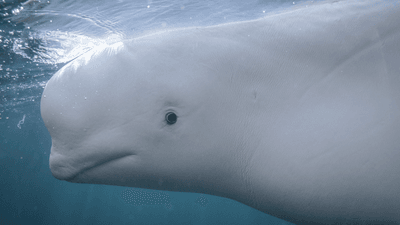


Have you looked at yourself in the mirror today? Maybe corrected a stray hair, or wiped off a smudge of dirt? Well congratulations! You’ve passed the mirror test, an assessment of a kind of self-recognition that was once thought to be unique to humans.
Don’t go feeling too special, now. Investigations running since the 1970s have since proven we’re not alone, but nobody had ever successfully observed a beluga whale passing the mirror test. That is, until just recently.
The belugas demonstrated what is described as self-directed behavior where they appear to use the mirror as a tool to view parts of their bodies.
Alex Mildener
Enter: Kathy, Marina, Natasha, and Maris. These four belugas (Delphinapterus leucas) are looked after at the New York Aquarium of the Wildlife Conservation Society. Though a small group, they were a convenient captive audience for a team of scientists that wanted to explore if these whales – famous for their communication skills and loquacious nature – could pass the mirror test.
They installed a two-way plexiglass mirror that meant they could look at the belugas as the belugas were looking at themselves. Whether or not they would be able to marry up their reflection with their "sense of self" was the big question.
“The belugas demonstrated what is described as self-directed behavior where they appear to use the mirror as a tool to view parts of their bodies or activities that they would otherwise be unable to see without a mirror,” said study author Alex Mildener of the Reiss Lab of Cetacean Cognition at Hunter College to IFLScience. “For example, we saw the whales engaging in barrel rolls which allowed them to view different parts of their body and monitor their activity.”
This kind of self-directed behavior is considered to be evidence of mirror self-recognition and is something we’ve also seen in dolphins. Natasha even passed what’s known as a mark test, moving her body and interacting with a temporary mark on one side of her melon.
She oriented the marked area of her body close to the mirror, often pressing the side of her head to the mirror surface.
Dr Diana Reiss
“We were quite excited to observe how Natasha responded to seeing the temporary visual mark that had been applied to an area between her right eye and ear,” said study author Dr Diana Reiss, a cognitive psychologist and marine mammal scientist who leads the lab at Hunter College, to IFLScience. “She responded quite differently in this session than she did when previously unmarked in the same session or in any other session. Specifically, she initially did a sequence of repetitive laps around the pool with her right side towards the wall and mirror, pressing the marked area of her body against the mirror many times.”
“Once she stopped at the mirror, she oriented the marked area of her body close to the mirror, often pressing the side of her head to the mirror surface. She also displayed a suite of other self-directed behaviors that included repetitive vertical head movements (head bobs) some concurrent with her releasing bubbles from her blowhole, vigorous horizontal head shaking, opening and closing her mouth and engaging in her only instance of toy play at the mirror.”
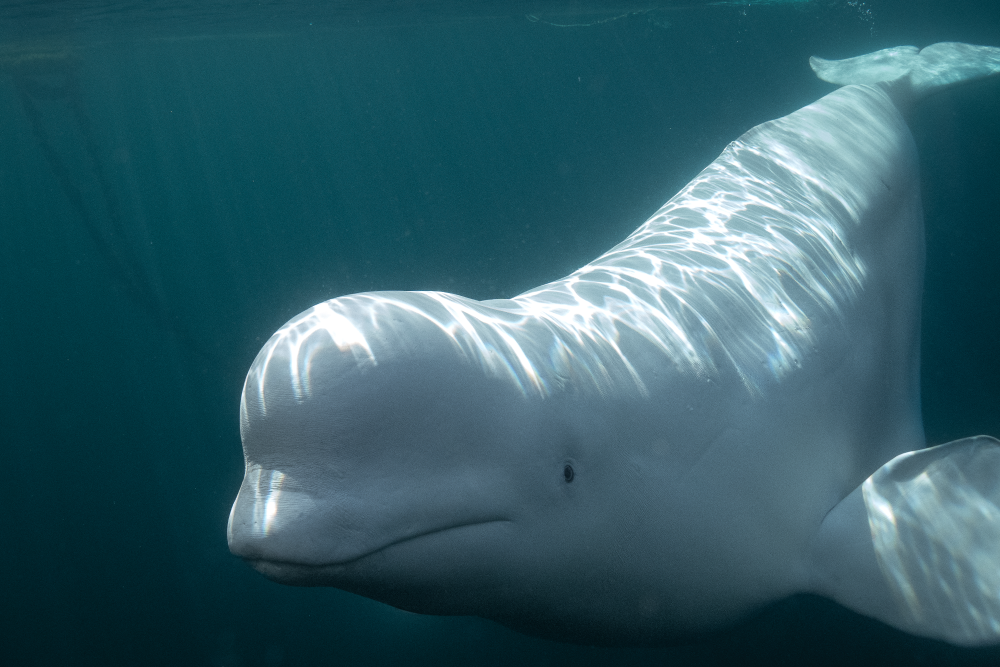
The study isn’t without its caveats, being made up of a small and captive sample size. The authors also note their control was a little more reflective than ideal, but the belugas' engagement with their reflections are still a testament to their remarkable intelligence. It serves as a reminder, too, of why it is so important we conserve the environments that make it possible for them to lead their rich and complex social lives.
“These findings show that belugas demonstrate a high level of self-awareness and a sense of self,” said Reiss. “It was long thought that we humans were the only species that possessed the capacity for mirror self-recognition. This level of consciousness also includes the comprehension that the mirror can be used as a tool to view oneself.”
These findings will hopefully raise our awareness and commitment to maintain strong global and local governmental policies to protect these magnificent marine mammals and their environments, especially in light of current threats to weaken policies such as the US Marine Mammal Protection Act of 1972.
Dr Diana Reiss
“As we try to understand the cognitive capacities of other species, tests of [mirror self-recognition] afford us with a comparative approach to investigate how different species and individuals perceive and interpret the information they see in a mirror. With our increased awareness of the complexity and awareness of other species, there will hopefully be an increased appreciation, empathy and concern globally for the welfare and conservation of these magnificent white whales and other cetacean species.”
“These findings will hopefully raise our awareness and commitment to maintain strong global and local governmental policies to protect these magnificent marine mammals and their environments, especially in light of current threats to weaken policies such as the US Marine Mammal Protection Act of 1972.”
Reiss's lab hopes to conduct further mirror tests on octopuses, while continuing their ongoing research into the cognitive and communicative capacities of bottlenose dolphins. Mildener is moving on to develop a bottlenose dolphin catalog for Gotham Whale, a nonprofit identifying whales in New York City waters, and hopes to study wild belugas in future.
Getting to know whales? It's a smart move considering how many people are trying to talk to them.
The study is published in the journal PLOS One.