Humans
 4
4



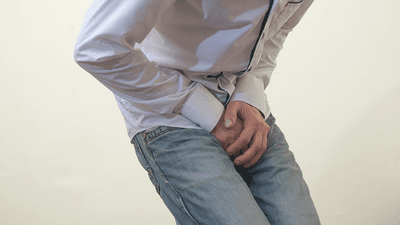


Here's the scenario: you are out for a walk in a busy residential area, with no public toilets available for miles around. Do you a) begin searching for a place to relieve yourself, or b) make several important life decisions while your bladder is bursting?
If you answered "a", you clearly don't have a full bladder right now. According to the scientific literature, you may make better decisions when you really, really need to pee.
So, why investigate this in the first place? Well, research has shown that people's impulsivity levels vary depending on a range of different circumstances. For example, studies have shown that people are more likely to act on impulses when they are hungry.
While this makes a lot of sense for food (your impulse to chow down a family-sized pack of chocolate biscuits, for example, is more likely to be indulged when hungry) research has also found some spillover; people tend to make more impulsive decisions surrounding money.
Elsewhere, men have been shown to opt for smaller but instantaneous rewards over larger, delayed rewards when exposed to "sex cues" (or, in less scientific terms and breaching into Austin Powers territory, when they're feeling randy).
In 2011, one team made headlines when they investigated the "spillover" effect of needing to wee on decision-making and inhibitions over several separate experiments.
In the first experiment, 193 university students were given a couple of tasks. The first was simply to indicate the meanings of words that were presented to them and was not expected to be affected by urine levels within the bladder. The second part, however, asked them to indicate the color of the word presented to them, a task that involves inhibition of their natural response to read the word.
Both tasks were timed, and afterwards the participants were asked to rank how badly they needed to pee, from "not urgently at all" to "very urgently". Perhaps surprisingly, while no effect was observed in the first task, participants were found to perform better at the color-naming task in line with how badly they needed to pee on the seven-point scale.
This study relied on self-reported bladder fullness, but in the second study, the team chose to fill people's bladders themselves. They told participants they were there to do a water taste test as part of an experiment. They were either given a small amount of water to sip or a large amount to chug down.
After a 45-minute filler task, they were then presented with a decision to test their impulsivity. For example, they were told that they could either be given a smaller reward for participating in the experiment now, or a larger reward if they waited for the next day. After this, they were also asked to note down how badly they needed to pee. In this experiment, the team found that the more urgently the participant needed to pee, the more likely they would opt for the larger, delayed reward.
"These findings indicate that inhibitory signals stemming from increased bladder pressure spill over to the domain of intertemporal choice," the team explains in their paper. "This spillover is reflected in an increased ability to inhibit the urge to choose more immediate but smaller rewards and to opt more often for rewards that are more beneficial in the long term."
In a final experiment, the team attempted to see if a full bladder was necessary, or if the effect could be induced in participants by simply making them think about peeing. To this effect, participants were either given a word search with words like "hammer" and "table" or pee-related words like "toilet", "bladder", and "urination".
The team found that the participants searching for pee-related words then rated themselves as more urgently needing to go to the toilet. As well as this, they were more likely to make the better choice of a larger, delayed reward over the short-term, smaller gain. In short, people tend to make better, or at least less impulsive, decisions when they need to pee.
This was at odds with previous research, which suggested that people may go through "ego depletion" when they are required to inhibit their behavior (in this case, stop themselves from peeing all over the place) and would subsequently have less mental capacity to resist impulses. Instead, at least in the case of pee, it may have the opposite effect.
"The degree of effort required to exert control on a first task might be an important determinant of whether impulse control on a subsequent task will improve (inhibitory spillover effect) or deteriorate (depletion effect)," the team concludes.
In short, though it is a small study, there might be a little benefit to your decision-making when you really, really need to go potty.